

Tesla Model 3 & Y High-Voltage Battery Cable Guide (2017-2026)
This guide explains the critical differences between high-voltage battery cables for the Tesla Model 3 and Model Y, including how to identify the correct part for your RWD, AWD, or 'Highland' vehicle.
- Compatibility is critical: Cables are specific to RWD, AWD, and model year (especially the 2024+ 'Highland' Model 3). Always verify the OEM part number.
- This is not a DIY repair. High-voltage systems are lethal. Replacement must be done by a trained professional who can safely de-energize the vehicle.
- Symptoms are severe, often including a sudden loss of power, inability to start, or charging failures. These require immediate attention.
- When buying used, meticulously inspect the orange sheathing for any damage and check all connectors for corrosion, bent pins, or signs of arcing.
Key Differences & Compatibility Warnings

Choosing the correct high-voltage battery cable for a 2017-2026 Tesla Model 3 or 2020-2025 Tesla Model Y is more complex than for a traditional vehicle. Fitment depends entirely on the vehicle's model year, drivetrain (RWD vs. AWD), and specific hardware generation. Using the wrong cable can lead to system errors, non-functionality, or even safety risks. The main harnesses run from the battery pack's main junction box (known as the penthouse) to the front and/or rear drive units and other HV components.
Warning: High-voltage systems are extremely dangerous and can cause fatal injury. All diagnostic and repair work on the orange high-voltage cables MUST be performed by a qualified, trained technician. The HV system must be properly de-energized before any work begins.
Variant Breakdown: RWD vs. AWD vs. Highland
The most significant variations in HV cables are determined by the vehicle's configuration:
- Rear-Wheel Drive (RWD) Models: These vehicles have a single motor at the rear and require a specific harness to power it. They will not have the cabling for a front drive unit.
- All-Wheel Drive (AWD) / Dual Motor Models: These vehicles have electric motors at both the front and rear axles. They use different and additional HV cables to power the front drive unit. An RWD cable cannot be used on an AWD vehicle, and vice-versa.
- 2024+ Model 3 'Highland': The refreshed Model 3, known as 'Highland', introduced changes to its architecture. These models use different part numbers for their HV harnesses compared to the 2017-2023 Model 3. For example, part number 1109003-00-F is specifically listed for 2024 and newer Model 3 and Model Y vehicles.
Because of these variations, you must verify the exact part number needed for your vehicle's specific VIN and configuration before purchasing a replacement.
Common Symptoms of Failure

A failing high-voltage battery cable or related component often results in clear and serious warnings on the vehicle's touchscreen. The car's Battery Management System (BMS) constantly monitors the HV system for safety and will shut down power if a fault is detected.
Sudden Loss of Power While Driving
The most dangerous symptom is a sudden loss of propulsion. The vehicle may display a warning to pull over immediately and will lose the ability to accelerate. This can be caused by a break in the cable, a connector failure, or an internal fault in a related component like a contactor, which acts as a large switch.
Vehicle Will Not Start or "Wake Up"
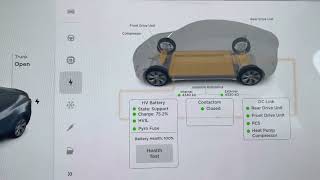
If the HV system detects a serious fault, such as an insulation failure (a short), it will prevent the main contactors from closing. This means the high-voltage battery will not connect to the rest of the car. The vehicle may appear completely dead, even with a charged main battery, or it may display a critical error message. Often, this is accompanied by a failure of the 12-volt system, as the DC-to-DC converter can no longer recharge it from the main pack.
Charging Problems
A fault in the HV cabling or connectors can prevent the vehicle from charging. The charge port light may turn red, and the screen will display an error message like "Charging not possible." This can be due to a poor connection, corrosion, or an isolation fault that the BMS detects when the charging station tries to energize the system.
Specific Error Codes and Alerts
🎬 Watch: How to identify common Tesla HV system alertsOwners and technicians may see specific alerts in the service menu that point to a cable or connection issue. Common related alerts include:
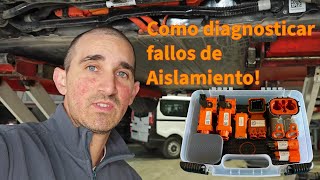
- BMS_f068_HV_isolation_fault: 🎬 Ver: Cómo diagnosticar fallos de aislamiento de forma segura This indicates a loss of electrical isolation, meaning high voltage could be leaking to the chassis. This is a critical safety fault.
- DI_f123_hv_system_failure: A general powertrain fault indicating an issue within the high-voltage system.
- "Vehicle may not restart": This warning often appears when an intermittent fault is detected, alerting the driver that the car may not power back on after being parked.
Buying a Used High-Voltage Battery Cable
Purchasing a used OEM high-voltage cable can offer significant savings over a new part from the manufacturer. However, careful inspection is critical to ensure safety and functionality. Given the role of this part, a high-quality used OEM cable is often a better choice than a new, unproven aftermarket alternative.
Inspection Checklist:
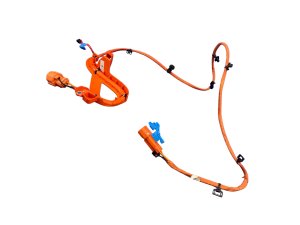
- Verify the Part Number: This is the most important step. Match the part number from your original cable or from a Tesla service center to the used part. The part number is typically printed on a white label on the harness. As an example, part number 1109003-00-F is for later model AWD vehicles.
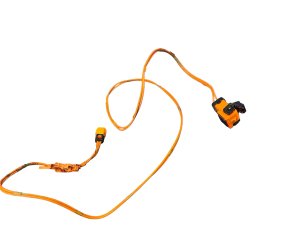
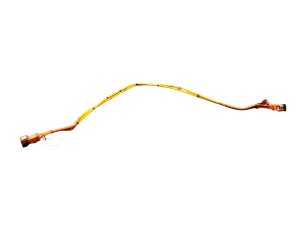
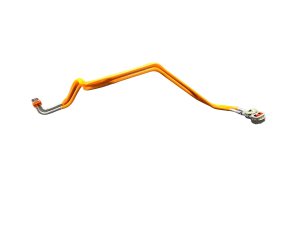
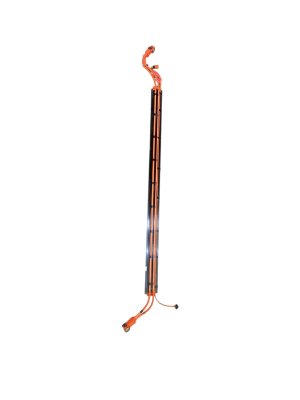
- Inspect the Orange Sheathing: Carefully examine the entire length of the orange outer insulation. Look for any cuts, deep abrasions, crushing, or signs of heat damage (discoloration, melting). Any breach in the outer sheathing is cause for immediate rejection.
- Check All Connectors: Look closely at every connector. The plastic housings should be free of cracks or damage. The locking tabs must be intact.
- Examine Connector Pins and Terminals: Look inside the connectors. The pins should be perfectly straight and clean. Check for any signs of corrosion (green or white powder), arcing (black soot or burn marks), or melting plastic.
- Check for Fluid Contamination: Ensure the cable has not been exposed to battery coolant (a known issue that can degrade wiring) or other corrosive fluids.
Pro Tip: When in doubt, choose a used cable that comes from a low-mileage vehicle that was involved in a collision that did not affect the area where the cable was routed. This reduces the chance of wear-and-tear-related damage.
Known Issues, Recalls, and Service Bulletins
While the high-voltage cables themselves are generally robust, related components have been subject to recalls.
- NHTSA Recall 25V-XXX (Hypothetical, based on real events for future model years): A recall was issued for certain 2025 Model 3 and 2026 Model Y vehicles due to faulty high-voltage battery contactors. A bad solenoid connection could cause the contactor to open unexpectedly, leading to a sudden loss of drive power. While this is not a cable failure, it is a critical issue within the HV circuit that produces similar symptoms. The remedy involves replacing the contactors at a service center.
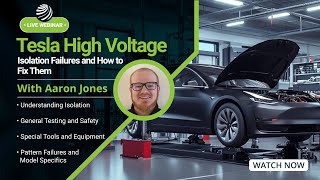
- Isolation Faults: A common theme in forums is the diagnosis of high-voltage isolation faults. These can be caused by a failing component (like an AC compressor or cabin heater), moisture intrusion, or damage to the HV wiring itself. 🎬 Watch: Expert webinar on diagnosing Tesla isolation failures Diagnosing the exact source of an isolation fault can be time-consuming.
Cost to Replace & Installation Info

Replacing an HV battery cable is a complex and dangerous job that should only be performed by qualified professionals.
| Item | Estimated Cost |
|---|---|
| New OEM Cable | $300 - $700+ (Varies by specific harness) |
| Used OEM Cable | $90 - $350 |
| Shop Labor | $600 - $1,200+ (Labor rates of $175-$200/hr are common for HV work) |
- Installation Difficulty: 5 out of 5 (Expert level)
- DIY Feasible: No. Due to the lethal voltages present, this is not a DIY job.
- Estimated Time: 3-6 hours, depending on which cable is being replaced and vehicle configuration.
The replacement procedure involves putting the vehicle into service mode, properly de-energizing the high-voltage system by disconnecting the first responder loop and the main battery pack, verifying the absence of voltage with a multimeter, and then physically accessing and replacing the cable, which may require removing underbody panels or interior components.
Frequently Asked Questions (FAQ)
Can I drive my Tesla if it has a high-voltage battery cable fault?
No. If the vehicle displays a critical high-voltage fault, instructs you to pull over, or will not enter "Drive," it is not safe to operate. Attempting to do so could result in a sudden loss of power or further damage to the electrical system.
What is the difference between a high-voltage battery failure and a 12V battery failure?
A high-voltage system failure typically results in warnings about the propulsion or charging systems and may prevent the car from moving. A 12V battery failure usually causes issues with the car's electronics, such as the screen not turning on, flickering lights, or the car being completely unresponsive, even to the key card. However, a serious HV fault can prevent the 12V battery from being charged, causing it to fail as well.
Can I use a battery cable from a Model 3 in a Model Y?
Sometimes, but only if the part numbers are an exact match. The Model 3 and Model Y share a platform and many parts, but differences in body and component layout mean you must verify compatibility. Always cross-reference the part number for the specific year and drivetrain of both vehicles.
Why are the high-voltage cables orange?
The orange color is an industry-standard safety convention used to clearly identify any component that carries dangerous high voltage in an electric or hybrid vehicle. This alerts technicians and first responders to the potential electrical hazard.
Helpful Videos
Technical Specifications
OEM Part Numbers: 1109000-00-D 1109001-00-G 1109002-00-F 1109003 1109003-00-D 1109003-00-E 1109003-00-F
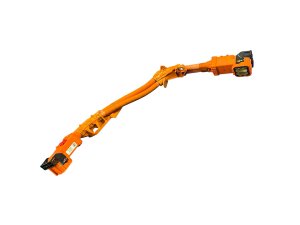
High-voltage DC power transmission harness, typically orange in color for safety identification. Connects the main battery pack to drive units and other HV components.
We Have This Part in Stock

The information in this article is provided for general reference and educational purposes only. Vehicle specifications, procedures, and part compatibility can vary by production date, trim level, and region. Always consult your vehicle's factory service manual and verify part numbers before purchasing or performing repairs. Safety-critical components such as airbags, seat belts, and braking systems should be installed by a qualified professional.
- Tesla 3:
- Tesla Y:
- 🎬 Helpful Videos
- 🛍️ Shop This Part
- Key Differences & Compatibility Warnings
- Variant Breakdown: RWD vs. AWD vs. Highland
- Common Symptoms of Failure
- Sudden Loss of Power While Driving
- Vehicle Will Not Start or "Wake Up"
- Charging Problems
- Specific Error Codes and Alerts
- Buying a Used High-Voltage Battery Cable
- Inspection Checklist:
- Known Issues, Recalls, and Service Bulletins
- Cost to Replace & Installation Info
- Frequently Asked Questions (FAQ)
- 🎟️ Get 5% Off