

2023-2025 Mitsubishi Outlander PHEV High-Voltage Cable: Diagnosis, Warnings, and Replacement
This guide covers the critical high-voltage battery cable harness for the 2023-2025 Outlander PHEV, including failure symptoms, known issues, and essential warnings for buyers.
- This is a high-voltage part for 2023-2025 Outlander PHEV models ONLY and is not compatible with gasoline versions.
- Replacement is extremely dangerous due to lethal voltage and MUST be done by a certified EV technician; it is NOT a DIY job.
- Many charging/starting problems in cold weather on 2023 models may be due to the vehicle's lack of a battery heater, not a faulty cable.
- When inspecting a used cable, physical damage to the orange sheathing is a deal-breaker, but a frayed outer metal braid may be normal RFI shielding.
Symptoms of a Failing High-Voltage Cable Harness
A problem with the main high-voltage battery cable harness is a critical failure that will likely make the vehicle undrivable. Symptoms are often system-wide and indicate a major powertrain fault.
- "EV System Service Required" Message: This is the most common indicator of a fault within the high-voltage system. The vehicle's computer has detected a problem that could involve the battery, motors, or the cables connecting them.
- Vehicle Will Not Enter "Ready" Mode: When you press the start button, the "Ready" indicator will not illuminate on the dashboard. The vehicle will not be able to drive in electric or gasoline mode because the high-voltage system is not engaging.
- Failure to Charge: The vehicle may not respond when a charging cable is plugged in, or it may start and then immediately stop charging.
- Complete Loss of Power: While rare, a catastrophic failure or short in the cable could lead to a complete and sudden loss of motive power.
- Diagnostic Trouble Codes (DTCs): A professional scan tool may reveal codes related to the Battery Management Unit (BMU) or high-voltage system. Codes like P1AD (Battery Current Sensor Fail) on older models suggest a problem in the HV battery circuit, which can sometimes be linked to wiring.
Pro Tip: Before assuming a catastrophic failure, check the basics. On some Outlander PHEV models, a single blown low-amperage fuse (e.g., 7.5A) for the HV battery control unit can mimic a complete system failure, preventing the vehicle from starting or charging. Always have these simple components checked first.
Known Issues, Recalls, and Technical Bulletins
While this specific harness has no widespread reported failures, owners of 2023-2025 Outlander PHEVs should be aware of several vehicle-specific issues that can present similar symptoms.
Class Action Lawsuit: 2023 PHEV Cold Weather Battery Issues
A class-action lawsuit was filed concerning the 2023 Mitsubishi Outlander PHEV. The suit alleges that these vehicles were manufactured without a high-voltage battery heater, which can cause the vehicle to fail to start or charge in cold weather conditions. If you are experiencing issues primarily in freezing temperatures, the problem may be related to this design issue rather than a faulty cable harness.
TSB for 12V Battery Drain (Gasoline Models Only)
Mitsubishi issued Technical Service Bulletins (TSB-25-54-004REV and TIN-25-54-002) for the 2025 gasoline-powered Outlander regarding a dead 12-volt battery. This issue is caused by a software bug related to the My MITSUBISHI CONNECT app. The bulletins explicitly state that the Outlander PHEV models are not affected by this particular problem.
Recall: Rearview Camera Software
NHTSA recall number 23V345 was issued for 2023-2025 Outlander PHEVs because a software error could cause the rearview camera image to freeze or not appear. This is an infotainment system issue and is unrelated to the high-voltage battery cables.
Buying a Used High-Voltage Battery Cable Harness
Purchasing a used high-voltage cable can be a cost-effective solution, but careful inspection is mandatory due to the safety-critical nature of the part. Used OEM is often the only alternative to expensive new dealer parts, as aftermarket options are rare for these components.
What to Check Before You Buy:
- Verify the Part Number: Ensure the part is stamped with OEM number 9482A490. High-voltage systems are precisely engineered, and a cable from another model or even a different trim level will not work.
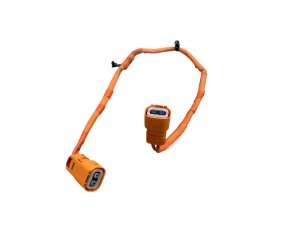
- Inspect the Orange Sheathing: Look for any cuts, abrasions, melting, or signs of crushing along the entire length of the orange outer casing. Any breach in this protective layer is a major red flag.
- Check the Connectors: Examine the large, locking connectors at both ends. Look for any signs of melting, arcing (black marks), or physical damage to the plastic housing. The locking tabs should be intact.
- Examine the Connector Pins: Look inside the connectors at the metal pins. They should be straight, clean, and free of any corrosion or moisture damage.
- The Exposed Metal Braid: You may see a woven metal braid that appears exposed in some areas of the cable. According to owner forums and Mitsubishi correspondence for similar cables, this is often an outer RFI (Radio Frequency Interference) shield that is intentionally designed to be exposed to allow moisture to escape. A frayed or weathered-looking braid is not necessarily a defect, unlike damage to the inner orange insulation.
Warning: Never purchase a high-voltage cable that shows any signs of being in a fire, flood, or major collision. Internal damage may not be visible, and installing a compromised cable is extremely dangerous.
Installation and Replacement
DANGER: HIGH VOLTAGE. This is not a DIY repair. Replacement must be performed by a qualified technician certified to work on electric and hybrid vehicles. The system carries lethal voltage, even when the vehicle is off.
Professional replacement involves a specific, multi-step safety protocol to de-energize the high-voltage system. This includes:
- Turning the vehicle off and disconnecting the 12-volt battery.
- Removing the high-voltage service disconnect plug.
- Waiting a minimum of 5-10 minutes for the high-voltage capacitors within the inverter to fully discharge before any work begins.
- Using specialized Personal Protective Equipment (PPE), including high-voltage lineman's gloves.
Accessing the cable requires removing underbody panels and heat shields. Due to the complexity and extreme danger, installation difficulty is rated 5 out of 5.
Cost Comparison
The cost for high-voltage components can vary significantly. The estimates below are for reference. Note that some online parts catalogs show lower prices for smaller sections of HV wiring, while main cables can be much more expensive or only sold with larger assemblies.
| Part Source | Estimated Cost |
|---|---|
| New OEM (Dealer) | $200 - $600+ (Varies widely by specific cable section) |
| New Aftermarket | Not commonly available |
| Used OEM | $150 - $300 |
| Shop Labor | $300 - $800 |
Labor cost is estimated at 2-4 hours at a specialized EV/hybrid shop rate of $150-$200/hr. Standard mechanic labor rates for 12V battery cables do not apply here due to the required training and safety procedures.
Frequently Asked Questions (FAQ)
Can I install a 2023-2025 Outlander PHEV battery cable myself?
No. This is an extremely dangerous job that should only be performed by a certified EV/hybrid technician. The system contains lethal high voltage that can cause severe injury or death if handled improperly.
Is this cable the same as the one in the non-hybrid Mitsubishi Outlander?
No, absolutely not. This is a high-voltage harness specific to the Plug-in Hybrid (PHEV) models. It is not compatible with standard gasoline-powered Outlanders, which only use a conventional 12-volt electrical system.
My Outlander PHEV won't charge in the winter. Is the cable bad?
Not necessarily. For 2023 models, there is a known issue related to the vehicle lacking a battery heater, which can prevent charging and starting in very cold weather. This is a vehicle design issue, not a cable failure. Consult a dealer to see if your vehicle is affected.
The used cable I'm looking at has a frayed metal mesh on the outside. Is it damaged?
It might be okay. That outer metal mesh is typically a shield for radio frequency interference (RFI). On some Mitsubishi cables, this shield is designed to be exposed to the elements. As long as the bright orange insulation underneath the mesh is completely intact with no cuts or abrasions, the cable may still be perfectly functional. However, any damage to the orange sheathing itself means the cable is unsafe and should not be used.
Technical Specifications
OEM Part Numbers: 9482A490
High-voltage DC power cable for PHEV system, identified by orange external sheathing.
We Have This Part in Stock

The information in this article is provided for general reference and educational purposes only. Vehicle specifications, procedures, and part compatibility can vary by production date, trim level, and region. Always consult your vehicle's factory service manual and verify part numbers before purchasing or performing repairs. Safety-critical components such as airbags, seat belts, and braking systems should be installed by a qualified professional.
- Mitsubishi Outlander:
- 🛍️ Shop This Part
- Symptoms of a Failing High-Voltage Cable Harness
- Known Issues, Recalls, and Technical Bulletins
- Class Action Lawsuit: 2023 PHEV Cold Weather Battery Issues
- TSB for 12V Battery Drain (Gasoline Models Only)
- Recall: Rearview Camera Software
- Buying a Used High-Voltage Battery Cable Harness
- What to Check Before You Buy:
- Installation and Replacement
- Cost Comparison
- Frequently Asked Questions (FAQ)
- 🎟️ Get 5% Off