

2023-2024 Fisker Ocean High-Voltage Battery Harness: Power Loss, Faults, and Replacement
This guide covers the critical high-voltage battery cable harness in the 2023-2024 Fisker Ocean, a part that can be related to sudden power loss and electrical system warnings.
- Due to Fisker's bankruptcy, used OEM parts are the only realistic option for this repair.
- Replacement is NOT a DIY job. It involves dangerous high-voltage components and must be done by a qualified EV technician.
- Symptoms like power loss and fault warnings can also be caused by software issues or other module failures; proper diagnosis is essential.
- You must verify the part number (FM2915850230B) and check if your car is FWD or AWD, as the harnesses may differ.
Known Issues & Recalls on the 2023-2024 Fisker Ocean
The Fisker Ocean has been subject to numerous electrical issues and recalls, several of which cause a sudden loss of drive power. While no recall specifically targets the high-voltage battery cable harness itself, understanding the related problems is crucial for diagnosis.
- NHTSA Recall 24V-404: This recall addresses a software issue in the Motor Control Unit (MCU) and Vehicle Control Unit (VCU) that can cause the vehicle to unexpectedly enter a safe mode, resulting in a complete loss of motor power. The vehicle may shift to Neutral and then Park, requiring a power cycle to recover.
- NHTSA Recall 24V-499: A communication failure with the cabin electric water pump can trigger the Battery Management System (BMS) to enter a "limp mode." This severely restricts battery power to 8.5 kW, limiting vehicle speed to 10-20 mph.
These issues, along with widespread owner complaints about 12-volt battery drain, non-start conditions, and various warning lights, 🎬 Watch: How to revive a dead Fisker Ocean create a complex diagnostic environment. A physical problem with the high-voltage harness, such as damage or a loose connection, can produce symptoms nearly identical to these software and module failures.
Symptoms of a Failing Battery Cable Harness
A faulty high-voltage battery cable harness can manifest in several critical ways. Because this component is fundamental to the car's operation, symptoms are typically severe.
1. Complete Loss of Power or Inability to Start
The most serious symptom is a total inability to power the vehicle on or a sudden shutdown while driving. This can happen if the main power conductors are severed or if the integrated High-Voltage Interlock Loop (HVIL) circuit is broken. A break in the HVIL tells the vehicle's computer that the high-voltage system is not secure, and it will refuse to energize the main contactors, effectively bricking the car. The dashboard may display a "High Voltage Battery Error" or a cascade of other system faults.
2. "Electrical System Malfunction" or "Drivetrain Fault" Warnings
Intermittent connection problems or increased resistance in the cable can trigger various general fault warnings on the instrument cluster. The vehicle's control modules constantly monitor voltage and current; if the readings fluctuate outside of the expected range due to a damaged cable, the system will register a fault and may enter a reduced power mode.
3. Vehicle Enters Limp Mode or Reduced Power State
If the harness is partially damaged, it might still be able to transmit some power, but not enough for full performance. This can cause the vehicle to enter a "limp mode" to protect other high-voltage components. The experience would be similar to the symptoms of recall 24V-499, with drastically reduced acceleration and top speed.
4. Charging Problems
Damage to the high-voltage harness can sometimes interfere with the vehicle's ability to charge. The Battery Management System (BMS) might detect a fault in the high-voltage circuit and prevent charging as a safety precaution. This could manifest as a red light on the charge port or a "Charging Fault" message on the screen.
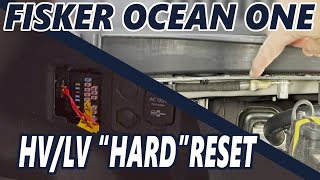
Warning: The Fisker Ocean's electrical system is complex. Many issues, like 12V battery drain and software glitches, can cause the vehicle to become unresponsive. Always ensure the 12V battery is fully charged and perform a system reset before suspecting a 🎬 Watch: How to perform a hard reset on your Ocean major hardware failure like the HV harness.
Buying a Used 2023-2024 Ocean Battery Harness
Due to Fisker's bankruptcy in June 2024, the supply of new OEM parts is virtually non-existent. For this reason, a quality-inspected, recycled OEM harness from a low-mileage donor vehicle is the most practical and often only solution.
1. Physical Inspection is Mandatory
Before purchasing, you must meticulously inspect the entire harness. Look for:
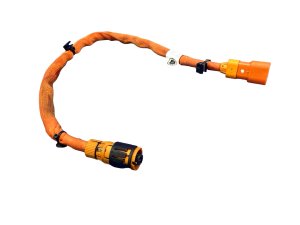
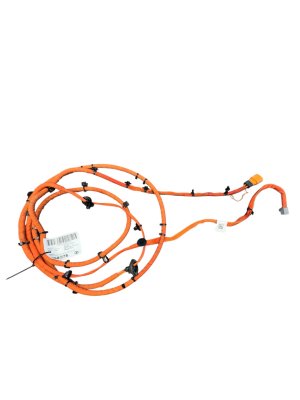
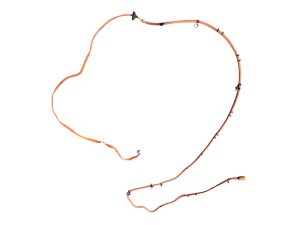
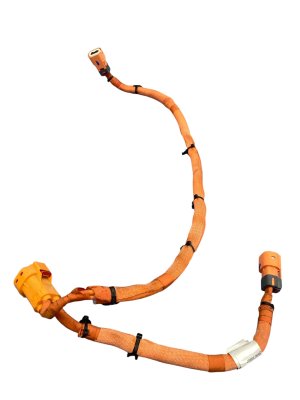
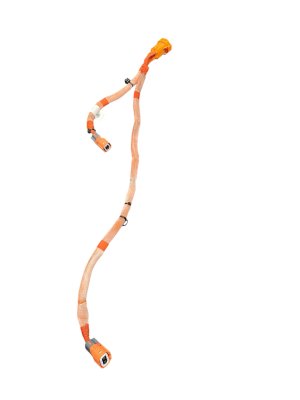
- Damage to the Orange Sheathing: Check for any cuts, abrasions, crushing, or signs of heat/melting on the distinctive orange outer casing. Any breach in this sheathing compromises safety and indicates potential damage to the conductors inside.
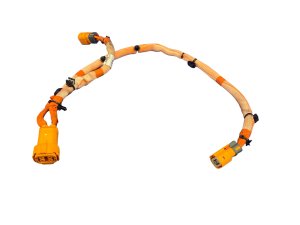
- Connector Integrity: Examine all high-voltage connectors. The plastic housings should be free of cracks. Look inside for any bent, corroded, or discolored pins. Heat damage often appears as melted plastic or a dark, burnt look on the metal pins.
- Mounting Points and Brackets: Ensure all plastic and metal mounting points are intact and not broken. These are critical for securing the harness to the vehicle's chassis and preventing damage from vibration.
- Low-Voltage Connectors: Pay close attention to the smaller, integrated connectors for the HVIL safety loop. These are just as important as the main power plugs. Damage here will prevent the car from starting.
2. Verify The Part Number
Compatibility Warning: The Fisker Ocean was produced in both Front-Wheel Drive (FWD) and All-Wheel Drive (AWD) versions. These drivetrains may use different high-voltage harnesses with different lengths and connection points. The provided OEM part number is FM2915850230B. It is absolutely essential to verify that the part number on the used harness you are buying matches the one on your original part.
3. Why Used OEM is Your Only Choice
For a safety-critical, complex component like an EV high-voltage harness, aftermarket options are not available, especially for a low-volume, defunct brand like Fisker. A used OEM harness is manufactured to the original IATF 16949 automotive standard, ensuring correct materials, shielding, and connector specifications. It is the only reliable way to ensure compatibility and safety.
Cost Comparison
With Fisker's bankruptcy, traditional pricing models do not apply. New parts are generally unavailable, making used OEM parts the primary market.
| Part Type | Estimated Price Range | Notes |
|---|---|---|
| New OEM | Unavailable | Fisker's parts supply chain was disrupted by its bankruptcy. New Old Stock (NOS) may be extremely rare and expensive. |
| New Aftermarket | Not Available | The complexity and safety requirements make it highly unlikely for any aftermarket company to produce this part. |
| Used OEM | $200 - $500+ | This is the most realistic option. Price depends heavily on condition and availability from automotive recyclers. A similar, but different, Fisker Ocean electrical part was seen for around €210. |
| Shop Labor | $600 - $1,200+ | Replacement is a high-skill job requiring certified EV technicians. Labor rates for EV high-voltage work are typically $150-$250 per hour, and this job can take 4-6 hours. |
Replacement Difficulty & Labor
- Difficulty: 5 out of 5 (Professional Technician Only)
- DIY Feasible: No
- Estimated Time: 4-6 hours
Warning: High-Voltage System. This is not a DIY repair. The Fisker Ocean's battery system operates at approximately 400 volts. Attempting to service any component with orange cabling without proper training and safety equipment can result in severe injury or death. The high-voltage system must be properly de-energized using the service disconnect and verified with a CAT III rated multimeter before any work begins.
Frequently Asked Questions (FAQ)
Can I drive my Fisker Ocean with a suspected battery harness problem?
No. If you suspect an issue with the high-voltage harness, the vehicle should not be driven. Symptoms include sudden power loss, which creates a significant risk of a crash. The vehicle should be towed to a qualified repair facility that specializes in electric vehicles.
Why can't I just repair the damaged section of the cable?
High-voltage EV cables are not designed to be spliced or repaired. They have specific electromagnetic interference (EMI) shielding and resistance characteristics that are critical for the proper function and safety of the vehicle's electronics. An improper repair could cause system faults, create a fire hazard, or compromise the HVIL safety circuit.
Does a replacement battery cable harness need to be programmed?
No, the harness itself is a physical component and does not require programming. However, after the replacement is complete, the technician will need to use a diagnostic scan tool to clear any stored fault codes from the vehicle's control modules before the car will operate correctly.
Where is the high-voltage harness located?
The main high-voltage battery cable harness is typically routed underneath the vehicle, protected by underbody panels. It connects the main battery pack (located in the center of the vehicle) to the power electronics and drive unit(s) at the front and/or rear of the car.
Helpful Videos

Technical Specifications
OEM Part Numbers: FM2915850230B
System Voltage: Approx. 400V DC. Shielded high-gauge copper conductors with integrated High-Voltage Interlock Loop (HVIL) wiring.
We Have This Part in Stock

The information in this article is provided for general reference and educational purposes only. Vehicle specifications, procedures, and part compatibility can vary by production date, trim level, and region. Always consult your vehicle's factory service manual and verify part numbers before purchasing or performing repairs. Safety-critical components such as airbags, seat belts, and braking systems should be installed by a qualified professional.
- Fisker Ocean:
- 🎬 Helpful Videos
- 🛍️ Shop This Part
- Known Issues & Recalls on the 2023-2024 Fisker Ocean
- Symptoms of a Failing Battery Cable Harness
- 1. Complete Loss of Power or Inability to Start
- 2. "Electrical System Malfunction" or "Drivetrain Fault" Warnings
- 3. Vehicle Enters Limp Mode or Reduced Power State
- 4. Charging Problems
- Buying a Used 2023-2024 Ocean Battery Harness
- 1. Physical Inspection is Mandatory
- 2. Verify The Part Number
- 3. Why Used OEM is Your Only Choice
- Cost Comparison
- Replacement Difficulty & Labor
- Frequently Asked Questions (FAQ)
- 🎟️ Get 5% Off