

2023-2024 Fisker Ocean 12V Battery Cable & Grounding Issues: A Buyer's Guide
For an orphaned EV with no factory support, understanding the 12V system's weak points is the key to keeping a 2023-2024 Fisker Ocean on the road.
- Before buying a cable, check for simpler, common issues: a loose main ground bolt under the hood, a misaligned negative terminal sensor, and the 5-amp MF06 fuse for the battery sensor.
- Due to Fisker's 2024 bankruptcy, new OEM parts are unavailable, making used, recycled parts the only viable option for most repairs.
- A dead 12V battery or bad ground connection is the most common cause of a 'bricked' Fisker Ocean that is completely unresponsive.
- Complex high-voltage harnesses differ between FWD and AWD models; you must match the OEM part number exactly if replacing one of these. This is not a DIY job.
A Critical Note on the Fisker Ocean

The 2023-2024 Fisker Ocean is an 'orphaned' vehicle following the company's bankruptcy in mid-2024. This means there is no reliable factory support, new parts are generally unavailable, and recall administration is complicated. As a result, the market for used, recycled OEM parts is the primary source for keeping these vehicles operational. This guide focuses on diagnosing and sourcing parts in this unique and challenging context.
Is It Really the Cable? Troubleshooting First

Many electrical issues on the Fisker Ocean mimic a failed battery cable but are caused by simpler, well-documented connection problems. Before buying any parts, check these three critical points, as they are the most common sources of 12V system failure.
1. The Loose Main Ground Bolt
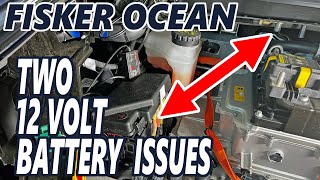
Owners have discovered that a main 12-volt grounding bolt located under the hood can be loose from the factory. This creates a poor connection that can cause intermittent power loss, charging problems, or a completely dead vehicle.
- Location: Under the front hood, trace the main negative cable to where it bolts to the chassis.
- The Fix: Using a 13mm wrench, ensure this bolt is tight. 🎬 Watch: How to fix these common 12V battery issues It should not move at all. This simple check has solved major electrical problems for many owners.
Pro Tip: Access is tight. A low-profile or ratcheting wrench is recommended to avoid stressing nearby coolant pipes.
2. Misaligned Negative Terminal Sensor
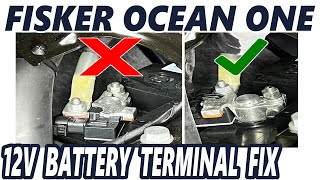
During transatlantic shipping, the 12V batteries were disconnected. When reconnected at the port, the negative terminal, which includes the black plastic Intelligent Battery Sensor (IBS), was sometimes reinstalled incorrectly. A folded or misaligned cable can put stress on the sensor, causing it to report incorrect data, leading to a dead 12V battery and charging issues.
- The Fix: Loosen the two 10mm nuts on the negative terminal, straighten the cable so it goes directly into the sensor without twisting, and ensure the sensor sits flat. 🎬 See this quick 12V battery terminal fix Retighten the nuts.
3. Blown or Loose IBS Fuse (MF06)
A small 5-amp mini fuse, labeled MF06 in the fuse box above the 12V battery, protects the Intelligent Battery Sensor. If this fuse is loose or blown, the system cannot properly monitor and charge the 12V battery, leading to frequent 'low battery' warnings and a dead car.
- The Fix: Pull the MF06 fuse. Check if it's blown and replace it if necessary. Even if it looks good, re-seat it firmly to ensure a solid connection.
Symptoms of a Failing Battery Cable

If you've ruled out the simple fixes above, the cable itself may have failed. Symptoms often overlap with a weak 12V battery.
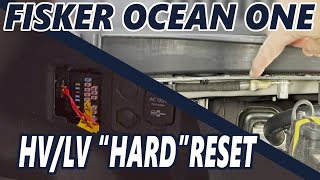
- Vehicle is Completely Dead ('Bricked'): The most common symptom. The doors won't unlock, 🎬 Watch: How to perform a hard reset on your Ocean and there are no lights or sounds, even if the high-voltage battery is charged. This happens because the 12V system is required to 'boot up' the rest of the car.
- Failure to 'Start' or Enter 'Ready' Mode: You get into the car, but it won't shift into drive and may display multiple, cascading error messages on the dashboard.
- Clicking Sounds When Trying to Start: A rapid clicking from under the hood can indicate the relays are trying to engage but don't have enough power due to a poor connection.
- Intermittent Electrical Issues: Flickering lights, a dashboard that randomly resets, or features that work one moment and not the next can point to a cable that is loose or internally damaged.
- High-Voltage Battery Won't Charge: The 12V system controls the charging process. If the 12V system is unhealthy due to a bad cable, the car may refuse to initiate charging for the main HV battery.
- Visible Corrosion or Damage: White, green, or blue crust around the battery terminals, or cracked and frayed cable insulation, are clear signs the cable needs replacement.
Buying a Used 2023-2024 Fisker Ocean Battery Cable

With new parts unavailable, buying a used OEM part is often your only option. Here’s what to look for.
Step 1: Identify Your Cable Type
There are two main types of 'battery cables' discussed for the Ocean. It is critical to know which one you need.
- 12V Ground Cable with IBS: This is the most common failure point. It's a relatively simple part that connects the negative 12V battery terminal to the vehicle chassis.
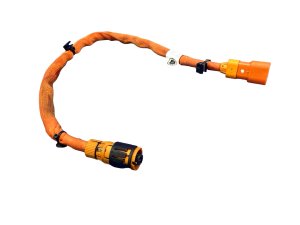
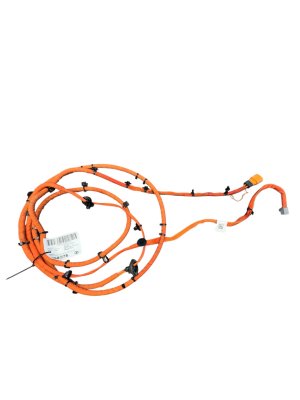
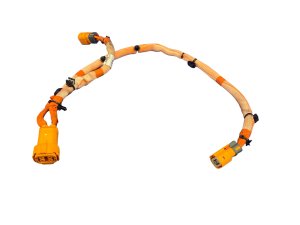
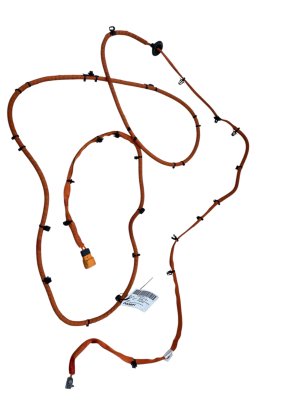
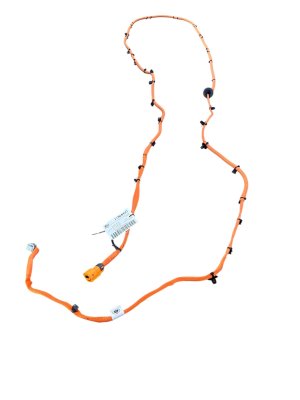
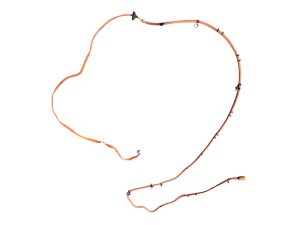
- High-Voltage Harnesses: These are much larger, more complex, and often orange-colored cables. Part numbers like FM2915850230B refer to these harnesses. They differ between Front-Wheel Drive (FWD) and All-Wheel Drive (AWD) models. Replacement of these is NOT a DIY job and requires a qualified EV technician.
Warning: The high-voltage system in the Fisker Ocean can cause serious injury or death if handled improperly. Do not attempt to disconnect or replace any orange high-voltage cables yourself.
Step 2: Physical Inspection Checklist
When buying a used cable, scrutinize the photos or inspect it in person:
- Check the Connectors: Look for any signs of corrosion, melting, or physical damage on the terminal ends.
- Inspect the Intelligent Battery Sensor (IBS): On the negative ground cable, ensure the black plastic sensor housing is not cracked or damaged. This sensor is critical and cannot be easily replaced separately.
- Examine the Cable Insulation: Look for any cuts, cracks, or signs of abrasion that could expose the wires.
- Verify the Part Number: For complex HV harnesses, you MUST match the OEM part number exactly. A harness for a FWD model will not work on an AWD model.
Known Recalls and Technical Service Bulletins
While there are no recalls specifically for the battery cables, numerous related issues exist. These are important for understanding the vehicle's overall electrical fragility.
- NHTSA Campaign 23V-860 / TSB SA1040000208: Addressed a sudden loss of drive power due to software faults in the Vehicle Control Unit (VCU) and Motor Control Unit (MCU).
- NHTSA Campaign 24V466: A software flaw could cause the vehicle to roll away when drivers thought it was in Park.
- TSB TSB-10062408: Software update to improve regenerative braking behavior over bumps.
- TSB SA7010000207: Software update to fix non-compliant dashboard warning lights.
Cost of Replacement
Pricing is volatile due to the company's status. These are rough estimates as of late 2024.
| Part/Service | Estimated Cost | Notes |
|---|---|---|
| New OEM | N/A | Generally unavailable since Fisker's bankruptcy. |
| New Aftermarket | N/A | No significant aftermarket development exists for this model. |
| Used OEM (12V Ground Cable) | $50 - $150 | Price depends on condition and inclusion of the IBS sensor. Sourced from salvage vehicles. |
| Used OEM (HV Harness) | $150 - $500+ | Highly variable. Price depends on complexity and demand. |
| Shop Labor (12V Cable) | $100 - $200 | Estimated 0.5-1.0 hours. Many shops may refuse to work on a Fisker, so call ahead. |
Frequently Asked Questions (FAQ)
Why is my Fisker Ocean completely dead even though the big battery is 100% charged?
This is a classic symptom of a dead 12-volt battery or a bad 12V connection. The car uses the 12V system to power up its computers and connect the main battery. Before assuming the worst, check the simple fixes: the main ground bolt, the IBS fuse, and the negative terminal alignment.
Can I replace the battery cable myself?
It depends. Replacing the 12-volt negative ground cable is a relatively simple job (Difficulty 1/5) that requires basic hand tools. However, replacing any of the large, orange high-voltage harnesses is extremely dangerous and should only be performed by a qualified EV technician (Difficulty 5/5).
What's the difference between all the battery cable part numbers?
The numerous part numbers (e.g., FM2915850220B, FM2915850230B) generally refer to different versions of the complex high-voltage harnesses. The differences are typically based on the vehicle's drivetrain (FWD vs. AWD) and potentially other options. It is absolutely critical to match these part numbers exactly when ordering a used part.
Will a jump start fix my dead Ocean?
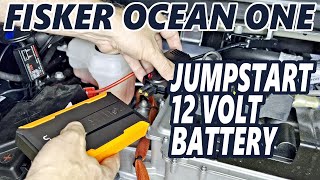
Sometimes. If the 12V battery is simply discharged, a jump start or a 12V battery charger can bring the car back to life, allowing the internal DC-to-DC converter to recharge it. However, if the cause is a bad connection or a failed cable, a jump start may not work or will only be a temporary fix. Some owners report needing a high-amperage charger, not just a trickle charger, to revive a very dead 12V system.
Helpful Videos
Technical Specifications
OEM Part Numbers: 2915850220B 2915850227B FM2915850220B FM2915850223B FM2915850227B FM2915850230B FM2980640020C
The most common failure point is the 12-volt negative ground cable which includes an integrated Intelligent Battery Sensor (IBS). High-voltage harnesses are typically orange and vary between FWD and AWD configurations.
We Have This Part in Stock

The information in this article is provided for general reference and educational purposes only. Vehicle specifications, procedures, and part compatibility can vary by production date, trim level, and region. Always consult your vehicle's factory service manual and verify part numbers before purchasing or performing repairs. Safety-critical components such as airbags, seat belts, and braking systems should be installed by a qualified professional.
- Fisker Ocean:
- 🎬 Helpful Videos
- 🛍️ Shop This Part
- A Critical Note on the Fisker Ocean
- Is It Really the Cable? Troubleshooting First
- 1. The Loose Main Ground Bolt
- 2. Misaligned Negative Terminal Sensor
- 3. Blown or Loose IBS Fuse (MF06)
- Symptoms of a Failing Battery Cable
- Buying a Used 2023-2024 Fisker Ocean Battery Cable
- Step 1: Identify Your Cable Type
- Step 2: Physical Inspection Checklist
- Known Recalls and Technical Service Bulletins
- Cost of Replacement
- Frequently Asked Questions (FAQ)
- 🎟️ Get 5% Off