

2002-2015 Sonata Back Glass: Decoding Antennas, Heat & Solar Tints
This guide covers the critical differences in back glass across three Sonata generations, helping you find the exact, leak-free match for your car.
- Compatibility is determined by generation (2002-05, 2006-10, 2011-15) and features; parts are not interchangeable across generations.
- You must verify the specific features of your glass: heated defroster, integrated radio antenna (standard or diversity), and solar tint.
- Failure of the rear defroster or radio antenna is often the first symptom of a problem, which may not require glass replacement if the cause is a fuse or relay.
- Replacement is a job for professionals due to the specialized tools and techniques required for cutting and applying urethane adhesive to prevent leaks.
Symptoms of Back Glass Failure
Back glass failure isn't always as dramatic as a complete shatter. Often, the integrated electronic components are the first to cause problems. Here’s what to look for:
- Physical Damage: The most obvious failure is a crack or a full shatter from an impact like road debris, hail, or an accident. Tempered glass cannot be repaired like a laminated windshield; any crack or chip requires a full replacement.
- Spontaneous Shattering: Some owners report the back glass shattering for no apparent reason. This can be caused by thermal stress, such as using the defroster on high when the glass is ice-cold or pouring hot water on a frozen window. Microscopic flaws from manufacturing can also be a cause.
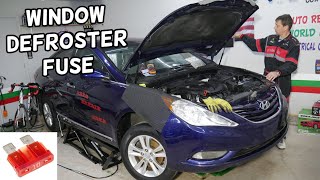
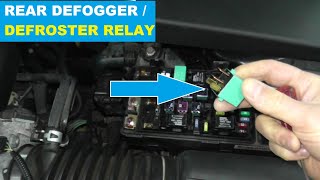
- Defroster Not Working: If your rear defroster fails to clear frost or fog, the issue could be a blown fuse, a bad relay, or a problem with the switch. If only some lines on the grid work, it indicates a break in the conductive lines on the glass itself, often from a scratch or damage. 🎬 Watch: How to repair a broken rear defroster grid On 2010-2015 Sonatas, there are up to three fuses that control the rear defroster system. 🎬 Watch: How to find and replace the rear defroster fuse
- Poor Radio Reception: On models with an integrated antenna, a sudden drop in AM/FM radio quality can point to a problem with the antenna grid in the glass or the amplifier/connector at the edge of the window.
- Water Leaks or Wind Noise: A humming or whistling sound from the rear of the car at speed, or water stains around the headliner, indicates a failed urethane seal around the glass. This requires removal and resealing of the glass.
Buying a Used 2002-2015 Sonata Back Glass: A Buyer's Guide
Purchasing a used OEM back glass is a smart way to save money while ensuring a perfect factory fit. However, due to the many variations, careful verification is essential.
Step 1: Identify Your Sonata's Generation
The back glass is NOT interchangeable between generations. The first step is to confirm your vehicle's model year range:
- Fourth Generation (EF): 2002–2005
- Fifth Generation (NF): 2006–2010
- Sixth Generation (YF): 2011–2015 (includes standard and Hybrid models)
Step 2: Verify Your Exact Glass Features
Within each generation, there are multiple glass options. You must match your original glass exactly. Check for the following features:
- Heated Defroster: Nearly all Sonatas in this range have a heated back glass. You can see the thin, horizontal orange or brown lines printed on the inside of the glass.
- Integrated Antenna: Many Sonatas use the grid on the back glass as the radio antenna. Some versions have a separate antenna, while others have a "diversity antenna" system with elements in both the front and rear glass. A glass without the correct antenna will result in poor or no radio reception.
- Solar Tint: Some higher trims feature solar-controlled glass, which has a specific tint to reduce cabin heat and UV rays. While a non-solar glass will fit, the tint will not match the rest of your vehicle's windows.
- Hybrid vs. Non-Hybrid (2011-2015): The sixth-generation Sonata Hybrid may use different back glass than the standard gasoline models. Always confirm compatibility if you have a Hybrid.
Warning: The most common purchasing error is buying a glass with the wrong antenna configuration. For example, part number 87110-0A000 for the 2006-2010 Sonata is a heated glass specifically without the diversity antenna and without solar tint. Part 87110-4R000 for the 2011-2015 Sonata is specifically with an antenna. Always verify these features on the donor vehicle or with the seller.
Step 3: Physical Inspection Checklist for Used Glass
- Check for Scratches: Deep scratches on the interior side can damage the defroster grid lines, creating dead spots.
- Inspect the Defroster Grid: Look closely at the orange/brown lines. Any visible breaks or flaking means that section of the defroster will not work.
- Examine the Electrical Connectors: Check the tabs and wiring pigtails at the edge of the glass. They should be intact, without corrosion or signs of being forcefully torn off. 🎬 Watch: How to fix a broken defroster grid connector tab
- Look for Chips and Edge Damage: Even small chips, especially near the edge, can compromise the integrity of tempered glass and lead to future failure. Reject any glass with visible edge damage.
Known Issues, Recalls, and Technical Service Bulletins (TSBs)
While there are no direct recalls for the back glass on 2002-2015 Sonatas, there are related issues and recalls for other glass components:
- Panoramic Sunroof Recall (2015-2016 Models): Hyundai recalled certain 2015-2016 Sonatas because the panoramic sunroof panel could detach while driving due to a bonding issue. While this doesn't affect the back glass directly, it's a critical safety check for vehicles with this option.
- Windshield Adhesion Recall (2021 Models): Later model Sonatas were recalled for poor windshield adhesion, which could compromise safety in a crash. This highlights the importance of proper urethane bonding during any glass installation.
- No Widespread Shattering Recalls: Unlike some other Hyundai/Kia models, there have been no widespread recalls for spontaneously shattering back glass on the 2002-2015 Sonata, though individual instances due to thermal shock can occur.
Generation-Specific Details and Part Numbers
Fourth Generation (2002-2005)
Glass for this generation is simpler, but verifying the presence of an integrated antenna is still important.
Fifth Generation (2006-2010)
This generation has several variations. Compatibility is critical. Key part numbers include:
- 87110-0A000: Heated, without diversity antenna, without solar tint.
- 87110-3K020: Check for antenna and solar features.
Sixth Generation (2011-2015)
This generation introduced the Sonata Hybrid and more complex antenna systems.
- 87110-3Q001: Heated, without diversity antenna. Replaces 87110-3Q000.
- 87110-4R000: Heated, with antenna.
- 87110-3S010: Often associated with Hybrid models. Verify features.
Cost of Replacement
The cost to replace a Hyundai Sonata back glass varies significantly based on the source of the part and labor rates.
| Part/Service | Estimated Cost |
|---|---|
| New OEM | $160 - $575+ (part only, depending on features) |
| New Aftermarket | $200 - $450 (part only) |
| Used OEM | $75 - $200 (part only) |
| Shop Labor | $250 - $450 |
Installation Overview
- Difficulty: 5 out of 5
- DIY Feasible: No (Recommended for professionals only)
Replacing a back glass is not a typical DIY project. It requires specialized tools to cut the old urethane adhesive without damaging the paint. The new glass must be primed and set with a new bead of urethane, a process that is critical for preventing leaks and ensuring structural integrity. Improper installation can lead to serious water damage, wind noise, and compromised safety. A professional installer can typically complete the job in under two hours.
Frequently Asked Questions (FAQ)
Can I use a back glass from a different year Sonata?
Only if it is from the same generation (e.g., a 2006 glass on a 2009 Sonata). Glass from a different generation (e.g., a 2010 glass on a 2011 Sonata) will not fit.
My rear defroster doesn't work. Do I need to replace the whole glass?
Not necessarily. First, check the fuses and relays related to the defroster system. If the fuses are good, the problem could be a broken wire or a faulty switch. You only need to replace the glass if the conductive grid lines on the glass itself are physically broken or scratched.
What is a 'diversity antenna' and how do I know if I have one?
A diversity antenna system uses multiple antennas (often in the front and rear glass) and a controller to select the strongest signal for better radio reception. It can be difficult to identify visually. The best way to confirm is by using your vehicle's VIN to get the original build sheet from a dealer or by matching the part number from your original glass.
Why did my back glass shatter for no reason?
This is usually caused by thermal shock. A rapid change in temperature, like using the defroster on high on a very cold day, can create stress in the tempered glass, causing it to shatter. While rare, small, unnoticed manufacturing flaws can also be a cause.
Helpful Videos

Technical Specifications
OEM Part Numbers: FB22652GT FB24687GT 87110-3K010 87110-3K020 87110-3Q001 87110-4R000 87110-4R010 871100A000 871103K020 871103q000 871103Q001 871103Q010 871103Q011 871103S010 871104R000
Tempered safety glass, may include integrated heating elements (defroster), integrated AM/FM antenna, and solar tinting.
We Have This Part in Stock



The information in this article is provided for general reference and educational purposes only. Vehicle specifications, procedures, and part compatibility can vary by production date, trim level, and region. Always consult your vehicle's factory service manual and verify part numbers before purchasing or performing repairs. Safety-critical components such as airbags, seat belts, and braking systems should be installed by a qualified professional.
- Hyundai Sonata:
- 🎬 Helpful Videos
- 🛍️ Shop This Part
- Symptoms of Back Glass Failure
- Buying a Used 2002-2015 Sonata Back Glass: A Buyer's Guide
- Step 1: Identify Your Sonata's Generation
- Step 2: Verify Your Exact Glass Features
- Step 3: Physical Inspection Checklist for Used Glass
- Known Issues, Recalls, and Technical Service Bulletins (TSBs)
- Generation-Specific Details and Part Numbers
- Fourth Generation (2002-2005)
- Fifth Generation (2006-2010)
- Sixth Generation (2011-2015)
- Cost of Replacement
- Installation Overview
- Frequently Asked Questions (FAQ)
- 🎟️ Get 5% Off