

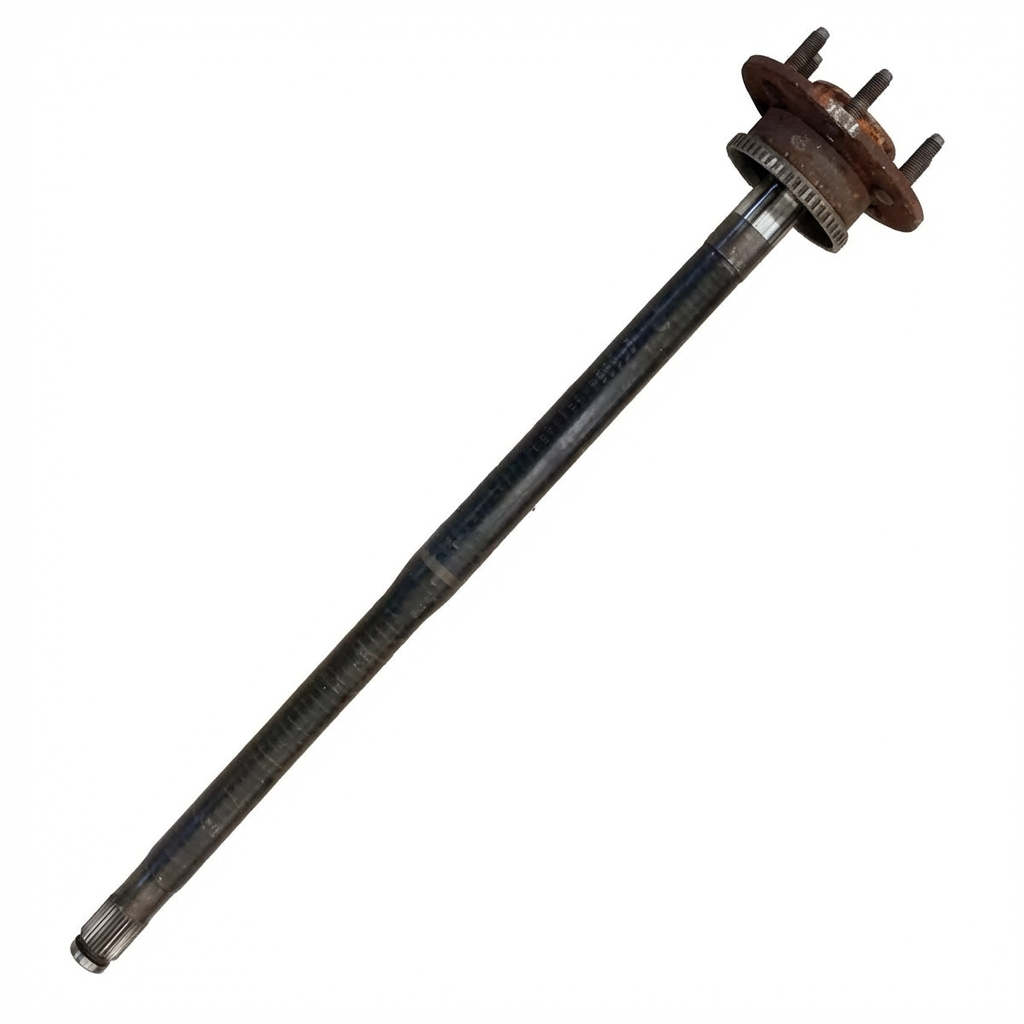
2010-2014 Honda Insight Axle Shafts: Clicking Noises, Vibrations, and Replacement
This guide covers the common failure symptoms, replacement costs, and what to look for when buying a used axle shaft for your second-generation Honda Insight.
- The most common symptom of failure is a clicking or popping noise when making sharp turns at low speed.
- Always replace the single-use spindle (axle) nut during installation and torque it to the proper specification to avoid safety issues and wheel bearing damage.
- When buying a used axle, the condition of the rubber CV boots is the most important factor; they must be free of any cracks or tears.
- A vibration that occurs only during acceleration is a strong indicator of a failing inner CV joint.
Symptoms of a Failing Axle Shaft

A failing axle shaft on a 2010-2014 Honda Insight will almost always provide clear, audible warnings. The most common cause of failure is a torn or cracked CV boot, which allows the protective grease to leak out and lets in dirt and moisture, quickly destroying the joint.
Clicking or Popping Noises When Turning
This is the most classic symptom of a bad outer CV joint. You will hear a rhythmic clicking or popping sound that corresponds with wheel speed, and it's most noticeable during slow, sharp turns, like when pulling out of a parking spot or making a U-turn. If the noise is louder when turning left, the right-side axle is likely the culprit, and vice-versa. To diagnose, find an empty parking lot, roll down your windows, and drive in tight circles in both directions to confirm which side is making the noise.
Vibration While Accelerating
A vibration or shudder that is felt through the car, especially during acceleration, often points to a problem with the inner CV joint. This vibration may lessen or disappear when you are cruising at a steady speed. As the joint wears, it develops excessive play, causing it to become unbalanced as it tries to handle the engine's torque.
Clunking Sound When Shifting
A 'clunk' or 'thud' sound when you shift the car from Park to Drive or Reverse can indicate excessive play in worn CV joints. This happens as the slack in the worn joint is suddenly taken up when power is applied.
Visible Grease on the Inner Wheel or Undercarriage
One of the easiest visual checks is to look for evidence of a torn CV boot. If a boot is torn, the spinning axle will fling dark, heavy grease onto the inside of your wheel, the suspension components, and the underbody of the car. This is a sure sign that the joint has lost its lubrication and is failing.
Pro Tip: Sometimes other issues can be mistaken for a bad axle. A ticking noise can also be caused by low engine oil or a loose drive belt tensioner. However, if the noise is directly related to turning, the CV axle is the most likely cause.
Buying a Used 2010-2014 Insight Axle Shaft

For many owners, a quality used OEM axle shaft is a smart choice, often providing better longevity and fit than a cheap, new aftermarket part. New aftermarket axles can sometimes cause vibrations due to less precise manufacturing and balancing. When inspecting a used axle, here’s what to look for:
- Inspect the CV Boots: This is the most critical inspection. Squeeze and flex both the inner and outer rubber boots. They should be pliable and free of any cracks, splits, or pinholes. If a boot is damaged, the joint is compromised. Do not buy it.
- Check for Joint Play: Hold the shaft and try to move the joint housing. There should be very minimal in-and-out play and no noticeable 'clunking' or looseness. The joint should articulate smoothly throughout its range of motion without binding.
- Examine the Splines and Threads: Check the splines on both ends of the axle. They should be clean, straight, and free of damage. Ensure the threads on the outer end (where the axle nut goes) are not stripped or cross-threaded.
- Mileage vs. Condition: While lower mileage is always better, the physical condition of the boots is more important. An axle from a 120,000-mile car with perfect boots is a better bet than one from a 60,000-mile car with cracked or torn boots.
Known Issues, Recalls, and TSBs
The 2010-2014 Honda Insight was subject to several recalls, primarily for Takata airbag inflators. Searches for NHTSA records and Technical Service Bulletins (TSBs) did not reveal any specific recalls or widespread issues directly concerning the axle shafts for this generation of Insight. Most axle failures are due to normal wear and tear, typically initiated by a damaged CV boot.
Replacement Overview

Replacing an axle shaft is considered an intermediate-level DIY job. It requires safely lifting and supporting the vehicle and having the right tools. If you've done brake jobs or replaced struts before, you can likely handle this repair.
Related Parts to Replace
It is highly recommended to replace a few small parts at the same time to ensure a safe and lasting repair:
- Spindle Nut (Axle Nut): This is a one-time-use part. Always use a new spindle nut and torque it to the correct specification. Reusing the old nut is a major safety risk.
- Transmission Axle Seal: When you pull the old axle out of the transmission, it's a good time to replace the seal to prevent future leaks.
- Lower Ball Joint Cotter Pin: You will need to separate the lower ball joint to remove the axle. Always use a new cotter pin upon reassembly.
Critical Torque Specifications
Proper torque is essential for safety and to prevent damage to the new parts, especially the wheel bearing. Do not use an impact gun to tighten the axle nut.
| Component | Torque Spec |
|---|---|
| Front Axle (Spindle) Nut | 181 ft-lbs (245 N-m) or 134 ft-lbs (182 N-m) |
| Lower Ball Joint Castle Nut | 43 ft-lbs (58 N-m) |
| Tie Rod End Castle Nut | 40 ft-lbs (54 N-m) |
Warning: There are conflicting torque specs found for the main axle nut. One source from a detailed replacement video states 181 ft-lbs, while another technical guide lists 134 ft-lbs, which is common for other Hondas like the Fit. Always consult the official service manual for your specific vehicle if possible. Over-torquing can destroy the wheel bearing.
Cost Comparison
The cost to replace a Honda Insight axle shaft can vary significantly based on the parts you choose and whether you do the work yourself.
| Part/Service | Estimated Cost | Notes |
|---|---|---|
| New OEM (Honda) | $840 - $900 per side | Highest quality and price. Part numbers 44306-TF0-N01 (Left) and 44305-TF0-N01 (Right). |
| New Aftermarket | $100 - $175 per side | Prices from major auto parts stores. Quality can vary. |
| Used OEM | $75 - $165 per side | A cost-effective option that retains OEM quality if inspected properly. |
| Shop Labor | $193 - $351 per side | Typically takes 1.5 to 2.5 hours of labor. |
Part Numbers and Fitment
These axle shafts are specific to the 2010-2014 Honda Insight models equipped with the 1.3L hybrid engine and CVT automatic transmission. They are side-specific.
| Position | OEM Part Numbers |
|---|---|
| Driver Side (Left) | 44306-TF0-N01 (replaces 44306-TF0-N00, 44306-TM8-A00, 44306-TM8-A01) |
| Passenger Side (Right) | 44305-TF0-N01 (replaces 44305-TF0-N00, 44305-TM8-A00) |
Frequently Asked Questions (FAQ)
Can I just replace the torn CV boot instead of the whole axle?
While CV boot kits are available, it's generally not recommended. If the boot has been torn for any length of time, dirt and water have already contaminated the joint and caused wear. The labor involved in cleaning and repacking the joint is often close to the cost of a complete new aftermarket or used OEM axle, which is a much more reliable repair.
What is the difference between the driver's side and passenger's side axle?
The two axles are different lengths and are not interchangeable. The driver's side (left) axle is shorter than the passenger's side (right) axle. Always ensure you are purchasing the correct part for the side you are replacing.
Is it safe to drive with a clicking CV axle?
You can drive with a clicking CV joint for a short time, but it should be addressed as soon as possible. The clicking will get progressively worse. In a worst-case scenario, the joint can fail completely, which would cause the vehicle to lose power to that wheel and leave you stranded. A complete failure at speed could be extremely dangerous.
Do I need a wheel alignment after replacing an axle shaft?
Technically, replacing an axle shaft itself does not change the alignment angles. However, because the process involves separating suspension components like the lower ball joint and tie rod end, it is a good idea to have the alignment checked to ensure everything is still within specification and to prevent uneven tire wear.
Technical Specifications
OEM Part Numbers: 44306-TF0-N01 44306-TF0-N00 44306-TM8-A00 44306-TM8-A01 44305-TF0-N01 44305-TF0-N00 44305-TM8-A00
Fits 2010-2014 Honda Insight with 1.3L Hybrid engine and CVT. Axle Nut Torque: 134 ft-lbs or 181 ft-lbs (consult service manual). Left and Right sides are different lengths and are not interchangeable.
We Have This Part in Stock

The information in this article is provided for general reference and educational purposes only. Vehicle specifications, procedures, and part compatibility can vary by production date, trim level, and region. Always consult your vehicle's factory service manual and verify part numbers before purchasing or performing repairs. Safety-critical components such as airbags, seat belts, and braking systems should be installed by a qualified professional.
- Honda Insight:
- 🛍️ Shop This Part
- Symptoms of a Failing Axle Shaft
- Clicking or Popping Noises When Turning
- Vibration While Accelerating
- Clunking Sound When Shifting
- Visible Grease on the Inner Wheel or Undercarriage
- Buying a Used 2010-2014 Insight Axle Shaft
- Known Issues, Recalls, and TSBs
- Replacement Overview
- Related Parts to Replace
- Critical Torque Specifications
- Cost Comparison
- Part Numbers and Fitment
- Frequently Asked Questions (FAQ)
- 🎟️ Get 5% Off