

1995-1997 Buick Riviera Axle Shaft: Supercharged vs. Standard & Failure Diagnosis
Learn to identify clicking and clunking noises and ensure you buy the correct axle for your supercharged or naturally aspirated 3.8L V6.
- Crucially, you must verify if your Riviera is Supercharged or Naturally Aspirated; the axle shafts are different and not interchangeable.
- The most common failure symptom is a rhythmic clicking noise during sharp, low-speed turns, which indicates a bad outer CV joint.
- When buying a used axle, the most important inspection is checking the rubber CV boots for any tears or cracks, as this is the primary cause of failure.
- Always use a new axle nut and torque it to the correct specification (107 ft-lbs for 95-96, 151 ft-lbs for 97) to prevent wheel bearing damage.
Symptoms of a Failing Axle Shaft

A failing axle shaft provides several distinct audible warnings. The location and timing of the noise can help you diagnose whether the inner or outer joint is the problem.
1. Clicking or Popping Noise When Turning
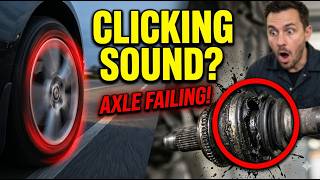
This is the most common symptom of a bad axle shaft and almost always points to a worn outer CV joint. The noise is most noticeable during low-speed, sharp turns, such as in a parking lot. As you turn the wheel, the worn internal components of the joint bind and release, creating a rhythmic clicking or popping sound that matches the speed of the wheel. 🎬 Watch this quick guide on identifying CV axle failure symptoms To test this, find an empty parking lot and drive the car in tight circles in both directions. The noise will typically be more pronounced on the side with the failing axle.
2. Clunking Noise on Acceleration or Deceleration
A loud “clunk” or “thud” when you shift from drive to reverse, or when you get on and off the gas pedal, usually indicates a problem with the inner CV joint. This sound is caused by excessive play or slack in the joint, which connects the axle shaft to the transmission. You may hear this noise even when driving in a straight line.
3. Vibration While Driving
A vibration or shudder that is felt during acceleration can be a sign of a worn inner CV joint. As the joint wears, it can no longer transfer power smoothly, creating a vibration that can be felt in the steering wheel or the floor. A vibration that gets worse as your speed increases can also point to a bent axle shaft or a severely worn joint.
4. Grease on the Inside of the Wheel or Fender Well
The CV joints are protected by flexible rubber boots filled with grease. Over time, these boots can crack, tear, or get punctured. When this happens, the spinning axle slings grease onto the inside of your wheel, tire, and surrounding suspension components. This is a clear visual sign that the boot has failed. Once the grease is gone and contaminants like dirt and water get in, the CV joint will wear out very quickly.
Buying a Used 1995-1997 Riviera Axle Shaft: A Buyer's Guide


A recycled OEM axle shaft can be a reliable and cost-effective alternative to a new part, but careful inspection and verification are essential. The 1995-1997 Riviera has specific variations that make checking for compatibility crucial.
Warning: The most critical compatibility check is determining if your Riviera has the standard 3.8L V6 or the optional Supercharged 3.8L V6. The axle shafts are different between these two engine options and are not interchangeable. The supercharged models used a heavy-duty (HD) version of the transaxle which may require different length or spline counts on the axles.
Critical Compatibility Checks
- Engine Type: Verify if your car is Supercharged or Naturally Aspirated. A supercharged engine will have a large component on top of the engine with visible ribs and a pulley, while the naturally aspirated engine will have a simpler plastic intake manifold. Axles for these two are different.
- Side of Vehicle: Axle shafts are specific to the driver's side (left) and passenger's side (right). They are not interchangeable.
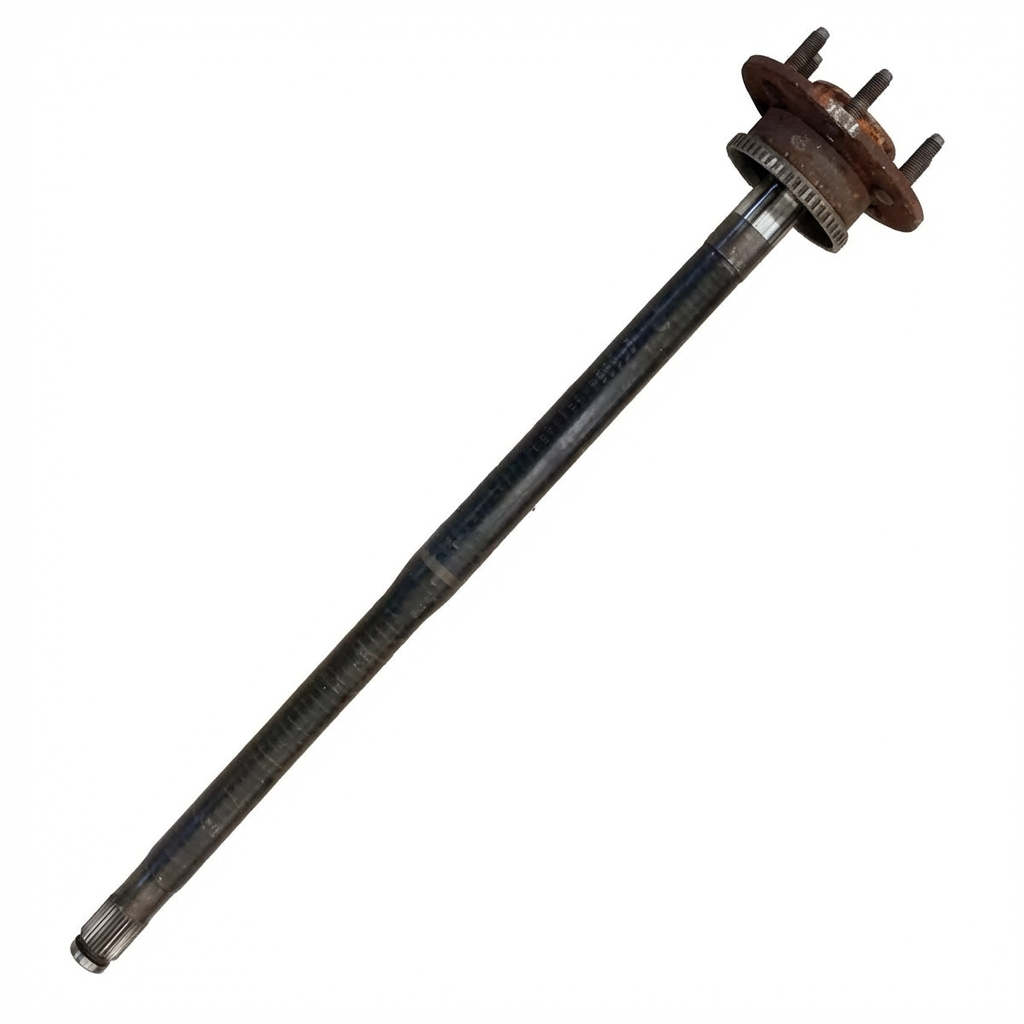
- Spline Count: As a final verification, it is wise to count the splines (the teeth that engage with the hub and transmission) on both the inner and outer ends of your original axle and compare them to the replacement part.
- ABS Ring: Ensure the replacement axle has an ABS tone ring if your vehicle is equipped with an Anti-lock Braking System. This toothed ring is what the wheel speed sensor reads. Most Rivieras of this era have ABS as standard.
Physical Inspection Checklist
When inspecting a used axle shaft, look for the following:
- CV Boots: The rubber boots are the most common failure point. Carefully inspect both the inner and outer boots for any cracks, tears, or pinholes. Squeeze the boots to check for pliability; they should not be dry or brittle. Any sign of damage means the joint is likely contaminated and should be avoided.
- Joint Play: Hold the shaft and try to move the CV joints. There should be no excessive play or clunking. The joint should move smoothly through its range of motion but not feel loose or sloppy.
- Splines and Threads: Check the splines on both ends for any signs of twisting, stripping, or damage. Inspect the threads on the outer end where the axle nut attaches. Damaged threads will make installation impossible.
- Shaft Condition: Look for any signs that the shaft itself is bent or heavily corroded. Minor surface rust is normal, but deep pitting or damage from an accident is a red flag.
Known Issues, Recalls, and TSBs
While there are no specific recalls for the axle shafts on the 1995-1997 Buick Riviera, several recalls were issued for other components on the vehicle. You can check if your specific vehicle is affected by entering your VIN on the NHTSA website. The most common issues reported for this generation of Riviera often relate to engine sensors (like the crankshaft position sensor), intake manifold gaskets, and the anti-theft system, rather than the axles themselves. However, the axle boots are a common wear item, and their failure is the primary cause of axle replacement.
Cost Comparison: New vs. Used Axle Shafts
Replacing a CV axle involves both parts and labor costs. Opting for a used OEM part can offer significant savings over a new part from the dealer.
| Part Type | Estimated Cost (Part Only) |
|---|---|
| New OEM | $250 - $500+ (Often discontinued and hard to find) |
| New Aftermarket | $70 - $150 |
| Used OEM | $50 - $100 |
| Shop Labor | $150 - $350 per side |
Replacement Overview & Torque Specs

Replacing a CV axle is considered an intermediate-level DIY task. It requires safely lifting and supporting the vehicle and having the right tools, including a high-torque wrench or breaker bar for the axle nut.
The general process involves:
- Safely raise and support the vehicle on jack stands and remove the wheel.
- Remove the large axle nut from the center of the wheel hub. This nut is very tight and may require a breaker bar.
- Separate the lower ball joint from the steering knuckle to allow the knuckle to be pulled away from the axle.
- Push the outer end of the axle out of the wheel hub.
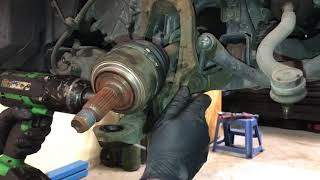
- Use a pry bar to carefully pop the inner end of the axle out of the transaxle. 🎬 See how to replace an axle shaft in this walkthrough A small amount of transmission fluid may leak out.
- Installation is the reverse of removal. Be careful not to damage the new axle's seals when inserting it into the transaxle.
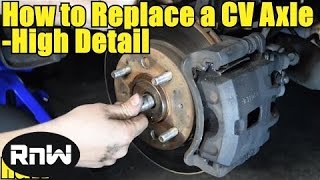
Pro Tip: Always use a new axle nut upon reassembly. These are typically single-use, torque-to-yield nuts. 🎬 Watch this detailed step-by-step video on removing and replacing a CV axle Failure to properly torque the axle nut can lead to premature wheel bearing failure.
Important Torque Specs
Torque specifications are critical for a safe and lasting repair. While specs can vary slightly, these are common values for this platform.
| Fastener | Torque Value | Source |
|---|---|---|
| Axle Nut (1995-1996) | 107 ft-lbs (145 Nm) | |
| Axle Nut (1997) | 151 ft-lbs (205 Nm) | |
| Wheel Lug Nuts | 100 ft-lbs (135 Nm) |
Frequently Asked Questions (FAQ)
Can I drive with a bad axle shaft?
It is not recommended. While the car may be drivable for a short time with a clicking noise, the joint will continue to degrade. If the axle fails completely, the vehicle will lose power to that wheel and you will be stranded. A broken axle can also potentially damage other nearby components.
What's the difference between an axle shaft, CV axle, and half-shaft?
These terms are often used interchangeably to describe the same part: the shaft that connects the transaxle to the wheel in a front-wheel-drive vehicle.
Do I need to replace axle shafts in pairs?
No, it is not required to replace them in pairs. You typically only need to replace the one that has failed. However, since both axles have been subjected to the same mileage and conditions, it's not uncommon for the other side to fail soon after the first. If you are paying for labor, it may be more cost-effective to replace both at the same time.
What happens if I install the wrong axle (Supercharged vs. Naturally Aspirated)?
The axle will likely not fit. It may be the wrong length or have a different spline count at the inner or outer end, making installation impossible. The 1995-1997 Riviera used different versions of the 3800 V6 engine (Series I and Series II) and different transaxles (4T60-E and the 4T65-E HD), which leads to these component differences.
Helpful Videos
Technical Specifications
OEM Part Numbers: 10399690 10399694 26035205 26043431 26045743 26054529 26054531 26054566 26054707 26055092 26060113 26063202 26063203 26063205 26073384
Axle Nut Torque (1995-1996): 107 ft-lbs (145 Nm). Axle Nut Torque (1997): 151 ft-lbs (205 Nm). Variations exist for Supercharged vs. Naturally Aspirated models.
We Have This Part in Stock

The information in this article is provided for general reference and educational purposes only. Vehicle specifications, procedures, and part compatibility can vary by production date, trim level, and region. Always consult your vehicle's factory service manual and verify part numbers before purchasing or performing repairs. Safety-critical components such as airbags, seat belts, and braking systems should be installed by a qualified professional.
- Buick Riviera:
- 🎬 Helpful Videos
- 🛍️ Shop This Part
- Symptoms of a Failing Axle Shaft
- 1. Clicking or Popping Noise When Turning
- 2. Clunking Noise on Acceleration or Deceleration
- 3. Vibration While Driving
- 4. Grease on the Inside of the Wheel or Fender Well
- Buying a Used 1995-1997 Riviera Axle Shaft: A Buyer's Guide
- Critical Compatibility Checks
- Physical Inspection Checklist
- Known Issues, Recalls, and TSBs
- Cost Comparison: New vs. Used Axle Shafts
- Replacement Overview & Torque Specs
- Important Torque Specs
- Frequently Asked Questions (FAQ)
- 🎟️ Get 5% Off