

2011-2014 Challenger & Charger Rear Axle Assembly: Decoding Noises, Ratios & Swaps
A complete guide to understanding the common failure points, identifying the correct part, and saving money on a replacement for your 2011-2014 Dodge Challenger.
- The most critical step before buying is to verify your vehicle's exact gear ratio, differential size (215mm vs 226mm), and type (Open vs. LSD).
- Common failure symptoms include a speed-dependent whine, clunking when shifting, and fluid leaks from the seals.
- Replacement is a difficult, professional-level job due to the component's weight and complexity.
- A used OEM assembly from a compatible Challenger, Charger, or 300 offers significant savings over a new unit, but must be inspected carefully for leaks and gear smoothness.
Symptoms of a Failing Rear Axle Assembly

A failing rear differential rarely stops working suddenly. Instead, it will usually provide several warning signs. Ignoring these can lead to a complete failure, which can cause a loss of power to the wheels or lock up the rear end, creating a serious safety hazard. Listen for these common symptoms:
- Whining or Howling Noise: The most common symptom is a steady whine or howl that changes pitch with vehicle speed. This noise is often most noticeable at highway speeds and can indicate worn gears or low fluid level. Some owners report this is a common characteristic of these cars, but it should be investigated if it gets louder over time.
- Clunking or Grinding: A clunk when shifting from Park to Drive, or a grinding/clicking sound when accelerating or making tight turns, can point to excessive wear inside the differential. This could be from worn gears, bearings, or a problem with the limited-slip clutches.
- Vibrations: A vibration felt in the floor or seat, especially under acceleration or at a steady cruising speed, can be caused by a failing differential or related driveline components like the driveshaft. A TSB for later models noted a similar vibration was caused by issues with the half-shafts or propeller shaft.
- Fluid Leaks: Wetness or drips of thick, dark oil from the rear of the car is a major red flag. Leaks can come from the axle seals (where the half-shafts enter the differential) or the pinion seal (where the driveshaft connects). Low fluid will quickly lead to overheating and catastrophic failure.
- Burning Smell: A strong, burnt odor from the rear of the vehicle suggests the differential fluid is severely overheated. This is a sign of extreme stress and requires immediate attention.
Known Issues, Recalls, and Technical Service Bulletins (TSBs)

While there are no specific recalls for the rear differential assembly itself on 2011-2014 Challengers, related issues and TSBs for similar models exist. A class-action lawsuit was filed for later model year V8 Challengers and Chargers, alleging the rear differentials were not robust enough for the engine's power, leading to premature failure. This suggests that even on earlier models, the differential can be a weak point, especially on high-output V8 versions.
- TSB 03-001-15: Issued for 2015 models, this TSB addressed a slight noise or vibration from the rear of the vehicle, instructing dealers to replace both rear half-shafts.
- TSB 03-008-16: For 2015-2017 models, this bulletin addressed rear axle noise on limited-slip differentials by replacing the axle oil.
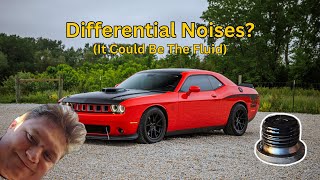
- TSB 9003655: This TSB from 2017 dealt with noise during tight turns on 2015-2016 models, recommending a drain and refill of the differential fluid. 🎬 Watch this guide on replacing your differential fluid to solve noises
- Alternator Recalls: Several recalls (NHTSA recalls 14V-634, 14V-817, 17V-435) were issued for 2011-2014 Challengers concerning sudden alternator failure, which could cause the vehicle to stall unexpectedly. While not a differential issue, it is a critical safety recall for this vehicle generation.
Buying a Used Axle Assembly: What to Check

Purchasing a used OEM rear axle assembly is a great way to save a significant amount of money. However, due to the many variations, careful verification is essential. Here’s what to look for:
1. Verify Your EXACT Configuration
This is the most critical step. You cannot mix and match components without potential problems. You must identify:
- Your Gear Ratio: The most common ratios are 2.65 (V6 models), 3.06 (V8 Automatic), and 3.73 or 3.92 (V8 Manual). The ratio is usually found on a tag on the differential cover or a sticker in the driver's side door jamb. Do not guess; you must verify.
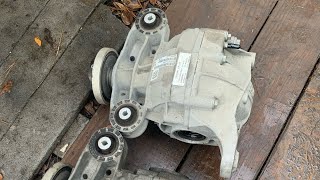
- Differential Size: V6 models typically use a smaller 215mm differential, while V8 models use a larger, more robust 226mm Getrag unit.
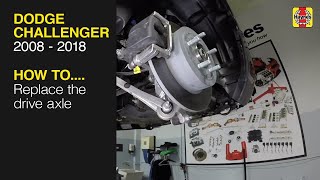
- Differential Type: Determine if you have an 'Open' differential (standard on most V6 and some V8 automatics) or a Limited Slip Differential (LSD), also known as an Anti-Spin Differential (sales code DSA). LSD is standard on most manual transmission cars and optional on others. 🎬 See how to replace the drive axle on a Dodge Challenger
Pro Tip: A used assembly from a 2011-2014 Dodge Charger or Chrysler 300 with the same engine, transmission, and options will often fit a Challenger, which can broaden your search options. Always double-check part numbers.
2. Physical Inspection Checklist
Before purchasing, inspect the used unit thoroughly:
- Check for Leaks: Look for any signs of oil residue around the pinion seal (front) and the axle seals (sides). A clean, dry housing is a good sign.
- Inspect the Housing: Check for cracks, especially around the mounting points, and any signs of heavy impact or corrosion.
- Spin the Input Flange: Turn the flange where the driveshaft connects. It should rotate smoothly with some resistance. Any grinding, notchiness, or excessive looseness is a major red flag.
- Check for Play: Try to wiggle the input flange and the axle stubs. A small amount of rotational play (backlash) is normal, but excessive up-and-down or in-and-out movement indicates worn bearings.
- Ask About the Donor Vehicle: Get the VIN, mileage, and engine/transmission type of the vehicle it came from. Low mileage is always preferable.
Cost Comparison
Replacing a rear differential assembly can be expensive, which makes a quality used OEM part an attractive option.
| Part Type | Estimated Cost | Notes |
|---|---|---|
| New OEM | $2,000 - $4,300+ | Price varies widely based on the specific ratio and differential type. Can be very expensive from a dealer. |
| New Aftermarket | $2,100 - $2,900+ | Often sold as remanufactured units. Quality can vary. High-performance conversion kits can cost over $4,000. |
| Used OEM | $450 - $1,200 | Offers the best value. Price depends on mileage, ratio, and condition. |
| Shop Labor | $600 - $1,200 | This is a labor-intensive job, typically taking 4-6 hours. |
Replacement Overview

Replacing the rear differential assembly is a difficult and heavy job, best suited for experienced mechanics with the proper tools.
- Difficulty: 5 out of 5 (Professional Level)
- Tools Required: Vehicle lift or multiple heavy-duty jack stands, transmission jack, extensive socket and wrench set (including large sizes), pry bars, torque wrench, and possibly an Allen socket set.
- General Procedure: The process involves supporting the vehicle, removing the rear wheels and exhaust components, disconnecting the driveshaft and both rear axle half-shafts, and then unbolting the heavy differential carrier from the rear subframe. Some mechanics have found ways to do this without dropping the entire subframe, but it is a tight fit. 🎬 Watch a full step-by-step Dodge Challenger rear end replacement
Warning: The differential assembly is extremely heavy, weighing over 100 pounds. Attempting to remove it without a proper transmission jack can lead to serious injury or damage to the part.
Frequently Asked Questions (FAQ)
Can I upgrade my V6 Challenger to a V8 differential?
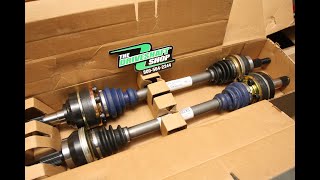
Yes, this is a common upgrade, but it is not a simple bolt-in swap. You will typically need the larger 226mm differential from a V8 car, the corresponding axle half-shafts (which are thicker), and potentially the driveshaft from the V8 model as well. It's a popular way to get a stronger rear end and a more aggressive gear ratio.
What's the difference between an Open and a Limited Slip Differential (LSD)?
An open differential always sends equal torque to both wheels. If one wheel is on ice and spinning, the other wheel on dry pavement gets almost no power. A Limited Slip Differential (LSD) can detect wheel slip and automatically send more power to the wheel with more traction, which greatly improves performance and traction in slippery conditions.
What kind of fluid does the Challenger differential need?
The differential requires a specific synthetic gear oil, typically 75W-90 or 75W-140 depending on the application. If you have a Limited Slip Differential (LSD), you MUST also add a special friction modifier additive. Failure to add the modifier will cause chattering and binding during turns. Always check the specific requirements for your model.
Is a whining noise from the rear always a bad differential?
Not always, but it's the most likely cause. Whining that changes with vehicle speed is almost always related to the gears in the differential. However, a bad wheel bearing can also make a howling noise, but it will typically change when you turn or swerve from side to side. A failing driveshaft center support bearing can also cause grinding or thumping noises under the car.
Helpful Videos
Technical Specifications
OEM Part Numbers: 04578732AC 04578733AB 04593844AA 04593853AA 04593854AF 04593854AG 04593854AH 04593854AI 04779208AB 04779572AA 05038237AC 05038237AD 05038237AE 05038237AG 05038237AH 05038237AI 68085306AA
Common Gear Ratios: 2.65, 3.06, 3.73, 3.92. Differential Sizes: 215mm (V6), 226mm Getrag (V8). Types: Open or Limited Slip (LSD).

The information in this article is provided for general reference and educational purposes only. Vehicle specifications, procedures, and part compatibility can vary by production date, trim level, and region. Always consult your vehicle's factory service manual and verify part numbers before purchasing or performing repairs. Safety-critical components such as airbags, seat belts, and braking systems should be installed by a qualified professional.
- Dodge Challenger:
- 🎬 Helpful Videos
- Symptoms of a Failing Rear Axle Assembly
- Known Issues, Recalls, and Technical Service Bulletins (TSBs)
- Buying a Used Axle Assembly: What to Check
- 1. Verify Your EXACT Configuration
- 2. Physical Inspection Checklist
- Cost Comparison
- Replacement Overview
- Frequently Asked Questions (FAQ)
- 🎟️ Get 5% Off