

Mercedes Transmission Overheating? Your 2013-2023 AMG GT, E-Class, G-Class & More Cooler Guide
Diagnose transmission overheating, leaks, and shifting problems in your Mercedes-Benz and understand the critical difference between a bad cooler and related wiring issues.
- Transmission overheating symptoms can also be caused by related issues, like the G-Class wiring harness recall (NHTSA 23V-097) or air in the coolant circuits on M256 engines.
- Replacement is not DIY-friendly due to the complex, temperature-sensitive fluid leveling procedure required for the 9G-Tronic transmission.
- A used OEM cooler is a viable option, but it MUST be thoroughly flushed before installation to prevent contaminating your transmission.
- Do not drive if you receive a transmission overheating warning. Pull over safely and have the vehicle towed to prevent catastrophic, multi-thousand-dollar transmission damage.
Symptoms of a Failing Transmission Oil Cooler

A problem with the transmission oil cooler can quickly lead to expensive transmission damage. If you own a 2016-2023 Mercedes-Benz AMG GT, 2019-2023 CLS-Class, 2018-2023 E-Class, 2013-2018 G-Class, or 2018-2023 S-Class, watch for these common symptoms.
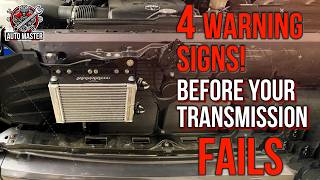
- Transmission Overheating Warning: The most direct symptom is a warning message on your dashboard stating the transmission temperature is too high or advising you to stop and let it cool. This is the vehicle's primary defense against heat damage. 🎬 Watch: 4 warning signs of a failing transmission cooler
- Leaking Red or Brown Fluid: The cooler itself or the lines connected to it can develop leaks. You may find puddles or drips of reddish-brown, oily fluid on the ground under the front of your vehicle.
- Burning Smell: Overheated transmission fluid has a distinct, sharp burning odor. If you smell something like burnt toast after driving, it's a serious sign that your transmission is running too hot.
- Poor Shifting Performance: When fluid overheats, it loses its protective properties. This can cause jerky or hard shifts, hesitation when accelerating, a feeling of gears slipping, or delayed gear engagement.
- Unusual Noises: A transmission suffering from poor lubrication due to overheating may produce whining, clunking, or grinding sounds, especially during gear changes.
- Limp Mode: To prevent catastrophic failure, the vehicle's computer may put the transmission into "limp mode." This will severely limit engine power and available gears, forcing you to seek service.
Known Issues, Recalls, and Vehicle-Specific Information

While this specific transmission cooler does not have a high failure rate, several official recalls and known issues on these vehicles involve components located near the cooler that can cause similar symptoms.
Recall: Front Axle Wiring Harness Chafing (G-Class)
Official Recall: Owners of 2019-2021 Mercedes-Benz G550 and AMG G63 models should be aware of NHTSA Recall 23V-097. The recall states that the front axle wiring harness may be routed too close to an auxiliary oil cooler. Over time, the harness can rub against the cooler, wear through its insulation, and cause electrical shorts. This can lead to the impairment of ABS and ESP functions, increasing the risk of a crash. Dealers will inspect the harness and replace it if necessary.
Recall: Transmission Wiring Harness Corrosion (AMG 53 Models)
Official Recall: Owners of 2019-2022 AMG E53, 2019-2021 AMG CLS53, and 2019-2022 AMG GT53 models are affected by NHTSA Recall 24V445. This recall addresses a transmission wiring harness connection that may not have been sealed correctly, allowing water intrusion. This can lead to corrosion and an electrical short circuit, creating a fire risk. The remedy involves replacing the wiring harness and connector.
Forum-Reported Issues: Overheating on E-Class and CLS-Class
Owners on forums like MBWorld have reported instances of transmission overheating warnings on W213 E-Class and C257 CLS-Class models, particularly the AMG "53" variants with the M256 engine. In some cases, the cause was not a faulty cooler but rather air trapped in the complex auxiliary coolant circuit or low coolant levels in the separate reservoir for this circuit. Bleeding the system properly is a critical step that can resolve these overheating issues.
Part & Vehicle Compatibility Guide
While these vehicles share a similar transmission cooling solution, the exact part number can vary by engine and model year. It is critical to verify the correct part for your specific vehicle. The initial prompt's assertion that all these vehicles use the same part *because* of the M256 engine is not entirely accurate; this cooler design is used across different engine platforms.
| Vehicle | Years | Engine(s) | Common OEM Part Number |
|---|---|---|---|
| Mercedes-Benz AMG GT | 2016-2023 | 4.0L V8 (M178) / 3.0L L6 (M256) | A1975000800 / A7255000100 |
| Mercedes-Benz CLS-Class | 2019-2023 | 3.0L L6 (M256) | A7255000100 |
| Mercedes-Benz E-Class | 2018-2023 | 3.0L L6 (M256) | A7255000100 |
| Mercedes-Benz G-Class | 2013-2018 | 5.5L V8 (M157) / 4.0L V8 (M176) | A1975000800 |
| Mercedes-Benz S-Class | 2018-2023 | 3.0L L6 (M256) | A7255000100 |
Pro Tip: Always verify the part number by your vehicle's VIN with a dealership or trusted parts supplier before purchasing. While these numbers are commonly associated with these models, variations can exist.
Buying a Used Automatic Transmission Oil Cooler

Because this part does not have a high intrinsic failure rate, a used OEM cooler from a reputable recycler is an excellent, cost-effective option. However, careful inspection is mandatory to avoid installing a problematic part.
What to Inspect
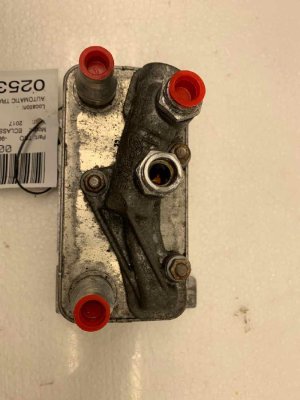
- Physical Damage: Carefully examine the cooler for bent or crushed cooling fins, cracked housings, or damaged mounting tabs. Any sign of impact from a collision is a major red flag.
- Hose Fittings: The inlet and outlet ports are the most critical areas. Ensure they are perfectly round and free of cracks, deep scratches, or stripped threads. Damaged ports will not seal properly.
- Corrosion: Check the aluminum body for signs of heavy white, flaky corrosion, especially if the donor vehicle was from a cold climate where roads are salted.
The Most Important Step: Flushing
Warning: You MUST thoroughly flush a used transmission cooler before installation. The cooler could contain contaminated fluid or metal debris from a catastrophic failure in the donor vehicle's transmission. Use a dedicated cooler flushing solvent and compressed air to clean out the internals. Installing a contaminated cooler will destroy your transmission.
Replacement Difficulty & Cost

While physically swapping the cooler is straightforward for a mechanic, the complete job is complex due to the transmission fluid service that must be performed simultaneously.
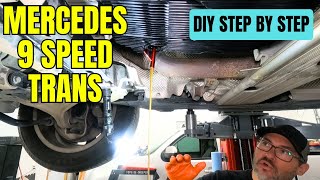
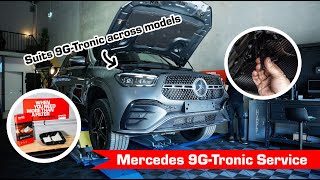
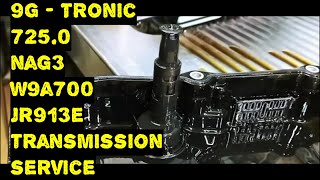
🎬 See this step-by-step 9-speed transmission fluid and filter service- Installation Difficulty: 4 out of 5.
- DIY Feasible: Not recommended for most DIY mechanics.
- Reason: The Mercedes-Benz 9G-Tronic (9-speed) transmission requires a very specific, temperature-dependent procedure to check and set the final fluid level. 🎬 Watch: How to correctly check the 9G-Tronic fluid level It requires a diagnostic scan tool to monitor fluid temperature and a special fluid pump adapter. Overfilling or underfilling the transmission will cause severe damage.
Cost Comparison
Prices can vary based on location and supplier. This table provides estimated costs to help you understand the value of a used OEM part.
| Part/Service | Estimated Cost |
|---|---|
| New OEM Cooler | $300 - $450 |
| New Aftermarket Cooler | $150 - $250 |
| Used OEM Cooler | $75 - $150 |
| Shop Labor (Cooler R&R + Fluid Service) | $250 - $450 |
(Labor estimates from sources. Part prices are estimates based on market research in early 2026.)
Frequently Asked Questions (FAQ)
Can I drive my Mercedes with a bad transmission cooler?
No. Driving with a faulty transmission cooler is not recommended. Overheating can cause rapid, severe, and extremely expensive damage to the internal components of your transmission. If you see an overheating warning, it is best to pull over safely and have the vehicle towed.
My transmission is overheating, but the cooler isn't leaking. What else could it be?
On these Mercedes models, the cooling system is complex. The issue could be air trapped in the auxiliary coolant circuit, a failing auxiliary coolant pump, or a bad sensor. It's essential to have a technician familiar with these systems diagnose the problem correctly rather than immediately assuming the cooler is bad.
How do I check for the G-Class wiring harness recall (23V-097)?
You can check if your specific vehicle is affected by entering your VIN on the NHTSA's recall website (nhtsa.gov/recalls). An authorized Mercedes-Benz dealer can also check this for you and perform the recall service free of charge if it has not been done.
Is a bigger aftermarket cooler a good upgrade?
For most users, even those who drive spiritedly, the factory OEM cooling system is more than adequate when it is functioning correctly. Upgrading to a larger cooler is generally not necessary unless the vehicle is heavily modified for track use. The priority should be ensuring the stock system, including all pumps and coolant circuits, is in perfect working order.
Helpful Videos
Technical Specifications
OEM Part Numbers: 1975000800 A1975000800 7255000100 A7255000100
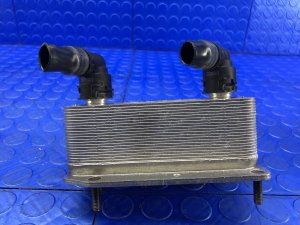
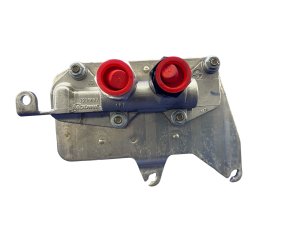
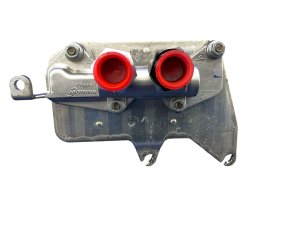
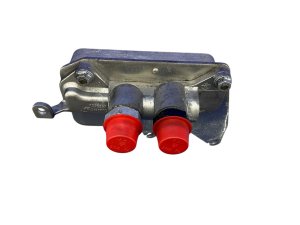
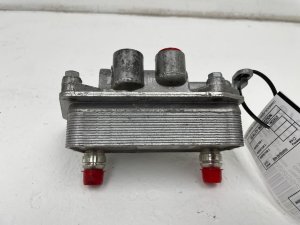
This is a stand-alone air-to-fluid heat exchanger, typically mounted in the front of the vehicle ahead of the main radiator or in a wheel well, designed to cool automatic transmission fluid.
We Have This Part in Stock

The information in this article is provided for general reference and educational purposes only. Vehicle specifications, procedures, and part compatibility can vary by production date, trim level, and region. Always consult your vehicle's factory service manual and verify part numbers before purchasing or performing repairs. Safety-critical components such as airbags, seat belts, and braking systems should be installed by a qualified professional.
- Mercedes-Benz AMG GT:
- Mercedes-Benz CLS-Class:
- Mercedes-Benz E-Class:
- MERCEDES-BENZ ECLASS:
- Mercedes-Benz G-Class:
- Mercedes-Benz S-Class:
- MERCEDES-BENZ SCLASS:
- MERCEDES-BENZ CLS:
- MERCEDES-BENZ CLSCLASS:
- 🎬 Helpful Videos
- 🛍️ Shop This Part
- Symptoms of a Failing Transmission Oil Cooler
- Known Issues, Recalls, and Vehicle-Specific Information
- Recall: Front Axle Wiring Harness Chafing (G-Class)
- Recall: Transmission Wiring Harness Corrosion (AMG 53 Models)
- Forum-Reported Issues: Overheating on E-Class and CLS-Class
- Part & Vehicle Compatibility Guide
- Buying a Used Automatic Transmission Oil Cooler
- What to Inspect
- The Most Important Step: Flushing
- Replacement Difficulty & Cost
- Cost Comparison
- Frequently Asked Questions (FAQ)
- 🎟️ Get 5% Off