

2002-2003 Mazda MPV ABS Module: A Buyer's Guide to Part Numbers & Compatibility
This guide decodes the complex compatibility of 2002-2003 MPV ABS modules, helping you match the correct part to your van's traction control system and wheel size.
- Compatibility is extremely specific. You must know if your MPV has Traction Control (TCS) and its wheel size (15/16" or 17") to find the correct part.
- Always match the OEM part number from your old module to the replacement. The different versions are not interchangeable.
- A used OEM module is a reliable and cost-effective option, but inspect it for connector corrosion before buying.
- Programming is generally not required if you use the correct matching part number, but you must clear fault codes after installation.
- Brake bleeding is required if you replace the entire hydraulic unit, not just the electronic module.
Symptoms of a Failing ABS Module

When the ABS module in a 2002-2003 Mazda MPV begins to fail, it will almost always alert you with dashboard warning lights. Here are the most common signs:
- ABS Warning Light: The most direct indicator of a problem. A solid ABS light means the anti-lock braking system has a fault and is disabled. Your standard brakes will still work, but the anti-lock feature will not activate in an emergency stop.
- TCS/DSC Warning Light: On models equipped with Traction Control (TCS), this light will often illuminate along with the ABS light. Since the TCS relies on the same wheel speed sensors and hydraulic control as the ABS, a fault in the shared module will disable both systems.
- Brake Warning Light: In some cases, the general brake system warning light may also turn on, indicating a potential issue with the hydraulic portion of the ABS unit or low brake fluid.
- Audible Humming or Buzzing: A continuous humming noise from the engine bay, even when the vehicle is off, can be a sign of a failed ABS pump motor relay, causing the pump to run constantly and drain the battery.
- OBD-II Diagnostic Codes: A scan tool will likely reveal chassis codes (starting with 'C') or communication codes (starting with 'U') related to the ABS module or wheel speed sensors.
Buying a Used 2002-2003 MPV ABS Module: A Step-by-Step Guide


Purchasing a used ABS module can save you a significant amount of money, but for the 2002-2003 MPV, it is absolutely critical to buy the correct one. Unlike many other parts, these modules are not one-size-fits-all. Compatibility depends entirely on your vehicle's factory-installed options. Using the wrong module will result in it not working at all.
Step 1: Identify Your Vehicle's Configuration
Before you can find the right part number, you need to know two things about your MPV:
- Does it have Traction Control (TCS)? Look at your dashboard, typically near the driver's left knee. If you have a button that says "TCS" or shows an icon of a car with squiggly lines behind it, your vehicle is equipped with traction control.
- What is your wheel size? Check the sidewall of your tires. The number after the 'R' indicates your wheel diameter (e.g., a tire labeled P215/60R16 is for a 16-inch wheel). These vans came with 15", 16", or 17" wheels from the factory.
Step 2: Match Your Configuration to the Correct OEM Part Number
Once you know your TCS status and wheel size, use this table to find the corresponding OEM part number. You MUST match the part number on your original module to the new or used one you are purchasing. The part number is typically printed on a sticker on the electronic portion of the module.
Warning: The different part numbers are NOT interchangeable. Installing a module for a non-TCS vehicle on a TCS-equipped vehicle (or vice-versa) will not work.
| Vehicle Configuration | OEM Part Numbers | Notes |
|---|---|---|
| Without Traction Control (15" or 16" Wheels) | LD48-43-7AZ, LD49-43-7AZ, LDY8-43-7AZ, LDY9-43-7AZ | This is the most common setup. The 'LDY' numbers are often later service or remanufactured parts that replace the 'LD' numbers. |
| With Traction Control (15" or 16" Wheels) | LD50-43-7AZ, LDY0-43-7AZ | For vehicles that have the TCS system but the smaller wheel sizes. |
| With Traction Control (17" Wheels) | LD51-43-7AZ | This module is specific to top-trim models with 17-inch wheels and TCS. |
Step 3: Inspect the Used Part
When buying a used module, perform a quick physical inspection:
- Check the Connectors: Look for any signs of corrosion (green or white powder) on the electrical pins. Water intrusion is a potential cause of failure.
- Examine the Housing: Ensure there are no cracks or physical damage to the black electronic module or the aluminum hydraulic block.
- Verify the Part Number: Double-check that the number on the part you are buying matches the number required for your vehicle.
Installation and Programming

Replacing the ABS module is a moderately difficult job, primarily because it involves the hydraulic brake system.
The replacement process involves disconnecting the battery, unplugging the electrical connectors, 🎬 Watch this Mazda ABS module replacement and coding video and unbolting the module. On some designs, you can separate the electronic control unit from the hydraulic pump block without opening the brake lines, which saves you the step of bleeding the brakes. However, if you replace the entire assembly, you must bleed the entire brake system afterward to remove any air that has entered the lines. This is critical for safe brake operation.
Does it need to be programmed?
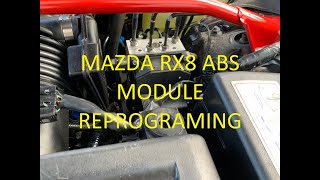
For the 2002-2003 Mazda MPV, programming is generally not required for a used module, provided you have matched the part number exactly. These modules are typically plug-and-play. However, after installation, any stored ABS/TCS fault codes must be cleared from the vehicle's computer using a capable OBD-II scan tool. Some forum users have noted that for certain variants, particularly those with traction control, a dealer or specialized shop may need to perform an initialization procedure, 🎬 See how to initialize and program Mazda ABS sensors but this is less common for this vehicle generation.
Known Issues, Recalls, and TSBs
There are no specific recalls for the ABS module on the 2002-2003 Mazda MPV in the US market. However, there was a recall for some non-ABS models concerning brake pipe layout. There was also a recall for the related 2001-2004 Mazda Tribute where the ABS module connector could allow water entry, leading to a potential electrical short and fire risk, highlighting the importance of checking for corrosion. While no TSBs directly address widespread ABS module failure on the MPV, a TSB for other Mazda models indicates that reprogramming can sometimes resolve communication errors or warning lights.
Cost of Replacement
The cost to replace an ABS module can vary widely depending on the type of part used.
| Part Source | Estimated Part Cost |
|---|---|
| New OEM | $800 - $1,200+ |
| New Aftermarket | $400 - $700 |
| Used OEM | $75 - $250 |
| Remanufactured | $200 - $450 |
| Shop Labor | $110 - $235 |
Pro Tip: Given the high cost of a new OEM unit, a guaranteed used OEM module is often the most cost-effective solution. It ensures perfect compatibility without the high price tag of a new part.
Frequently Asked Questions
Can I drive my MPV with the ABS light on?
Yes, but with caution. When the ABS light is on, your standard braking system will still function, but you will not have the anti-lock feature. This means your wheels can lock up during a panic stop, increasing the risk of skidding, especially on wet or loose surfaces. Your Traction Control System (TCS) will also be disabled.
How do I know if my MPV has traction control?
The easiest way to check is to look for a "TCS" switch on your dashboard, usually to the left of the steering wheel. If you have this button, your vehicle is equipped with traction control, and you must use an ABS module designed for TCS.
What is the difference between the ABS module and the ABS pump?
On the 2002-2003 MPV, they are part of a single assembly. The unit consists of the aluminum hydraulic block with brake line connections (the pump and valve body) and the black plastic electronic box bolted to it (the control module). They are typically sold and replaced as one piece.
Do I need a special tool to bleed the brakes after replacing the ABS module?
While a standard brake bleeding procedure will often work, some professional scan tools have a function to cycle the ABS pump motor. This "automated bleed" procedure helps ensure all trapped air is purged from the hydraulic block. If you experience a spongy pedal after a manual bleed, a visit to a shop with this capability may be necessary.
Helpful Videos
Technical Specifications
OEM Part Numbers: LD48-43-7AZ LD48437AZ LD49-43-7AZ LD49437AZ LD50-43-7AZ LD50437AZ LD51-43-7AZ LD51437AZ LDY0-43-7AZ LDY0437AZ LDY8-43-7AZ LDY8437AZ LDY9-43-7AZ LDY9437AZ
Varies by part number based on Traction Control (TCS) presence and wheel size (15", 16", or 17").

The information in this article is provided for general reference and educational purposes only. Vehicle specifications, procedures, and part compatibility can vary by production date, trim level, and region. Always consult your vehicle's factory service manual and verify part numbers before purchasing or performing repairs. Safety-critical components such as airbags, seat belts, and braking systems should be installed by a qualified professional.
- Mazda MPV:
- 🎬 Helpful Videos
- Symptoms of a Failing ABS Module
- Buying a Used 2002-2003 MPV ABS Module: A Step-by-Step Guide
- Step 1: Identify Your Vehicle's Configuration
- Step 2: Match Your Configuration to the Correct OEM Part Number
- Step 3: Inspect the Used Part
- Installation and Programming
- Does it need to be programmed?
- Known Issues, Recalls, and TSBs
- Cost of Replacement
- Frequently Asked Questions
- 🎟️ Get 5% Off