

2012 Dodge Challenger ABS Module: Warning Lights, Codes, and Replacement Guide
Diagnose the common ABS, ESP, and BAS warning lights and understand the critical programming steps required when replacing the anti-lock brake module.
- A failed ABS module typically triggers the ABS, ESP, and BAS warning lights all at once.
- Any replacement ABS module (new or used) MUST be programmed to the vehicle with a "Proxy Alignment" procedure; it is not plug-and-play.
- Before replacing the module, always test the wheel speed sensors, as a faulty sensor can cause identical warning lights and is a cheaper fix.
- You must exactly match the OEM part number from your original module to the replacement unit to ensure compatibility.
Symptoms of a Failing 2012 Challenger ABS Module

A problem with the ABS module in a 2012 Dodge Challenger will almost always announce itself with a combination of dashboard warning lights. Because the module controls multiple systems, you'll likely see more than just the ABS light.
- ABS, ESP, and BAS Warning Lights: The most common symptom is having the ABS, Electronic Stability Program (ESP), and Brake Assist System (BAS) lights all illuminate on the dashboard simultaneously. This "trifecta" of lights points to a fault within the stability control network, often originating from the ABS module itself.
- ABS Pump Constantly Running: You may hear a buzzing or humming sound from the engine bay, even when the car is off. This is the ABS hydraulic pump motor running continuously due to an internal electronic failure in the module.
- No Communication with Scan Tool: A mechanic may find that their diagnostic scan tool cannot communicate with the ABS module. This indicates a total failure of the electronic portion of the unit.
- Brake Pedal Pulsation or Unpredictable Braking: While less common, a failing module can cause erratic behavior, such as a pulsating brake pedal at low speeds or inconsistent braking feel.
- Wheel Lock-up: In a panic stop, the wheels may lock up and skid, as the primary function of the ABS is disabled. Your brakes will function like those on an older car without ABS.
Common Diagnostic Trouble Codes (DTCs)
A professional scan tool that can read Chrysler-specific chassis codes is necessary for proper diagnosis. Common codes pointing to a failed ABS module include:
- C2200 - Anti-Lock Brake Module Internal Fault. This code is a strong indicator that the module itself has failed.
- C2116 - Pump Motor Fault / Pump Supply Low Voltage. This often points to a failure in the hydraulic pump motor or the electronic circuits that control it.
- U0121 - Lost Communication with ABS Module. This code is set by other computers in the vehicle when they can no longer receive a signal from the ABS module.
Pro Tip: Before condemning the ABS module, always check the wheel speed sensors first. A faulty wheel speed sensor can also trigger the ABS, ESP, and BAS lights and is a much cheaper and easier part to replace. A good scan tool can read live data from each sensor to see if one is malfunctioning.
Known Issues, Recalls, and TSBs

For the 2012 model year, there are no specific recalls or Technical Service Bulletins (TSBs) directly targeting the ABS module for widespread failure. However, there are some related items to be aware of:
- Alternator Recalls: Several recalls (NHTSA 14V-634, 14V-635) were issued for failing alternators on 2011-2014 Challengers. A failing alternator can cause voltage fluctuations that may lead to various electronic module problems, including setting false codes in the ABS system.
- Water Intrusion on Similar Platforms: A recall on 2012-2015 Dodge Journeys (NHTSA 15V-675) noted that water could enter the ABS module through a poorly sealed ground wire, causing corrosion and failure. While not specific to the Challenger, it highlights a potential failure mode for similar Mopar ABS units of this era. Inspecting the module's wiring and connectors for corrosion is always a good idea.
CRITICAL: Programming and Calibration Requirements

Replacing the ABS module on a 2012 Dodge Challenger is not a plug-and-play procedure. The replacement module, whether new or used, must be electronically configured to the vehicle's specific Vehicle Identification Number (VIN) and options.
This process is often called a "Proxy Alignment" or "PROXI" on Chrysler/Dodge vehicles. The proxy alignment is a procedure that allows all the vehicle's computers (ECU, BCM, ABS, etc.) to recognize each other and communicate correctly on the CAN bus network. Without this step, the new ABS module will not function, and the warning lights will remain on.
This programming requires a dealer-level scan tool like a wiTECH or a high-end professional aftermarket scanner from brands like Autel or Launch. Most DIY mechanics will not have access to these tools. Therefore, you must plan for a visit to a dealership or a well-equipped independent repair shop after the physical installation is complete.
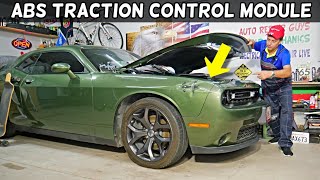
🎬 Watch: See where the ABS module and pump are locatedWarning: Be wary of sellers claiming to offer "pre-programmed" or "plug-and-play" ABS modules. True programming to a specific VIN can only be done when the module is installed in the vehicle. Sending a service your VIN to program the module on a bench is not possible for this component.
Buying a Used 2012 Challenger ABS Module
A used OEM Mopar ABS module can be a reliable and cost-effective alternative to an expensive new unit, provided you know what to look for. Given that internal electronic failure is a common issue, buying from a reputable recycler with a warranty is crucial.
- Verify the Part Number: This is the most important step. There are several part numbers for the 2012 Challenger. You MUST match the part number from your original module exactly. The part number is typically printed on a sticker on the electronic module. Known compatible part numbers include 04779789AC, 68089525AA, 68154622AA, and 68154622AB.
- Check Compatibility: The primary ABS module for this year fits Rear-Wheel Drive (RWD) models that are NOT equipped with Adaptive Cruise Control. Ensure the donor vehicle had the same configuration as yours.
- Physical Inspection: When you receive the part, inspect it carefully. Look for corrosion on the aluminum hydraulic block, especially around the brake line fittings. Check that the electrical connector pins are straight and clean. Avoid any units that show signs of being opened or tampered with.
- Source Vehicle Information: If possible, choose a part from a low-mileage vehicle that was not involved in a front-end collision. A part from a dry, southern or western state is preferable to one from the rust belt to minimize the risk of corrosion.
Cost Comparison
Prices can vary significantly based on supplier and availability. The cost of programming is a required additional expense.
| Part Type | Estimated Price Range |
|---|---|
| New OEM (Mopar) | $800 - $1,200+ |
| New Aftermarket | Not commonly available |
| Remanufactured (Cardone, etc.) | $450 - $600 |
| Used OEM | $300 - $550 |
| Shop Labor (Installation) | $160 - $240 |
| Shop Labor (Programming) | $80 - $180 |
Frequently Asked Questions (FAQ)
Do I have to program a replacement ABS module for a 2012 Challenger?
Yes, absolutely. A replacement module, whether it is new or used, must be programmed to your car's VIN using a procedure called a Proxy Alignment. Without this step, the ABS, ESP, and BAS lights will stay on, and the system will not work.
Can I just replace the electronic module and keep my old pump?
The ABS unit is sold and replaced as a complete assembly, including both the electronic control module and the hydraulic pump/valve body. While it is sometimes physically possible to separate them, it is not recommended. The fault may lie in the pump motor, and replacing the entire tested assembly is the only way to ensure a lasting repair.
Why are my ABS, ESP, and BAS lights all on at the same time?
These three systems are all controlled by the same computer: the ABS module. When the module detects a critical fault in itself, a wheel speed sensor, or another key component, it shuts down all related safety functions and illuminates the corresponding warning lights to alert the driver.
Can an independent mechanic program the new module, or do I have to go to a Dodge dealer?
Many well-equipped independent shops have professional-grade scan tools that can perform the Proxy Alignment procedure on Chrysler/Dodge vehicles. However, it's wise to call ahead and confirm they have the capability before having the work done. A dealership's service center is always a guaranteed, though often more expensive, option.
Helpful Videos
Technical Specifications
OEM Part Numbers: 04779789AC 68089525AA 68154622AA 68154622AB P04779789AC
Fits Rear-Wheel Drive (RWD) models without Adaptive Cruise Control. Assembly includes both the hydraulic control unit (pump) and the electronic control module.

The information in this article is provided for general reference and educational purposes only. Vehicle specifications, procedures, and part compatibility can vary by production date, trim level, and region. Always consult your vehicle's factory service manual and verify part numbers before purchasing or performing repairs. Safety-critical components such as airbags, seat belts, and braking systems should be installed by a qualified professional.
- Dodge Challenger: