

1995-1999 Subaru Legacy Alternator: Solving Whining Noises and Charging Problems
This guide covers common failure symptoms, crucial compatibility checks for plug shapes and amperage, and how to choose the right replacement alternator for your 1995-1999 Subaru Legacy.
- The most critical step is to verify your alternator's electrical plug shape (round vs. oval) before buying a replacement.
- A common failure sign on these Subarus is the 'Brake' and 'Battery' warning lights coming on at the same time.
- Upgrading from the stock 75-amp alternator to an 85-amp version is a direct fit and recommended for better performance.
- A low-mileage used OEM Hitachi alternator is often a more reliable and cost-effective choice than a new, cheap aftermarket part.
Symptoms of a Failing 1995-1999 Legacy Alternator
When your alternator starts to fail, it will give several warning signs. Paying attention to these can prevent you from being stranded with a dead battery.
Whining or Grinding Noises
One of the most common symptoms is a distinct noise from the engine bay. A whining or growling sound that rises and falls with engine RPM is a classic sign of failing alternator bearings. You may notice it's quiet at idle but gets louder as you accelerate. Do not confuse this with a high-pitched squeal, which usually indicates a loose or worn accessory belt that needs tightening or replacement.
Simultaneous 'Brake' and 'Battery' Warning Lights
A unique and well-documented symptom on this generation of Subaru is the illumination of both the battery/charge warning light and the brake warning light on the dashboard at the same time. While it may seem like a brake system issue, this combination almost always points to an internal failure of the alternator, such as a bad diode. The lights may be intermittent at first but will become constant as the alternator fails completely.
Dimming Lights and Electrical Problems
As the alternator's output weakens, it can't supply enough power to all the car's systems. You may notice the headlights and dashboard lights are dim, especially at idle, and then brighten as you rev the engine. Other electrical accessories like the radio, power windows, or heater fan may work intermittently or not at all.
Frequently Dead Battery
A bad alternator cannot properly recharge the battery. If you find yourself needing to jump-start your car frequently, or if the car starts after a jump but dies again shortly after the jumper cables are removed, the alternator is the most likely culprit. A failing alternator will quickly ruin a brand-new battery, so it's important to diagnose the charging system before simply replacing the battery.
Diagnosing the Problem
Before buying a new part, a couple of simple tests can confirm your alternator is the problem.
- Voltage Test: You will need a simple multimeter. With the engine off, touch the multimeter probes to the positive and negative terminals of your battery. A healthy, fully charged battery should read around 12.4 to 12.7 volts.
- Charging System Test: Start the car and let it idle. Test the battery terminals again. With the alternator running and charging the system, the voltage should be significantly higher, typically between 13.5 and 14.7 volts. If the voltage is still in the 12-volt range or lower while running, the alternator is not charging.
Compatibility Warning: Verify Plug Shape and Amperage. This is the most important step before buying a replacement.
Buying a Used 1995-1999 Legacy Alternator
For this specific vehicle, a low-mileage used OEM alternator is often a better choice than a cheap aftermarket remanufactured unit. The original Hitachi units are robust, and many owners find that a used original part outlasts new, non-OEM replacements.
1. Match Your Plug Shape: Round vs. Oval
The most critical compatibility check is the electrical connector plug. Alternators for the 1995-1999 Legacy came with two different plug shapes, often described as 'round' or 'oval'. For most 1995-1998 Legacy models, the correct plug is a 3-pin oval connector. However, variations exist. You must visually inspect the plug on your existing alternator before ordering a replacement. Getting this wrong will mean the new part cannot be connected to your car's wiring harness.
2. Check the Amperage: 75A vs. 85A
These alternators were available in 75-amp and 85-amp versions. The 85A unit is a direct-fit upgrade for the 75A version and provides better charging performance, especially if you have added electrical accessories like a large stereo system. When buying a replacement, opting for an 85A version is a smart choice. The part number or specifications will list the amperage.
3. Physical Inspection
When inspecting a used alternator, check the following:
- Pulley: Spin the pulley by hand. It should spin smoothly and quietly. Any roughness, grinding, or wobble indicates bad bearings.
- Case: Look for signs of excessive corrosion or physical damage. Check for evidence of oil or power steering fluid having leaked onto the alternator, as this can cause premature failure.
- Terminals: The main power terminal and the plug connector pins should be clean and free of corrosion.
4. Mileage and Warranty
An alternator's lifespan is typically 7-10 years or over 80,000 miles, but the original Hitachi units can last much longer. When buying used, look for a part from a vehicle with the lowest mileage possible. Reputable sellers of recycled OEM parts will provide the mileage of the donor vehicle and offer a warranty, which provides protection against a part that fails prematurely.
Cost Comparison: 1995-1999 Legacy Alternator
Prices can vary based on brand, warranty, and supplier. Here are typical cost ranges:
| Part Type | Estimated Cost | Notes |
|---|---|---|
| New OEM | $400+ (if available) | Original Subaru parts are often discontinued and very expensive. A remanufactured unit from Subaru is more common. |
| Remanufactured Aftermarket | $150 - $300 | Commonly available from stores like AutoZone or Advance Auto. Quality can vary greatly by brand. |
| New Aftermarket | $120 - $250 | Quality and longevity can be a gamble compared to OEM. |
| Used OEM (Recycled) | $50 - $100 | Often the best value, providing OEM quality at a low price. Check mileage and warranty. |
| Shop Labor for Replacement | $180 - $270 | The job typically takes 1-1.5 hours of labor. |
Replacement Overview & Torque Specs
Replacing the alternator on a 1995-1999 Legacy is a straightforward job for a DIY mechanic. The alternator is located on the front, top of the engine and is easily accessible.
Pro Tip: While you are replacing the alternator, it is the perfect time to install a new accessory drive belt. Inspect the belt tensioner for smooth operation as well.
Basic Steps:
- Disconnect the negative battery terminal. This is a critical safety step.
- Remove the plastic belt cover (typically held by 10mm bolts).
- Loosen the alternator tensioner lock bolt (a 12mm bolt on the front of the tensioner bracket).
- Turn the tensioner adjustment bolt (the long 12mm bolt on top) counter-clockwise to release tension from the belt.
- Slip the belt off the alternator pulley.
- Disconnect the main power wire (10mm nut) and the electrical plug.
- Remove the main pivot bolt that holds the alternator to the engine block.
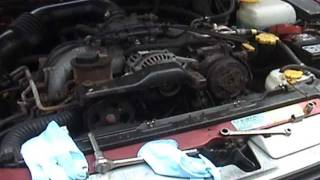
- Installation is the reverse of removal. When tensioning the new belt, a good rule of thumb is that you should only be able to twist the belt about 90 degrees at its longest point. 🎬 Watch this step-by-step alternator replacement guide for a 1995 Legacy
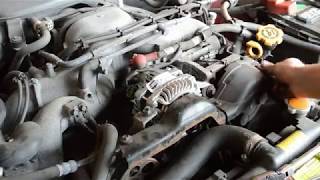
Torque Specs: While specific factory torque specs should be referenced from a service manual, this is a repair where "good and tight" is common practice for the mounting bolts. The tensioner lock nut does not require excessive force. Over-tightening the belt is a common mistake that can destroy the bearings in the new alternator 🎬 See how to swap an alternator on EJ series Subaru engines and other accessories.
Known Issues, Recalls, and TSBs
As of this writing, there are no active recalls or Technical Service Bulletins (TSBs) from Subaru or the NHTSA specifically for alternator failure on the 1995-1999 Subaru Legacy. The primary known issue is the common failure pattern of the 'Brake' and 'Battery' lights illuminating together, and the potential for confusion between the round and oval electrical connectors during replacement.
Frequently Asked Questions
Can I upgrade from a 75A to an 85A alternator?
Yes, this is a common and recommended upgrade. The 85-amp alternator is a direct bolt-on replacement for the 75-amp unit and provides more stable electrical power, especially if you run accessories like aftermarket stereos or lighting.
What causes the whining noise that changes with engine speed?
This is almost always caused by worn-out bearings inside the alternator. The alternator spins thousands of times per minute, and over many years, the internal bearings wear out, creating a distinct whining or grinding sound that is tied to engine RPM.
Can I drive my car with a bad alternator?
It is not recommended. Once the alternator fails, your car runs solely off the battery's stored power. This will only last for a very short time—often just a few miles—before the battery is completely drained, the engine stalls, and you are stranded. If the battery light comes on while driving, head directly to a safe location or repair shop.
Why are both my 'Brake' and 'Battery' lights on?
On this generation of Subaru, the charging and brake warning light circuits are linked in a way that an internal alternator fault (like a failed diode) will trigger both lights. If you have not noticed any issues with your brakes (low fluid, sticking caliper), this light combination is a very reliable indicator that your alternator has failed.
Helpful Videos
Technical Specifications
OEM Part Numbers: LR185-701 LR185-701B LR185-701H LR185-702 23700AA210 23700AA210F 23700AA211 23700AA211RA 23700AA212 23700AA34A 23700AA34ARA
Amperage: 75A or 85A Voltage: 12V Plug Type: 3-Pin Oval (most common, but verify) Pulley: 5-Groove Serpentine
We Have This Part in Stock


The information in this article is provided for general reference and educational purposes only. Vehicle specifications, procedures, and part compatibility can vary by production date, trim level, and region. Always consult your vehicle's factory service manual and verify part numbers before purchasing or performing repairs. Safety-critical components such as airbags, seat belts, and braking systems should be installed by a qualified professional.
- Subaru Legacy:
- 🎬 Helpful Videos
- 🛍️ Shop This Part
- Symptoms of a Failing 1995-1999 Legacy Alternator
- Whining or Grinding Noises
- Simultaneous 'Brake' and 'Battery' Warning Lights
- Dimming Lights and Electrical Problems
- Frequently Dead Battery
- Diagnosing the Problem
- Buying a Used 1995-1999 Legacy Alternator
- 1. Match Your Plug Shape: Round vs. Oval
- 2. Check the Amperage: 75A vs. 85A
- 3. Physical Inspection
- 4. Mileage and Warranty
- Cost Comparison: 1995-1999 Legacy Alternator
- Replacement Overview & Torque Specs
- Known Issues, Recalls, and TSBs
- Frequently Asked Questions
- 🎟️ Get 5% Off