

2005-2008 MINI Cooper & Clubman Alternator: Decoding First & Second Gen Failures
This guide clarifies the critical differences in alternators between the 2005-2006 (R50) and 2007-2008 (R56/R55) MINI Cooper models, helping you diagnose symptoms and choose the correct part.
- Crucially, you must identify if your MINI is a 1st Gen (2005-2006 Cooper) or 2nd Gen (2007-2008 Cooper/Clubman), as they use different alternators.
- Symptoms of failure include a battery light, dimming/flickering headlights, whining noises from the engine, and a frequently dead battery.
- Replacement is a difficult DIY job due to the very tight engine bay, with shop labor costs ranging from $425-$630.
- Before replacing the alternator, always test the battery and check the main power cables for corrosion, as these can cause similar symptoms.
Compatibility Warning: A Tale of Two MINIs

Critical: The vehicles covered in this guide span two completely different MINI generations, and they do not use the same alternator. This is the most common mistake buyers make.
- 2005-2006 MINI Cooper (R50 Hardtop) & 2005-2008 Cooper (R52 Convertible): These are 1st Generation models with a Tritec engine. They typically use a 110 Amp alternator. The OEM part numbers provided (12317550319, etc.) apply to these vehicles.
- 2007-2008 MINI Cooper (R56 Hardtop) & 2008 MINI Cooper Clubman (R55): These are 2nd Generation models with a Prince engine. The alternator is a different part, and the replacement procedure is different. Base models use a 110A or 120A alternator, while turbocharged 'S' models use a 150A unit.
Before buying, you must correctly identify your vehicle's generation. The body style is the easiest way to tell; the 2nd Gen (R56) is slightly larger and more rounded than the 1st Gen (R50).
Symptoms of a Failing MINI Cooper Alternator


A failing alternator rarely dies without warning. It usually gives several clues that it's getting weak. Recognizing these signs can prevent you from being stranded.
1. Battery Warning Light
The most obvious sign is the red battery icon illuminating on your dashboard while driving. This light indicates a problem in the charging system. Your car's computer has detected that the alternator's output voltage is too low to charge the battery and run the electrical system effectively.
2. Dimming or Flickering Lights
One of the classic symptoms is noticing your headlights and dashboard lights dim or flicker. This is most obvious at idle or when you use a high-draw accessory like a power window. As you rev the engine, the lights might brighten, indicating the alternator is struggling to produce enough power at low RPMs.
3. Whining or Grinding Noises
A high-pitched whining sound from the engine bay that changes pitch with engine speed is a common sign of a failing alternator. This is often caused by worn-out bearings inside the alternator. A more severe grinding or rattling noise can indicate that the bearings are completely shot and failure is imminent.
4. Random Electrical Gremlins
A weak alternator provides an unstable power supply, which can cause bizarre behavior in your MINI's sensitive electronics. You might experience the radio cutting out, the power windows moving slowly, or other random warning lights appearing and disappearing. On a 2005 R53, one owner reported the dash lights flickering and gauges going haywire before the car died.
5. Weak or Dead Battery
If the alternator isn't recharging the battery, you'll eventually find yourself with a car that won't start. You might be able to jump-start it, but if the alternator is bad, the car will die again shortly after the jumper cables are removed. A battery that repeatedly dies, even if it's new, is a strong indicator of a bad alternator.
Known Issues, TSBs, and Recalls

While there are no widespread recalls specifically for the alternator on these models, the electrical system of the 2nd Gen (R56) MINI has some documented issues.
- TSB SIM 12 02 07: MINI issued a Technical Service Bulletin for the 2nd Gen R56 regarding the alternator's battery positive cable connection. This indicates that connection issues could mimic alternator failure, so it's worth inspecting the cable for tightness and corrosion before replacing the whole unit.
- Auxiliary Water Pump Recall (Cooper S Models): Many 2007-2011 turbocharged Cooper S models were recalled for a faulty electric auxiliary water pump circuit board that could overheat and cause a fire, even when parked. While this isn't the alternator, it highlights the sensitivity of the electrical system in these cars.
- NHTSA Fire Investigation (Cooper S Models): The NHTSA investigated reports of engine fires in 2007-2008 MINI Cooper S models, with some fires starting while the vehicle was parked and off. The cause was suspected to be electrical or related to the turbocharger oil lines.
Pro Tip: Before condemning the alternator, always test the battery first. A faulty battery can cause many of the same symptoms. A simple voltage test should show around 12.6 volts with the engine off and 13.5 to 14.5 volts with the engine running. If the voltage doesn't increase to ~14V when the engine is on, the alternator is likely the culprit.
Buying a Used Alternator: What to Look For
A quality used OEM alternator can be a smart, cost-effective choice compared to expensive new OEM parts or unreliable, cheap aftermarket units. Here’s how to choose a good one.
- Verify Compatibility First: This is the most critical step. As detailed above, you must know if you have a 1st Gen (R50/R52) or 2nd Gen (R56/R55) MINI. Get the part number from your old alternator if possible, or use your VIN to confirm with a parts supplier. For R56 models, there were even two different suppliers (Bosch and Valeo), which can have different connectors.
- Physical Inspection: Check the alternator housing for any cracks or major corrosion. Look at the electrical connector and the main power post; they should be clean and free of damage or melting.
- Spin the Pulley: The pulley should spin smoothly and freely by hand in one direction. There should be no grinding, roughness, or wobbling. A seized or noisy bearing means the alternator is bad.
- Consider Mileage: While alternators don't have a strict expiration date, their lifespan is finite. A part from a lower-mileage vehicle is always preferable. Failure is most common after 8 years or around 100,000 miles.
- OEM vs. Aftermarket: For a complex electrical component on a European car, a used OEM (Bosch or Valeo) unit is often more reliable than a new, no-name aftermarket part. The voltage regulators in OEM units are designed to work perfectly with the car's computer, avoiding potential compatibility issues.
Replacement Overview & Difficulty
Replacing the alternator on a MINI is a moderately difficult job due to the tight engine bay. It is feasible for an experienced DIY mechanic.
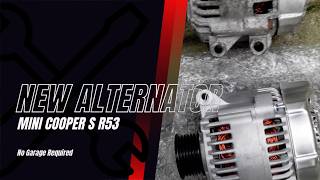
- 1st Gen (R50/R52): This is generally the more difficult of the two. On the supercharged Cooper S (R53), it often requires putting the front end into 'service mode,' which involves removing the bumper and sliding the radiator support forward for access. 🎬 Watch: Step-by-step alternator replacement for the R53 Cooper S. The base model may offer slightly better access.
- 2nd Gen (R56/R55): This replacement can often be done from the top without using service mode, but it is still very cramped. The process involves removing the serpentine belt tensioner to access the alternator bolts. The lower alternator bolt can be particularly difficult to reach. 🎬 See this walkthrough for replacing the alternator on R56 models.
Related Parts: It is highly recommended to replace the serpentine belt and inspect the belt tensioner at the same time you replace the alternator. The belt has to come off anyway, and a worn belt or weak tensioner can cause charging problems and noise.
Cost to Replace a MINI Cooper Alternator
The cost can vary significantly depending on the parts you choose and who does the work. Shop labor estimates are generally high due to the complexity of the job.
| Part/Service | Estimated Cost |
|---|---|
| New OEM Alternator | $650 - $1,100 |
| Remanufactured Alternator | $210 - $500 |
| Used OEM Alternator | $50 - $150 |
| Shop Labor | $425 - $630 |
| Total Professional Job (with Reman Part) | $700 - $1,200+ |
Frequently Asked Questions
Can I drive my MINI with a bad alternator?
No. Once the battery light comes on, you have a very limited amount of time before the battery is completely drained and the engine stalls. Driving is not recommended, as you could get stranded in an unsafe location. The car will run for as long as the battery has reserve power, which could be minutes or less.
What is the difference between a base Cooper and Cooper S alternator?
The main difference is the amperage rating. On 2nd Gen (R56) models, the turbocharged Cooper S requires a more powerful 150 Amp alternator to handle the higher electrical load, while the base model uses a 110 Amp or 120 Amp unit. Using the wrong amperage will cause charging problems.
Why are my new battery and alternator failing?
If you have replaced both the battery and alternator and are still having issues, there could be an underlying electrical problem. Check for a parasitic draw (something draining the battery when the car is off), a bad ground strap, or a corroded positive battery cable. On R50/R53 models, a failing electric power steering pump has been known to cause strange electrical issues that can mimic alternator failure.
Do I need to put my MINI in 'service mode' to change the alternator?
For 2nd Gen (R56/R55) models, it is often possible to replace the alternator from the top without using service mode, though it is very tight. For 1st Gen (R50/R52) models, especially the Cooper S, using service mode is often necessary to get enough clearance to work.
Helpful Videos
Technical Specifications
OEM Part Numbers: 12317523897 12317550319 12317550997 12317559223
Amperage: 110A (for 1st Gen Base and 2nd Gen Base models), 150A (for 2nd Gen 'S' models). Voltage Output (when running): ~13.5V - 14.5V. Two main suppliers for 2nd Gen: Bosch and Valeo.
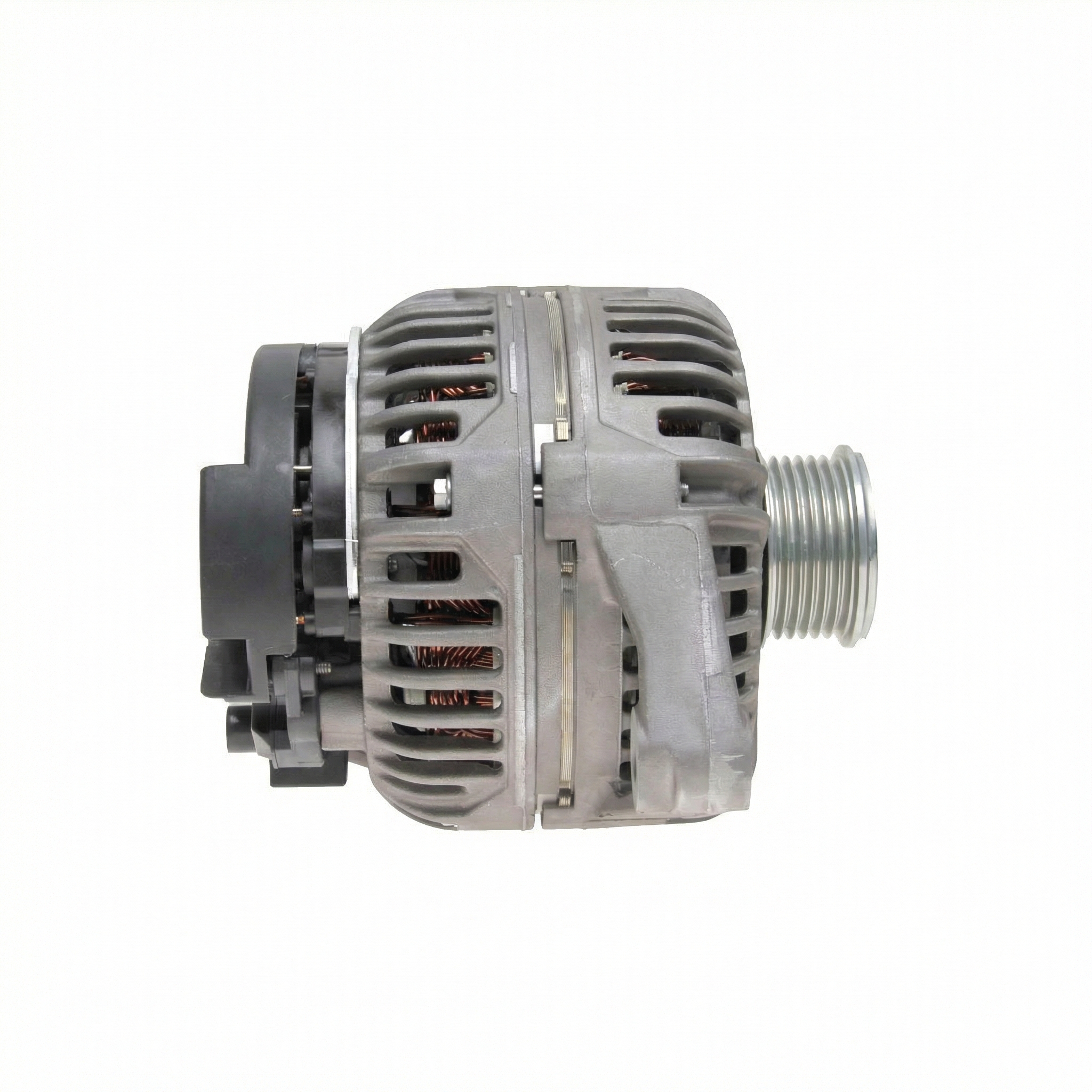
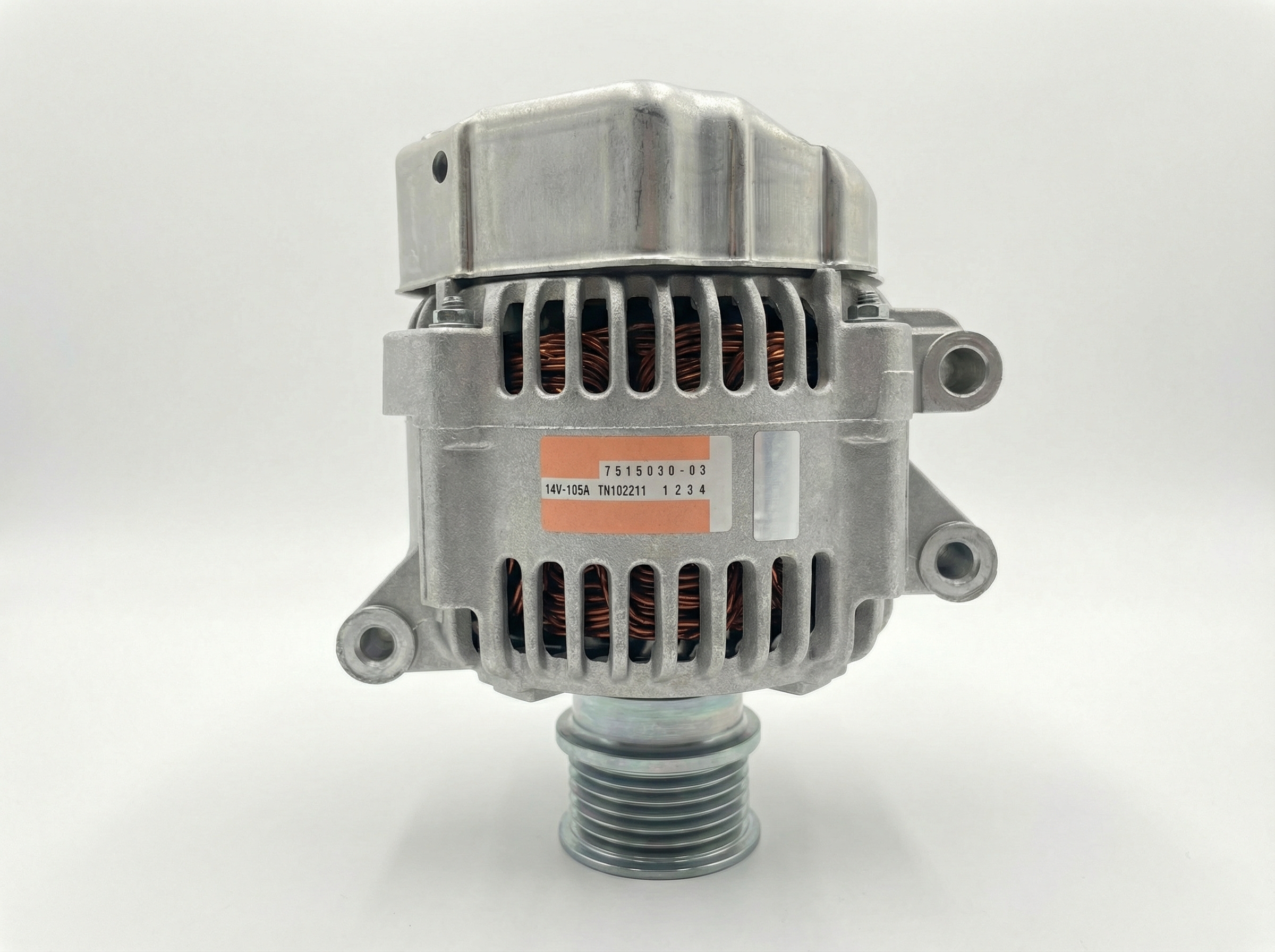
We Have This Part in Stock




The information in this article is provided for general reference and educational purposes only. Vehicle specifications, procedures, and part compatibility can vary by production date, trim level, and region. Always consult your vehicle's factory service manual and verify part numbers before purchasing or performing repairs. Safety-critical components such as airbags, seat belts, and braking systems should be installed by a qualified professional.
- MINI Mini Cooper:
- MINI Mini Cooper Clubman:
- 🎬 Helpful Videos
- 🛍️ Shop This Part
- Compatibility Warning: A Tale of Two MINIs
- Symptoms of a Failing MINI Cooper Alternator
- 1. Battery Warning Light
- 2. Dimming or Flickering Lights
- 3. Whining or Grinding Noises
- 4. Random Electrical Gremlins
- 5. Weak or Dead Battery
- Known Issues, TSBs, and Recalls
- Buying a Used Alternator: What to Look For
- Replacement Overview & Difficulty
- Cost to Replace a MINI Cooper Alternator
- Frequently Asked Questions
- 🎟️ Get 5% Off