

1997-2001 Honda Prelude Alternator: Diagnosis, Replacement Costs & Used Buying Tips
This guide covers common failure symptoms, diagnostic tests, replacement costs, and how to choose a reliable used OEM alternator for your 1997-2001 Honda Prelude.
- The most reliable diagnostic is a voltage test: expect ~12.6V with the engine off and 13.8-14.5V with it running.
- A low-mileage used OEM Denso alternator is often more reliable and a better value than a cheap new aftermarket unit.
- Always verify the electrical plug style matches your car's harness, as some early 1997 models may differ.
- It is highly recommended to replace the serpentine drive belt at the same time as the alternator for preventative maintenance.
Symptoms of a Failing 1997-2001 Prelude Alternator


Alternator failure can sometimes seem sudden, but there are usually warning signs. Recognizing them early can prevent you from being stranded.
- Battery Warning Light: The most obvious sign is the battery-shaped warning light on your dashboard. This indicates a problem with the charging system. Some owners report both the battery and brake lights coming on simultaneously.
- Dimming or Flickering Lights: You may notice headlights, dashboard lights, and interior lights dimming, flickering, or even getting excessively bright. This is especially common at idle or when using multiple accessories at once.
- Whining or Grinding Noises: A common symptom is a whining or grinding sound from the engine bay that changes pitch with engine RPM. This often points to failing bearings inside the alternator.
- Slow or Dead Battery: Since a bad alternator can't recharge the battery, you may find your car is difficult to start or the battery is completely dead, requiring frequent jump-starts. If the car starts after a jump but dies again shortly after, the alternator is the likely culprit.
- Electrical Accessory Problems: You might experience issues like power windows moving very slowly, a weak-sounding radio, or other electrical components acting strangely.
- Engine Stalling: If the alternator fails completely while driving, the engine will run off the battery until it's depleted, at which point the engine will stall.
Diagnosing the Problem

Before replacing parts, a few simple tests can confirm if the alternator is the source of your electrical issues.
- Voltage Test: This is the most definitive test. Using a multimeter, check the voltage across your battery terminals.
- Engine Off: A healthy, fully charged battery should read approximately 12.6 volts.
- Engine Running: Start the car. The voltage should jump to between 13.8 and 14.5 volts. If the voltage stays near 12.6V or drops, the alternator is not charging. If it goes much higher (e.g., over 15 volts), the voltage regulator inside the alternator has failed.
- Check the Belt: Inspect the serpentine belt that drives the alternator. A loose, cracked, or glazed belt can slip on the pulley and cause charging problems. Squealing sounds can also point to a worn belt or a bad tensioner.
- Listen for Noises: With the engine running, listen carefully near the alternator for any grinding or whining sounds, which indicate bad internal bearings.
Pro Tip: On some Hondas, a faulty Electronic Load Detector (ELD) unit, located in the under-hood fuse box, can cause charging system problems and trigger a Code 20. While less common than alternator failure, it's worth considering if a new alternator doesn't solve the issue.
Buying a Used 1997-2001 Prelude Alternator
For this generation of Prelude, a quality used OEM alternator is often a better choice than a cheap, new aftermarket part. The original equipment manufacturer (OEM) is Denso, known for high-quality bearings and electronics that last. Many budget aftermarket or remanufactured alternators use lower-grade components that can fail prematurely.
What to Inspect:
- Physical Condition: Avoid units with cracked housings, heavy corrosion, or obvious signs of being dropped.
- Pulley: Spin the pulley by hand. It should spin smoothly with minimal noise or resistance. Ensure it doesn't wobble and that it is the correct 6-groove pulley.
- Electrical Connector: This is a critical check. Carefully inspect the plastic electrical connector plug and compare it to your old unit. Ensure it's not cracked or damaged. Some early 1997 models may have a different plug style, so visual verification is essential.
- Main Power Terminal: Check the B+ terminal (the large post where the main power wire attaches). Make sure the threads are clean and not stripped or damaged.
- Mileage: Alternators are wear items, typically lasting 100,000 to 150,000 miles. When buying used, opt for a unit from a lower-mileage vehicle if possible.
Known Issues, Recalls & TSBs
There have been no specific NHTSA recalls issued for the alternator on the 1997-2001 Honda Prelude. However, there were recalls for the ignition switch in this generation, which can cause electrical issues like stalling. If you are experiencing electrical problems, it is wise to check if your vehicle's VIN has any open recalls for the ignition switch, as the repair is performed for free by dealers.
Compatibility Warning: The alternator for the 1997-2001 Prelude is a 90-amp unit with a 6-groove pulley, designed for the 2.2L VTEC engine. Always verify the electrical plug matches your vehicle's harness, as variations can exist.
Cost Comparison
Prices for a 1997-2001 Prelude alternator can vary significantly. OEM parts from a dealer are very expensive, making used OEM or new aftermarket parts more popular choices.
| Part Type | Estimated Cost |
|---|---|
| New OEM (Honda/Denso) | $932 - $1,498 |
| New Aftermarket | $125 - $200 |
| Remanufactured | $74 - $150 (plus core charge) |
| Used OEM | $50 - $125 |
| Shop Labor | $171 - $251 |
Replacement Overview & Related Parts

Replacing the alternator on a 5th generation Prelude is a moderately difficult job that a DIY mechanic can accomplish. The main challenge is access.
Key Steps:
- Disconnect the Battery: Always disconnect the negative battery terminal first to prevent electrical shorts.
- Remove Belts: Loosen the power steering pump to remove its belt, which will provide access to the alternator belt and its tensioner.
- Unbolt the Alternator: Remove the electrical connector and the main power wire nut. Then, unbolt the alternator from its mounting bracket. This typically involves a 14mm top bolt and a 12mm lower bolt attached to the tensioner assembly. Accessing the lower bolt can be difficult.
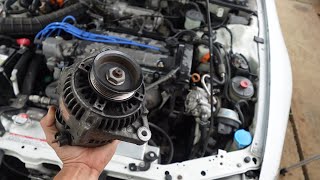
- Install New Unit: Installation is the reverse of removal. It may require gentle persuasion with a rubber mallet to seat the new alternator into the bracket. 🎬 See another helpful 5th gen Prelude alternator replacement tutorial
Pro Tip: It is highly recommended to replace the serpentine (drive) belt at the same time you replace the alternator. The belt is an inexpensive part and you've already done most of the labor to access it. A new belt costs between $23 and $44.
Torque Specs:
While specific torque specs for the Prelude were not found in search results, general Honda specifications for similar M8 and M10 bolts are typically in the range of 16-18 ft-lbs for 12mm head bolts and 30-33 ft-lbs for 14mm head bolts. The nut for the B+ terminal should be snug but not overtightened to avoid breaking the post, typically around 7-10 ft-lbs. Always tighten securely and re-check after a short drive.
Frequently Asked Questions (FAQ)
Can I drive my Prelude with a bad alternator?
It is not recommended. You can drive for a very short distance until the battery's charge is depleted, at which point the engine will stall, potentially leaving you stranded in an unsafe location.
Is a used OEM alternator better than a new aftermarket one?
Often, yes. The original Denso alternators built for Honda are very high quality. A low-mileage used OEM Denso unit is frequently more reliable than a new, non-brand-name aftermarket alternator which may use inferior components that fail quickly.
Do I need to replace the serpentine belt with the alternator?
It is strongly recommended. The belt must be removed to replace the alternator, so installing a new one at the same time is cost-effective and preventative maintenance. A new belt ensures proper tension and power transfer to the new alternator.
How do I test my alternator at home?
The easiest way is with a simple voltmeter (multimeter). With the engine off, the battery should read about 12.6 volts. With the engine running, it should read between 13.8 and 14.5 volts. If the voltage doesn't increase when the car is running, the alternator is not working correctly.
Helpful Videos
Technical Specifications
OEM Part Numbers: 31100-P5M-003 31100-P5M-013 06311-P5M-003RM 31100-P5M-013RM 31100-PCB-A0130 101211-9760 102211-1040 CJU74 CJU76 CJV04 CJV71
Amperage: 90A, Voltage: 12V, Pulley: 6-Groove Solid Pulley, Rotation: Counterclockwise (CCW).

The information in this article is provided for general reference and educational purposes only. Vehicle specifications, procedures, and part compatibility can vary by production date, trim level, and region. Always consult your vehicle's factory service manual and verify part numbers before purchasing or performing repairs. Safety-critical components such as airbags, seat belts, and braking systems should be installed by a qualified professional.
- Honda Prelude:
- 🎬 Helpful Videos
- Symptoms of a Failing 1997-2001 Prelude Alternator
- Diagnosing the Problem
- Buying a Used 1997-2001 Prelude Alternator
- What to Inspect:
- Known Issues, Recalls & TSBs
- Cost Comparison
- Replacement Overview & Related Parts
- Key Steps:
- Torque Specs:
- Frequently Asked Questions (FAQ)
- 🎟️ Get 5% Off