

2017-2025 F-150 & Raptor Alternator Guide: 240A, Hybrid, and 5.0L Differences
This guide details the many alternator variations for the 2017-2025 Ford F-150 and 2017-2022 F-150 Raptor, helping you identify the correct part by engine and options.
- There are many alternator variants; you MUST verify the correct part number and amperage for your truck's specific engine and options before buying.
- The 3.5L PowerBoost Hybrid uses a special Belt-Integrated Starter-Generator (BISG), not a conventional alternator.
- Before replacing the alternator, always check the large 'mega fuse' in the battery junction box, as a blown fuse can mimic alternator failure.
- After replacement, the Battery Management System (BMS) should be reset by letting the truck sit undisturbed for 8 hours; do not disconnect the BMS sensor wire.
Key Alternator Variations for 2017-2025 F-150 & Raptor

One of the biggest challenges when replacing the alternator on these trucks is identifying the correct one. Ford used several different alternators depending on the engine, model year, and optional equipment. Using the wrong one can lead to charging system problems, warning lights, or a part that simply doesn't fit. Always verify the part number on your original alternator before ordering a replacement.
Common Variants:
- 240 Amp Alternator: This is a common, high-output alternator used on models with the 2.7L EcoBoost, 3.3L V6, and 3.5L EcoBoost non-hybrid engines. It's often found on trucks equipped with features that demand more electrical power, like the optional 110-volt power converter.
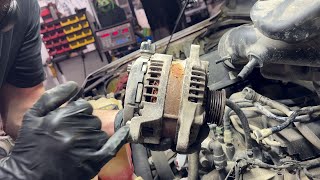
- 5.0L V8 Alternators: The 5.0L Coyote V8 engine has a few specific alternators. Some are designated for trucks without the Pro Power Onboard system. It is critical to verify compatibility by matching the identification number stamped on your original unit, such as ML3T-10300-HC. 🎬 Watch: Step-by-step alternator replacement for the 5.0L V8 engine.
- 3.5L PowerBoost Hybrid (Belt-Integrated Starter-Generator - BISG): This is a completely different component found only on the 3.5L Full Hybrid (FHEV) models. It's not a traditional alternator. This single unit, often called an ISG, acts as both the engine starter and the generator to charge the high-voltage hybrid battery and the conventional 12V battery. Failure of this unit will disable the hybrid system and can cause a no-start condition.
- Pro Power Onboard Alternators: Trucks equipped with the Pro Power Onboard system (the built-in generator with outlets in the bed) may use a specific single or dual alternator setup to provide the necessary power, which can be 2.0kW, 2.4kW, or 7.2kW. Some Super Duty configurations with this feature use a dual-alternator system with a 24V secondary alternator, though F-150 configurations are typically 12V.
Warning: The 3.5L PowerBoost Hybrid model does NOT use a conventional alternator. It uses a Belt-Integrated Starter-Generator (BISG). Do not attempt to order a standard alternator for a PowerBoost truck.
Symptoms of a Failing Alternator

When your alternator starts to fail, your truck will give you several warning signs. Since a bad alternator can leave you stranded, it's important to address these symptoms right away.
1. Battery or "Check Charging System" Warning Light
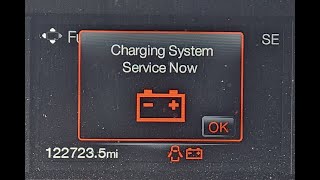
This is the most obvious sign. A dedicated battery light or a message on your dashboard indicates that the vehicle's computer has detected a problem with the charging system's voltage. The system expects to see a voltage higher than the battery's resting voltage (typically 13.5-14.7 volts) when the engine is running.
2. Dimming Headlights and Slow Accessories
If your headlights seem dim, especially at idle, or brighten when you rev the engine, your alternator is likely struggling to provide consistent power. You might also notice that your power windows operate slower than usual or your radio acts up. This happens because the alternator isn't producing enough electricity, forcing the vehicle to draw power from the battery, which quickly depletes.
3. Whining or Grinding Noises
A high-pitched whining sound that changes with engine RPM is a classic sign of a failing alternator. This noise is often caused by worn-out bearings inside the alternator. A grinding noise can also indicate a bad bearing or a problem with the alternator's pulley.
4. Difficulty Starting or a Dead Battery
A failing alternator can't properly recharge the battery. This can lead to a slow crank or a clicking sound when you try to start the engine, which means the battery doesn't have enough power to turn the starter. If you can jump-start the truck but it dies again shortly after, the alternator is almost certainly the culprit.
5. Strange Electrical Smells
A smell like burning rubber or hot wires can indicate an overworked alternator. The drive belt might be slipping and burning, or the alternator's internal components could be overheating and melting their insulation. This is a serious symptom that could pose a fire risk.
Known Issues, Recalls, and TSBs
While these alternators are generally reliable, there have been some related issues and recalls for the 2017-2025 F-150 platform.
- NHTSA Recall 19S40: Some 2019-2020 F-150s were recalled for a positive battery terminal fastener that may not have been properly secured. This could cause intermittent electrical issues, stalling, or even create a resistive short, increasing the risk of fire. The fix involved dealers inspecting and cleaning the connection.
- NHTSA Recall 20V467: A small number of 2020 F-150s were recalled because an incorrect nut may have been used on the starter motor's power supply cable, which could lead to excess heat and electrical arcing, posing a fire risk.
- Blown Mega Fuse: A common issue reported by owners is a "Check Charging System" light where the alternator itself is fine. The problem is often a blown high-amperage "mega fuse" located in the battery junction box. This fuse protects the charging circuit, and if it blows, the alternator's output cannot reach the battery. Always check this fuse before replacing the alternator. 🎬 See how to fix the charging system by checking the mega fuse.
- PowerBoost ISG Faults: Some owners of 2021-2023 F-150 PowerBoost models have reported issues with the Belt-Integrated Starter-Generator (BISG), leading to "Powertrain Malfunction" warnings and the truck's hybrid system being disabled.
Step-by-Step Diagnosis

If you suspect your alternator is failing, you can perform a few simple tests with a multimeter before buying a new part.
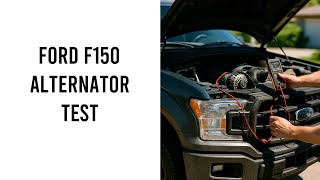
🎬 Watch this video to learn how to test your F-150 alternator.- Check Battery Voltage (Engine Off): Set your multimeter to DC volts. With the engine off, touch the red probe to the positive battery terminal and the black probe to the negative terminal. A fully charged battery should read between 12.4 and 12.6 volts. A reading below 12.4 volts indicates a discharged battery, which could be caused by a bad alternator.
- Check Charging Voltage (Engine Running): Start the engine. Be careful of moving parts. Measure the voltage across the battery terminals again. A healthy alternator should be putting out between 13.5 and 14.7 volts to charge the battery.
- Perform a Load Test: With the engine still running, turn on all major electrical accessories: headlights on high beam, A/C blower on max, radio, etc. The voltage should drop but remain above 13.0 volts. If it drops significantly or continues to fall, the alternator is not able to keep up with the demand.
- Inspect Fuses and Connections: Before condemning the alternator, check the large mega fuse in the battery junction box. Also, ensure the battery terminals and the main power wire on the back of the alternator are clean, tight, and free of corrosion.
Pro Tip: These trucks use a Battery Management System (BMS). After replacing the battery or alternator, the BMS should be reset. The common procedure is to leave the truck undisturbed with the ignition off for at least 8 hours to allow the BMS to relearn the battery's state of charge. Disconnecting the small wire on the negative battery terminal is NOT the correct reset procedure and can cause charging issues.
Buying a Used Alternator

For many owners, a quality used OEM alternator is a smart choice, offering original factory performance and reliability at a significant discount compared to a new dealer part. Here’s what to look for:
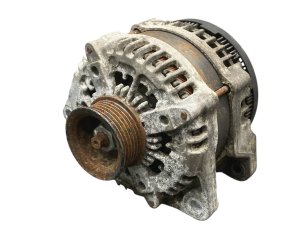
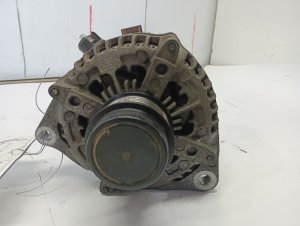
- Verify Compatibility: This is the most important step. Get the part number directly from your old alternator. Match it exactly. Pay close attention to the amperage (e.g., 240A) and any specific engine or option requirements (e.g., 5.0L without Pro Power Onboard). An alternator from a 2022 F-150 with part number ML3T-10300-AB is a known used part.
- Physical Inspection: Check the case for any cracks or major damage. Look at the electrical terminals for signs of corrosion or overheating (discoloration). Spin the pulley by hand; it should spin smoothly and quietly. A rough, gritty feeling or noise indicates bad bearings.
- Mileage Concerns: Alternators are wear items, but a modern OEM unit from a low-mileage (under 100,000 miles) vehicle is generally a reliable purchase. The bearings and brushes are the primary wear components. While there's no exact failure mileage, lower is always better.
- Why Used OEM vs. New Aftermarket: Modern charging systems are complex and communicate with the vehicle's main computer. Forum users frequently report issues with aftermarket alternators causing persistent warning lights or incorrect charging behavior because they don't integrate perfectly with the Ford BMS. A used OEM part is designed to work seamlessly with your truck's electronics.
Replacement Overview & Torque Specs

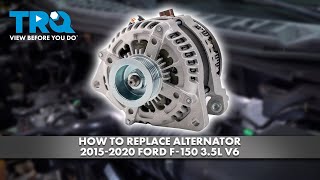
Replacing the alternator on an F-150 is a manageable DIY job for those with mechanical experience. The exact procedure varies slightly by engine, but the general steps are similar.
- Disconnect the Battery: Always disconnect the negative battery terminal first to prevent electrical shorts.
- Release Belt Tension: Use a serpentine belt tool or a long-handled ratchet on the belt tensioner to release the tension and slide the belt off the alternator pulley. This is a good time to inspect the belt and tensioner for wear.
- Remove Electrical Connections: Unplug the main electrical connector and unbolt the main power wire from the back of the alternator.
- Unbolt the Alternator: Remove the mounting bolts that hold the alternator to the engine bracket. The alternator can then be removed from the vehicle.
- Installation and Torque Specs: Installation is the reverse of removal. It's crucial to tighten fasteners to the correct torque to avoid damage.
| Fastener | Torque Specification |
|---|---|
| Alternator Mounting Bolts | 35 ft-lbs (47 Nm) |
| Battery Cable Nut (on alternator) | 150 in-lbs (17 Nm) |
Note: Torque specs can vary. Always consult a model-year specific repair manual if possible.
Cost Comparison
Alternator replacement costs can vary widely based on the part source and labor rates.
| Item | Estimated Cost |
|---|---|
| New OEM | $450 - $700+ |
| New Aftermarket | $200 - $400 |
| Remanufactured | $215 - $350 |
| Used OEM | $75 - $200 |
| Shop Labor | $150 - $300 |
Frequently Asked Questions (FAQ)
How do I know which amperage alternator my F-150 needs?
The best way is to check the part number or identification sticker on your current alternator. If that's not possible, a Ford dealer's parts department can look up the correct alternator using your truck's VIN. Trucks with more electrical options (like power inverters, heated/cooled seats) typically have higher amperage alternators like the 240A unit.
Can I upgrade to a higher-amperage alternator?
Yes, it is possible, and aftermarket companies offer high-output alternators up to 370A or more. However, if you do this to support accessories like a large stereo or off-road lights, you must also upgrade the main power wire from the alternator to the battery (a 'Big 3' wiring upgrade) to handle the extra current safely.
What other parts should I replace with the alternator?
It is highly recommended to replace the serpentine belt at the same time you replace the alternator. You're already removing it, and it's a critical wear item. Also, inspect the belt tensioner and idler pulleys. If they are noisy, loose, or feel rough when spun, they should be replaced as well.
Is the alternator for the F-150 Raptor different?
For the 2017-2022 model years, the F-150 Raptor shares its engine platforms (3.5L EcoBoost) with the standard F-150. Therefore, it uses the same family of alternators. However, you must still verify the correct part number and amperage for your specific vehicle, as Raptors are typically well-optioned and may require a higher-output unit.
Helpful Videos
Technical Specifications
OEM Part Numbers: GL8833 GL8993 GL8998 GL9025 HL3T10300BA HL3Z10346B ML3T-10300-AA ML3T-10300-AB ML3T-10300-HC ML3T-10300-JA ML3T-10300-JB ML3T-10300-KA ML3T-10300-KB ML3T-11A213-BC ML3T10300HC ML3Z-10346-B
Common amperages include 200A, 225A, and 240A. Voltage is 12V for standard systems. Torque for mounting bolts is 35 ft-lbs and the battery cable nut is 150 in-lbs.
We Have This Part in Stock



The information in this article is provided for general reference and educational purposes only. Vehicle specifications, procedures, and part compatibility can vary by production date, trim level, and region. Always consult your vehicle's factory service manual and verify part numbers before purchasing or performing repairs. Safety-critical components such as airbags, seat belts, and braking systems should be installed by a qualified professional.
- Ford F-150:
- Ford F-150 Raptor:
- 🎬 Helpful Videos
- 🛍️ Shop This Part
- Key Alternator Variations for 2017-2025 F-150 & Raptor
- Common Variants:
- Symptoms of a Failing Alternator
- 1. Battery or "Check Charging System" Warning Light
- 2. Dimming Headlights and Slow Accessories
- 3. Whining or Grinding Noises
- 4. Difficulty Starting or a Dead Battery
- 5. Strange Electrical Smells
- Known Issues, Recalls, and TSBs
- Step-by-Step Diagnosis
- Buying a Used Alternator
- Replacement Overview & Torque Specs
- Cost Comparison
- Frequently Asked Questions (FAQ)
- 🎟️ Get 5% Off