

Ford Explorer, Taurus, Edge & Flex Alternator Guide (2008-2019): Symptoms, Replacement & Costs
This guide covers common failure symptoms, replacement costs, and crucial compatibility warnings for the 175-amp alternator used in many Ford and Lincoln vehicles.
- Verify the amperage before buying; most models use a 175-amp unit, but some high-option Lincoln MKX models require a 200 or 225-amp alternator.
- Common failure symptoms include a battery warning light, dimming or flickering headlights, and a whining noise from the engine.
- Replacement is a moderately difficult DIY job due to tight access, often requiring removal of the cooling fan and working from the wheel well.
- A bad alternator will ruin a new battery. Always test the entire charging system, not just the battery, if you have starting issues.
Symptoms of a Failing Alternator

Alternator failure can sometimes seem sudden, but there are usually warning signs. Recognizing them early can prevent you from being stranded with a dead battery.
Warning Lights and Electrical Issues
- Battery Warning Light: This is the most common sign. A light shaped like a battery on your dashboard indicates a problem with the charging system. The alternator's voltage may have dropped below the required level, or in some cases, exceeded it.
- Dimming or Flickering Lights: If your headlights and dashboard lights seem dim, flicker, or get brighter as you rev the engine, it's a classic sign of a failing alternator struggling to provide consistent voltage.
- Slow or Malfunctioning Accessories: Power windows that are slow to operate, a weak radio, or glitchy dashboard displays can all point to the alternator not supplying enough power. Modern vehicles often prioritize essential systems, so non-essential features like the radio may be the first to lose power.
Noises and Smells
- Grinding or Whining Noises: A growling or whining sound from under the hood can indicate that the bearings inside the alternator are worn out and failing.
- Squealing Sounds: A sharp squeal, especially when you first start the car, could be a sign of a loose or worn serpentine belt that drives the alternator pulley.
- Burning Smell: A smell like burning rubber or an electrical fire can be caused by an overworked alternator or damaged wiring. This is a serious symptom that should be addressed immediately.
Starting and Driving Problems
- Difficulty Starting or Dead Battery: A bad alternator can't recharge the battery, leading to a no-start condition. You might hear a single click instead of the engine turning over.
- Frequent Stalling: If the alternator isn't providing enough power to the spark plugs and fuel system, the engine can stall while you're driving.
Compatibility Warning: This guide focuses on the common 175-amp alternator. However, some vehicles, particularly the 2016-2018 Lincoln MKX with the 'Technology Package' or 'Heated/Cooled Seats', were equipped with a higher output 200 or 225-amp alternator. Always verify your vehicle's required amperage before ordering a replacement part.
Known Issues, Recalls, and Technical Service Bulletins (TSBs)
Recall 18V-548 / 18S25: Improperly Secured Cables
Ford issued a recall for a small number of 2018 Ford Edge, 2019 Ford Flex, and 2019 Lincoln MKT vehicles. The power supply cables at the alternator and starter may not have been properly secured, creating a risk of an electrical arc and potential fire. The remedy involves dealers inspecting the cable nuts to ensure they are correctly torqued. While this recall affected a very specific production run, it highlights the importance of ensuring the main power cable nut is secure during any replacement.
Buying a Used Alternator: What to Look For

A quality used OEM alternator can be a reliable and cost-effective alternative to expensive new parts or lower-quality aftermarket options. Here’s what to inspect to ensure you get a good part.
- Check the Pulley: Spin the pulley by hand. It should spin smoothly and quietly. Any roughness, grinding, or wobble indicates bad bearings. Also, check the pulley grooves for excessive wear or damage.
- Inspect the Housing: Look for any cracks or significant corrosion on the aluminum housing. While some surface oxidation is normal, deep corrosion or physical damage is a red flag.
- Examine Electrical Connections: The main power stud (where the battery cable attaches) should be clean and the threads intact. Check the plastic electrical connector housing for cracks or broken clips.
- Verify the Part Number and Amperage: Cross-reference the part number on the used unit with the OEM numbers listed in this guide. Most importantly, confirm it is the correct 175-amp version required for your vehicle, unless you have a high-option Lincoln MKX that requires a higher output unit.
- Mileage and Vehicle History: Alternators typically last between 100,000 and 150,000 miles. A part from a lower-mileage vehicle is always preferable. Ask about the donor vehicle's history if possible.
Pro Tip: Many owners and mechanics strongly recommend using an OEM or Motorcraft replacement part over aftermarket alternatives. Some have reported premature failures with aftermarket units, leading to repeated repairs.
Cost Comparison for Alternator Replacement
The cost to replace an alternator varies by vehicle and labor rates. The job is more difficult on some of these models, like the Ford Edge, which increases labor costs.
| Part Type | Estimated Part Cost | Estimated Labor Cost | Estimated Total Cost |
|---|---|---|---|
| New OEM (Ford/Motorcraft) | $320 - $560 | $105 - $412 | $425 - $972 |
| New Aftermarket | $195 - $385 | $105 - $412 | $300 - $797 |
| Remanufactured | $210 - $350 | $105 - $412 | $315 - $762 |
| Used OEM | $50 - $150 | $105 - $412 | $155 - $562 |
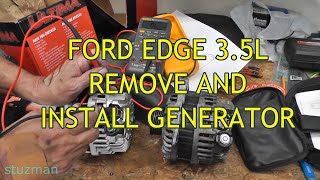
Note: Labor costs can vary significantly based on your location and the specific vehicle model. For example, RepairPal estimates labor for a Ford Taurus at $105-$155, while a Ford Edge can be $281-$412 due to more difficult access. 🎬 Watch: Step-by-step alternator replacement for the Ford Edge 3.5L.
DIY Replacement Guide & Tips

Replacing the alternator on these vehicles, particularly those with the 3.5L V6 engine, is a moderately difficult job due to tight spaces. Access is often from both the top of the engine bay and through the passenger-side wheel well.
Difficulty: 4 out of 5
Estimated Time: 2.5 - 4 hours
General Steps:
- Disconnect the Battery: Always disconnect the negative battery terminal first to prevent electrical shorts.
- Provide Access: This is the most challenging part. On many models like the Ford Edge and Explorer, you will need to remove the engine air intake ducting and the radiator cooling fan assembly from the top.
- Access from Below: Jack up the vehicle, secure it with jack stands, and remove the passenger-side front wheel and inner fender liner. This provides access to the serpentine belt tensioner and lower alternator bolts.
- Remove the Serpentine Belt: Using a long-handled wrench or serpentine belt tool (often a 3/8" or 1/2" drive), rotate the belt tensioner to release tension and slip the belt off the alternator pulley.
- Disconnect Electrical Connections: Unclip the main electrical connector and remove the nut holding the main power cable to the back of the alternator.
- Unbolt the Alternator: Remove the upper and lower mounting bolts. The alternator can then be maneuvered out, often through the space created by removing the cooling fan.
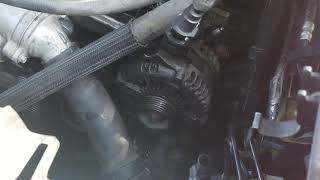
- Installation: Installation is the reverse of removal. It can be tricky to align the new alternator. Some mechanics suggest installing the serpentine belt before fully tightening the mounting bolts, allowing the belt tension to help pull the alternator into its final position. 🎬 Watch: Pro tips for removing and replacing the generator unit.
Related Parts to Replace
While you have everything apart, it's a good idea to inspect and likely replace the following:
- Serpentine Belt: If the belt is old, cracked, or glazed, replace it. A new alternator deserves a new belt.
- Belt Tensioner: Check the tensioner for smooth operation and proper tension. If the pulley is noisy or the arm doesn't move smoothly, it should be replaced.
Frequently Asked Questions (FAQ)
Can I drive my car with a bad alternator?
It is not recommended. A failing alternator means your car is running solely off the battery, which will drain quickly and leave you stranded. The engine may stall, and you could lose power to essential systems.
Will a bad alternator drain a new battery?
Yes. The alternator's job is to recharge the battery. If the alternator is bad, it won't charge the battery, and even a brand new battery will be drained and eventually ruined by deep discharging.
Is it the battery or the alternator?
If the car starts with a jump but dies shortly after, the alternator is the likely culprit. If the car won't start at all and you only hear a clicking sound, the battery is likely dead, but it could have been killed by a bad alternator. The best way to know for sure is to have the complete charging system tested at an auto parts store or repair shop.
Is rebuilding my old alternator an option?
While rebuilding is possible, it's not common for most DIY mechanics or shops today. Replacing the unit with a quality new, remanufactured, or used OEM part is typically faster and more reliable. The cost of professional rebuilding is often comparable to a remanufactured unit.
Helpful Videos
Technical Specifications
OEM Part Numbers: 8A4T10300AB 8A4T10300AC 8A4T10300AD 8A4Z10346A DG1T10300CA DG1T10300CB DG1Z10346F GL8664 GL8684 GL933
Standard Output: 175 Amps. Voltage: 12V. Pulley: 6-Groove. Rotation: Clockwise.
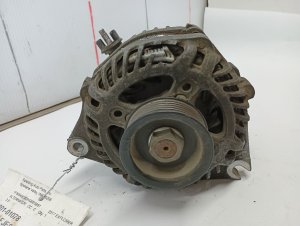
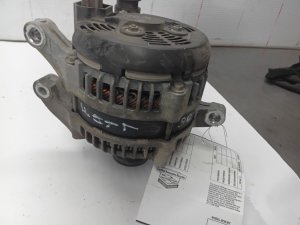
We Have This Part in Stock





The information in this article is provided for general reference and educational purposes only. Vehicle specifications, procedures, and part compatibility can vary by production date, trim level, and region. Always consult your vehicle's factory service manual and verify part numbers before purchasing or performing repairs. Safety-critical components such as airbags, seat belts, and braking systems should be installed by a qualified professional.
- Ford Explorer:
- Ford Taurus:
- Ford Edge:
- Lincoln MKT:
- Lincoln MKS:
- Lincoln MKX:
- Ford Flex:
- Ford Taurus X:
- 🎬 Helpful Videos
- 🛍️ Shop This Part
- Symptoms of a Failing Alternator
- Warning Lights and Electrical Issues
- Noises and Smells
- Starting and Driving Problems
- Known Issues, Recalls, and Technical Service Bulletins (TSBs)
- Recall 18V-548 / 18S25: Improperly Secured Cables
- Buying a Used Alternator: What to Look For
- Cost Comparison for Alternator Replacement
- DIY Replacement Guide & Tips
- General Steps:
- Related Parts to Replace
- Frequently Asked Questions (FAQ)
- 🎟️ Get 5% Off