

2007-2010 Porsche Cayenne Air Suspension Module: Decoding the 'Chassis System Faulty' Warning
Your complete guide to diagnosing, replacing, and understanding the control unit for your Cayenne's air ride, including the critical programming steps required after installation.
- Programming is mandatory. Any replacement module (new or used) requires coding with a Porsche PIWIS tool by a dealer or specialist shop.
- The 'Chassis System Faulty' light is a general warning; always diagnose properly before replacing the module, as the issue could be a leak, sensor, or compressor.
- When buying used, you must match the OEM part number exactly (95561830400 or 95561830401).
- A weak battery can cause identical symptoms, so test the battery before condemning expensive suspension components.
Symptoms of a Failing Air Suspension Control Module
A problem with the air suspension control module can be difficult to distinguish from other suspension issues like a leaking air spring or a bad compressor. However, certain symptoms point more directly to the module itself.
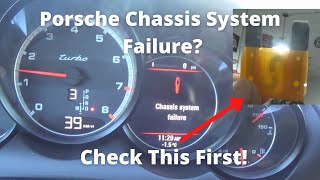
- "Chassis System Faulty" Warning: This is the most common indicator. A yellow warning light on the dashboard often means a fault has been detected, which could be related to the module, sensors, or other components. A red "Warning Chassis System" message indicates a more severe problem that significantly affects handling.
- Suspension Stuck at One Height: The vehicle may be stuck in a high, low, or uneven position and will not respond to commands from the height adjustment switch on the center console.
- Unpredictable Height Adjustments: The vehicle might raise or lower itself randomly, sometimes becoming a "low rider" while driving or raising to the highest setting unexpectedly.
- Sport Mode Disabled: When a chassis fault is present, features like Sport Mode may be disabled, often accompanied by a "Failure Sport Mode" message.
- Compressor Not Activating (or Running Constantly): A faulty module may fail to send the signal to turn the compressor on, preventing the system from generating air. Conversely, it might cause the compressor to run too long, leading to a drained battery or a burnt-out compressor.
These symptoms can also be caused by a weak vehicle battery, which is a known issue in these Cayennes. Always have your battery load-tested before assuming a component has failed.
Common Diagnostic Trouble Codes (DTCs)
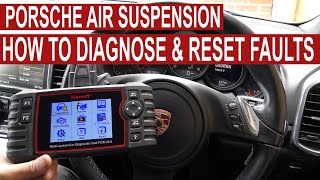
A professional scan tool that can read Porsche-specific codes is necessary for proper diagnosis. 🎬 See how to diagnose Porsche air suspension faults using a scan tool. Common codes related to the control system include:
- 1772 - Signal Lead for Pressure Sensor: This code often points to an issue with the compressor or its integrated pressure sensor, but can also be triggered by a module fault.
- C12085 - Check PSM Control Unit Fault Memory Content: This indicates the air suspension module has detected a fault and is instructing you to check another related system's memory.
- Faults related to level sensors (e.g., front left level sensor fault) can sometimes be traced back to the module if the sensor and its wiring are confirmed to be good.
Warning: The "Chassis System Faulty" light is a general warning. It can be triggered by a simple blown fuse, a bad ride height sensor, an air leak, a failing compressor, or the control module itself. Proper diagnosis with a Porsche-specific scan tool is essential to avoid replacing the wrong parts.
Known Issues, TSBs, and Recalls
For the 2007-2010 (957) generation Cayenne, there are no specific recalls or Technical Service Bulletins (TSBs) from the National Highway Traffic Safety Administration (NHTSA) that directly target the air suspension control module itself. However, NHTSA documents do exist for general air suspension problems, outlining diagnostic procedures for leaks and faulty level sensors. The most common real-world failure mode for electronics in this vehicle, including the suspension module, is often related to water intrusion or cracked solder joints from age and vibration.
Programming and Calibration: A Dealer or Specialist is Required
This is the most critical factor when replacing the air suspension control module. A new or used replacement module MUST be programmed and coded to your vehicle's specific VIN and options. This is not a plug-and-play part.
- What is Programming/Coding? The procedure syncs the module with the rest of the car's electronic systems. It tells the module about the vehicle's specific equipment (like whether it has Porsche Dynamic Chassis Control - PDCC) and calibrates the ride height sensors.
- What Tool is Needed? This programming requires a Porsche Integrated Workshop Information System (PIWIS) tester. Generic OBD-II scanners or even advanced DIY tools like Durametric cannot perform this level of module coding.
- Who Can Do It? A Porsche dealership or a qualified independent Porsche specialist with a genuine PIWIS tool can perform the programming. Many independent shops specializing in German vehicles have this capability.
Pro Tip: Before buying a replacement module, call local independent Porsche repair shops and ask if they have a PIWIS tester and can program a replacement PASM/air suspension module for a 957 Cayenne. Confirm their labor rate for this specific job.
Buying a Used Air Suspension Control Module
A used OEM module is an excellent, cost-effective alternative to an expensive new unit, provided you take the right precautions. A used original part often has better reliability and guaranteed compatibility compared to a new, non-OEM aftermarket part.
- Match the Part Number Exactly: The most important step is to match the OEM part number from your original module. The primary part numbers for the 2007-2010 Cayenne are 95561830400 and the updated 95561830401. Using a module with a different part number may result in incompatibility and programming failures.
- Physical Inspection: When you receive the used module, inspect the case for any signs of water damage or physical impact. Check the connector pins carefully; they should be straight, clean, and free of any green or white corrosion.
- Factor in Programming Costs: Remember that the purchase price of the used module is not the final cost. You must budget for 1-2 hours of labor at a dealership or specialist shop for installation and PIWIS programming.
- Source from Reputable Sellers: Buy from established auto recyclers who offer a warranty and have good reviews. This provides a safety net in case you receive a defective part.
Replacement Location and Procedure
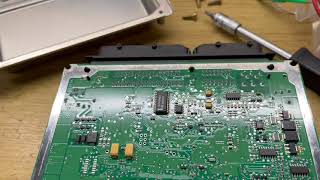
The air suspension control module on the 2007-2010 Cayenne is located in the right-hand side of the cargo area, behind a trim panel. 🎬 Watch a step-by-step walkthrough on fixing the Cayenne air suspension module. Physical replacement is straightforward:
- Disconnect the vehicle's battery.
- Remove the right-side cargo trim panel to access the electronics rack.
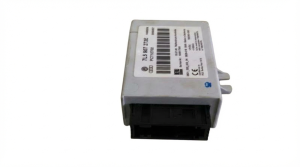
- The module is a silver or black box with two large multi-pin connectors.
- Carefully release the locking tabs on the two electrical connectors and unplug them.
- Release the clips holding the module to its bracket and remove it.
- Installation is the reverse of removal. The final, mandatory step is programming.
Cost Comparison
Prices can vary significantly based on supplier and condition. The most significant cost after the part itself is the labor for programming.
| Part Type | Estimated Cost |
|---|---|
| New OEM | $1,300 - $1,700 |
| New Aftermarket | $280 - $450 (Quality and compatibility can be questionable) |
| Used OEM | $100 - $300 |
| Shop Labor (Installation & Programming) | $200 - $500 (Typically 1.5-2.5 hours at specialist rates) |
Frequently Asked Questions (FAQ)
Does a used 2007-2010 Cayenne air suspension module need to be programmed?
Yes, absolutely. Any replacement module, whether new or used, must be coded to your car's VIN and specific options using a Porsche PIWIS diagnostic tool. Without this step, the module will not function correctly.
Can I drive my Cayenne with a "Chassis System Faulty" warning?
You can usually drive the vehicle, but with caution. Handling may be compromised, the ride will likely be harsh, and the vehicle may be stuck at an unsafe height (either too low or too high). It is recommended to have the vehicle inspected and repaired as soon as possible.
Is the "Chassis System Faulty" light always the control module?
No. This is a generic warning for the air suspension system. Common causes include leaking air springs, a failing compressor, faulty ride height sensors, broken sensor linkages, or even a weak battery. A proper diagnostic scan is required to pinpoint the exact cause.
Can an independent mechanic program the new module, or do I have to go to a Porsche dealer?
Many independent shops that specialize in Porsche or German vehicles have the necessary PIWIS tool to perform the programming. It is not exclusive to dealers. However, a general repair shop without this specific, expensive tool will not be able to complete the job.
Helpful Videos
Technical Specifications
OEM Part Numbers: 95561830400 95561830401
Location: Right-hand side of cargo area, behind trim panel. Connectors: Two large multi-pin electrical connectors.
We Have This Part in Stock




The information in this article is provided for general reference and educational purposes only. Vehicle specifications, procedures, and part compatibility can vary by production date, trim level, and region. Always consult your vehicle's factory service manual and verify part numbers before purchasing or performing repairs. Safety-critical components such as airbags, seat belts, and braking systems should be installed by a qualified professional.
- Porsche Cayenne:
- 🎬 Helpful Videos
- 🛍️ Shop This Part
- Symptoms of a Failing Air Suspension Control Module
- Common Diagnostic Trouble Codes (DTCs)
- Known Issues, TSBs, and Recalls
- Programming and Calibration: A Dealer or Specialist is Required
- Buying a Used Air Suspension Control Module
- Replacement Location and Procedure
- Cost Comparison
- Frequently Asked Questions (FAQ)
- 🎟️ Get 5% Off