

1995-1998 Porsche 911 (993) Air Pump Failure: Noises, Codes, and Moisture Damage
This guide covers the common causes of secondary air injection pump failure in the Porsche 993, from check engine light codes to the critical check valve issue that allows moisture to destroy the pump.
- The primary cause of air pump failure is a bad one-way check valve that allows corrosive exhaust moisture to flow backward and seize the pump.
- When replacing the air pump, you MUST also replace the check valve to prevent the new pump from failing prematurely.
- The most common symptom is a loud 'vacuum cleaner' noise for 1-2 minutes on a cold start, followed by a Check Engine Light with codes P0410 or P1411 on 1996-98 models.
- The car is safe to drive with a failed pump, but it will not pass an emissions test and the root cause should be addressed.
Common Symptoms of a Failing 993 Air Injection Pump

A failing air injection pump on a Porsche 993 typically makes its presence known right after a cold start. Here are the most common signs:
- Loud Whining or "Vacuum Cleaner" Noise: The most obvious symptom is a loud, high-pitched whining or roaring sound coming from the engine bay for the first 1-2 minutes after starting the car cold. This noise is the pump's motor straining to work, often because of internal corrosion or worn bearings. A healthy pump is audible, but a failing one is significantly louder.
- Check Engine Light (CEL): For 1996-1998 models with OBD-II diagnostics, a failing SAI system is a common cause for an illuminated Check Engine Light. The most frequent trouble codes are P0410 (Secondary Air Injection System Malfunction) and P1411 (Secondary Air Injection System, Cyl. 4-6, Insufficient Flow). 1995 models use an earlier OBD-I system that does not typically monitor the pump's function, so a CEL is less likely for this specific issue.
- Failed Emissions Test: Even if the car seems to drive perfectly, a stored fault code for the SAI system will cause an automatic failure of an emissions inspection in many states. This is often how owners first discover a problem, especially on the OBD-II cars.
The Real Cause of Failure: Moisture and the Check Valve

The air injection pump itself is a relatively simple electric motor. Its most common killer is not high mileage, but moisture. This happens for two main reasons:
- Failed Check Valve: The system includes a one-way check valve that allows fresh air to enter the exhaust but is supposed to block hot, corrosive exhaust gases from flowing backward into the pump. Over time, this valve fails due to rust and carbon buildup. Once it fails, hot, moist exhaust gas flows back into the pump and its connecting hoses, corroding the pump's internals and causing it to seize.
- Water Ingress: Less commonly, water can enter the pump from the air intake side, causing rust and bearing failure.
Warning: Simply replacing a failed air pump without also replacing the faulty check valve will lead to premature failure of the new pump. The check valve is a critical part of the repair.
Diagnosing the Secondary Air Injection System

If you suspect an issue, you can troubleshoot the system with a few steps:
- Listen on Cold Start: The pump should run for about 1-2 minutes and be audible. If it's silent, the pump motor may be dead or not receiving power. If it's excessively loud, the bearings are likely failing.
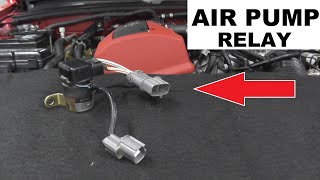
- Check the Fuse and Relay: The SAI pump is protected by a 40-amp fuse and a relay, located in the engine bay fuse box. A blown fuse or a failed relay will prevent the pump from running. You can test the relay by swapping it with a known good one or by testing its continuity with a multimeter. 🎬 See how to test and replace an air pump relay
- Test the Pump Directly: You can bypass the relay and test the pump motor by applying 12V directly to its electrical connector. If the pump doesn't run, the motor has failed.
- Inspect the Check Valve: Remove the hose leading from the pump to the check valve. Look for signs of rust, soot, or moisture inside the hose or at the valve's inlet. This is a clear sign the valve has failed and allowed exhaust backflow.
Pro Tip: On 1996-98 cars, a major cause of the P0410/P1411 codes, even with a working pump, is clogged air passages inside the cylinder heads. This is a much more involved repair that can sometimes require a top-end engine rebuild to properly clean the ports. Regular service of the check valve can help prevent this severe carbon buildup.
Buying a Used Air Injection Pump for Your Porsche 993

A used OEM air pump can be a cost-effective solution, as the original Bosch units are robust until they are damaged by moisture. When buying a recycled part, focus on the signs of its past environment.
- Physical Inspection: Look for any signs of rust or corrosion on the metal and plastic housing, especially around the air inlet and outlet ports. Check the electrical connector for any corrosion or melted plastic, which could indicate an electrical issue.
- Spin the Fan: If possible, try to spin the internal fan blade through the inlet port using a small tool. It should spin freely. If it feels stiff, gritty, or completely seized, the pump is bad.
- Ask the Seller: Inquire about the condition of the vehicle it came from. Was there evidence of moisture or a failed check valve? A pump from a car with a known good check valve is a much safer bet.
- Compatibility: Verify the part number matches your original unit. The primary OEM numbers are from Bosch (0580000005) and Porsche (99362410300, 99362410301, 99362410302). This pump is specific to non-turbo 993 models.
- Why Used OEM?: A good, dry used OEM Bosch pump is often preferable to a new, unbranded aftermarket part. The build quality of the original units is high, and their failure is almost always due to external system faults (the check valve) rather than a manufacturing defect in the pump itself.
Cost of Replacing a 993 Air Injection Pump
The cost can vary significantly depending on the parts you choose and whether you perform the labor yourself.
| Part/Service | Estimated Cost |
|---|---|
| New OEM (Porsche) | $1,800 - $2,200 |
| New OEM (Bosch) | $270 - $840 |
| Used OEM | $300 - $500 |
| New Check Valve (Required) | $100 - $130 |
| Shop Labor | $200 - $400 |
Installation Overview & Difficulty
- Difficulty: 2 out of 5. The job is straightforward for a DIY mechanic with basic tools.
- Location: The pump is located in the engine bay, on the driver's side, behind the air filter box.
- Process: The basic steps involve removing the airbox for access, disconnecting the electrical connector and hoses, and unbolting the pump from its bracket. Installation is the reverse of removal. Replacing the check valve at the same time is highly recommended and may require a modified crowfoot wrench due to tight access.
Frequently Asked Questions (FAQ)
Can I drive my 993 with a bad air injection pump?
Yes, but with consequences. A failed air pump does not affect the car's primary performance or safety once the engine is warm. However, you will have a Check Engine Light on (for '96-'98 models) and will not be able to pass an emissions test. Ignoring the root cause (a bad check valve) can lead to further damage.
What are the OBD-II codes for a bad air pump?
The most common codes are P0410 (Secondary Air Injection System, Insufficient Flow) and P1411 (Secondary Air Injection, Insufficient Flow, Cyl. 4-6). These codes indicate that the engine's computer did not detect the expected change in oxygen levels in the exhaust when the pump was supposed to be running.
Do I really need to replace the check valve and relay?
Yes, replacing the check valve is mandatory. A failed check valve is what allows moisture to destroy the pump, and skipping this step will cause your new pump to fail quickly. It's also wise to inspect the relay. If the old pump failed due to an electrical short, it may have damaged the relay. Signs of melting on the pump's connector are a red flag to replace the relay.
Can I just remove the whole system?
On 1995 OBD-I cars, it is physically possible to remove the entire SAI system and plug the ports, and it will not cause a Check Engine Light. However, this is not legal for road use in areas with emissions regulations. On 1996-1998 OBD-II cars, removing the system will cause a persistent Check Engine Light unless the DME is reprogrammed with "Rest of World" (ROW) software, which is intended for off-road use only.
OEM Part Numbers
| Manufacturer | Part Number |
|---|---|
| Porsche | 99362410300 |
| Porsche | 99362410301 |
| Porsche | 99362410302 |
| Bosch | 0580000005 |
| Pierburg | 7.21903.50.0 |
Helpful Videos
Technical Specifications
OEM Part Numbers: 99362410300 99362410301 99362410302 0580000005 7.21903.50.0
12V electric pump, protected by a 40A fuse. System operates for approximately 60-120 seconds on cold start.

The information in this article is provided for general reference and educational purposes only. Vehicle specifications, procedures, and part compatibility can vary by production date, trim level, and region. Always consult your vehicle's factory service manual and verify part numbers before purchasing or performing repairs. Safety-critical components such as airbags, seat belts, and braking systems should be installed by a qualified professional.
- Porsche 911:
- 🎬 Helpful Videos
- Common Symptoms of a Failing 993 Air Injection Pump
- The Real Cause of Failure: Moisture and the Check Valve
- Diagnosing the Secondary Air Injection System
- Buying a Used Air Injection Pump for Your Porsche 993
- Cost of Replacing a 993 Air Injection Pump
- Installation Overview & Difficulty
- Frequently Asked Questions (FAQ)
- OEM Part Numbers
- 🎟️ Get 5% Off