

1993-1995 Lexus GS300 Air Flow Meter: Solving Stalling, Hesitation, and Rough Idle
This guide covers common failure symptoms, diagnostic steps, and how to choose a reliable used air flow meter for your first-generation GS300.
- The most common symptoms of failure are rough idle, stalling at stops, and hesitation during acceleration.
- Before replacing, try cleaning the sensor with dedicated MAF sensor cleaner and inspect the intake for air leaks.
- Verify the part number is 22250-46020 or 22250-46010. A used OEM Denso part is often more reliable than a new, cheap aftermarket one.
- Replacement is extremely easy (Difficulty 1/5) and requires only a Phillips head screwdriver.
Symptoms of a Failing Air Flow Meter

When the air flow meter on a 1993-1995 GS300 begins to fail, it sends incorrect information to the engine computer, leading to a range of drivability problems. You may experience one or more of the following issues:
- Rough Idle or Stalling: The engine may idle erratically, hunt for a steady RPM, or stall completely when you come to a stop. This is often worse after the engine has warmed up.
- Hesitation and Jerking: During acceleration, the car may hesitate, stumble, or jerk as the computer struggles with inaccurate air readings.
- Poor Fuel Economy: An incorrect air-fuel mixture, usually running too rich (too much fuel), will cause a noticeable drop in your miles per gallon.
- Black Smoke from Exhaust: A sign of a rich fuel mixture, where unburned fuel is exiting through the exhaust system.
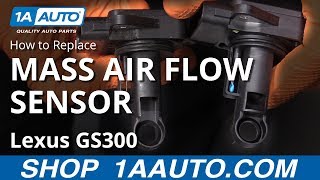
- Check Engine Light: A failing MAF sensor will often trigger the Check Engine Light. Common trouble codes include P0100 (Mass Air Flow Circuit Malfunction), P0101 (Mass Air Flow Circuit Range/Performance) 🎬 Watch this step-by-step Lexus GS300 MAF sensor replacement guide, P0171 (System Too Lean), and P0172 (System Too Rich).
- Loss of Power: The vehicle may feel sluggish and lack its normal power, especially when going up hills or accelerating hard.
Diagnosing the Problem

Before replacing the sensor, a few simple diagnostic steps can help confirm the issue.
- Visual Inspection: Check the air intake hose between the air filter box and the throttle body for any cracks, loose clamps, or disconnected vacuum lines. Unmetered air entering the engine after the MAF sensor can mimic the symptoms of a bad sensor.
- Clean the Sensor: Often, the sensor's delicate wire is simply dirty, not broken. You can attempt to clean it as a first step. Purchase a can of dedicated Mass Air Flow Sensor Cleaner—do not use brake cleaner or carburetor cleaner, as they will destroy the sensor. Remove the two screws holding the sensor, carefully lift it out, spray the internal wires generously, and let it air dry completely before reinstalling. 🎬 See how mechanics quickly clean a dirty MAF sensor
- Check the Connector: Inspect the electrical connector for any green or white corrosion on the pins or any broken/damaged wires.
Warning: Some owners have reported that cleaning an older, original sensor can sometimes cause it to fail completely. While cleaning is often successful, be aware that it carries a small risk on a 30-year-old electronic part.
Buying a Used 1993-1995 GS300 Air Flow Meter: What to Check

For this specific vehicle, a quality used OEM part is often a more reliable and cost-effective choice than a cheap new aftermarket sensor. Original Denso sensors are precisely calibrated for the Lexus ECU, while aftermarket units can sometimes cause persistent, hard-to-diagnose running issues.
Physical Inspection Checklist
When buying a used air flow meter, perform these checks:
- Verify Part Numbers: The original Lexus part number is typically 22250-46020, which supersedes 22250-46010. The housing itself will be stamped with the Denso (the original manufacturer) part number, which is often 197100-4050. Ensure the part you are buying matches these numbers.
- Inspect the Housing: Check the black plastic housing for any cracks, especially around the screw holes.
- Examine the Connector: Look at the electrical pins inside the connector port. They should be clean and straight, with no signs of corrosion or damage.
- Look Inside the Bore: Carefully look through the sensor's bore (the main opening). You should see two very fine wires. Ensure they are intact and not broken, sagging, or covered in oil.
- Check the O-Ring: Make sure the rubber O-ring that seals the sensor against the intake tube is present and not cracked or flattened. A bad seal will cause a vacuum leak.
Pro Tip: Ask the seller for the mileage of the vehicle the part came from. A sensor from a lower-mileage car is always preferable. Avoid parts that look like they have been sitting outside or are covered in excessive dirt and corrosion.
Known Issues, TSBs, and Recalls
While there are no recalls or Technical Service Bulletins (TSBs) that specifically target the air flow meter on the 1993-1995 GS300, a recall was issued for the front control arm on 1993-1994 models (NHTSA Recall No. 95V072000). It is always wise to check if this or any other recall work has been performed on the vehicle.
Replacement Guide (Difficulty: 1/5)

Replacing the air flow meter is one of the easiest jobs you can do on this car, requiring only a Phillips head screwdriver.
- Locate the Sensor: Open the hood. The air flow meter is located on the large black air intake tube, just behind the air filter box.
- Disconnect the Electrical Connector: Press the tab on the electrical connector and pull it straight off the sensor.
- Remove the Screws: Using a Phillips head screwdriver, remove the two screws that secure the sensor to the intake tube.
- Remove the Old Sensor: Gently wiggle and pull the sensor straight up and out of the intake tube.
- Install the New Sensor: Ensure the new sensor's O-ring is in place, then insert it into the opening. Reinstall the two screws, being careful not to overtighten them as you are screwing into plastic. Reconnect the electrical plug.
Cost Comparison
| Part Type | Estimated Cost | Notes |
|---|---|---|
| New OEM (Lexus) | $1300+ (if available) | This part is largely discontinued by Lexus but some dealer stock may exist at a very high price. |
| New Aftermarket | $70 - $150 | Quality and calibration can be inconsistent. Brands vary widely. |
| Used OEM | $50 - $125 | Often the best balance of quality and price. Sourced from salvage vehicles. |
| Remanufactured OEM | $150 - $250 | An original unit that has been rebuilt and tested. May include a core charge. |
| Shop Labor | $50 - $75 | Typically a 0.5-hour job at a standard shop rate. |
Frequently Asked Questions (FAQ)
Can I drive with a bad air flow meter?
Yes, but it's not recommended for long. The car will run poorly, get terrible gas mileage, and may stall unexpectedly, which can be a safety hazard in traffic. Driving for an extended period with a very rich or lean mixture can also damage other components like the catalytic converter.
What happens if I just unplug the MAF sensor to test it?
If you unplug the MAF sensor, the engine computer (ECU) will recognize the missing signal and switch to a default, pre-programmed fuel map. This is often called 'limp mode'. If the car runs better with the sensor unplugged, it's a strong indicator that the sensor itself is faulty. However, the car will not run efficiently in this state.
Does a new air flow meter need to be programmed?
No, for the 1993-1995 Lexus GS300, the air flow meter is a plug-and-play part and does not require any special programming or calibration. It is a good practice to disconnect the battery for about 30 minutes after installation to reset the ECU's fuel trim adaptations.
Is the GS300 air flow meter the same as the one in the Toyota Supra?
Yes, the naturally aspirated 1993-1995 Toyota Supra uses the same 2JZ-GE engine and shares the same air flow meter (part numbers 22250-46010 / 22250-46020). It also fits the 1992-1995 Lexus SC300. This interchangeability can make it easier to find a good used part.
Helpful Videos
Technical Specifications
OEM Part Numbers: 22250-46020 22250-46010 22204-42011 197100-4050
Karman-Vortex type sensor with a 5-pin electrical connector.

The information in this article is provided for general reference and educational purposes only. Vehicle specifications, procedures, and part compatibility can vary by production date, trim level, and region. Always consult your vehicle's factory service manual and verify part numbers before purchasing or performing repairs. Safety-critical components such as airbags, seat belts, and braking systems should be installed by a qualified professional.
- Lexus GS300: