

2013-2023 Mazda CX-5 Passenger Airbag: SRS Light Causes and Replacement Guide
This guide covers common failure symptoms, Technical Service Bulletins (TSBs), and critical compatibility details for the 2013-2023 Mazda CX-5 passenger-side front seat airbag.
- PROFESSIONAL INSTALLATION IS MANDATORY. Due to the explosive nature of airbags and the need for system-specific computer resets, this is not a DIY repair.
- An illuminated SRS warning light means the entire airbag system is disabled and will not deploy in a crash.
- Many SRS light issues on 2017-2020 models are related to low battery voltage on startup or an overly sensitive passenger seat sensor, both of which are covered by Mazda TSBs.
- When buying a used airbag, always get a non-deployed OEM part from a reputable source and meticulously inspect it for damage, especially to the connectors.
Symptoms of a Failing Airbag System

The most common and immediate sign of a problem within the Supplemental Restraint System (SRS) is an illuminated airbag warning light on your dashboard. This light, which typically shows an icon of a seated person with a deployed airbag, indicates that the SRS control module has detected a fault. When this light is on, you should assume the entire airbag system is disabled and will not deploy in a crash.
- SRS Warning Light Stays On: The light should illuminate for a few seconds when you start the car for a system self-check, then turn off. If it remains lit, there is an active fault in the system.
- Passenger Airbag "Off" Light On with Adult Passenger: The passenger occupant classification system (OCS) may malfunction, incorrectly identifying an adult as a child and deactivating the passenger airbags.
- Flashing Airbag Light: In some cases, the light may flash a specific pattern, which corresponds to a diagnostic trouble code (DTC) that can be read with a specialized scanner.
Known Issues, Recalls, and Technical Service Bulletins (TSBs)

While the 2013-2023 Mazda CX-5 was not part of the widespread Takata airbag inflator recalls that affected many other Mazda models, it does have several documented issues related to the SRS, primarily concerning the passenger seat's Occupant Classification System (OCS).
Technical Service Bulletins (TSBs)
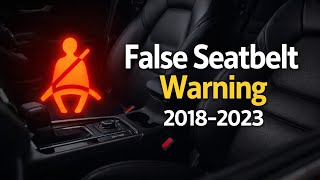
- TSB 08-001/23 (NHTSA MC-10232279): Addresses an overly sensitive front passenger seat sensor that may falsely detect an occupant (from a light item like a bag or laptop) and trigger the seatbelt reminder chime. 🎬 Watch: How to fix a CX-5 seatbelt light that keeps beeping. The fix involves replacing the seat cushion and occupancy sensor assembly with a modified part.
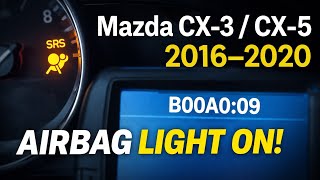
- TSB 08-002-23 (NHTSA 10232280): For 2017-2020 CX-5 models, this TSB addresses the airbag warning light illuminating with DTC B00A0:09 (Occupant Classification Sensor - Internal Signal Output Unstable), often triggered by a temporary voltage drop during engine cranking in cold weather. 🎬 Watch: Fixing the airbag light after a cold start. The fix is a software update for the SAS (airbag) control module.
- TSB for Ventilated Seats: Another TSB notes that on models with ventilated seats, the weight of the ventilation unit itself can sometimes be detected by the OCS, causing a false passenger detection. The repair involves replacing the seat cushion with a modified version.
Recalls
- NHTSA Recall 18V426000: This recall affects a small number of 2018 Mazda CX-5 vehicles. The side curtain airbags (not the seat-mounted airbag this guide focuses on) may not unfold properly during deployment, increasing injury risk. The remedy is a replacement of the curtain airbags.
Pro Tip: Many SRS light issues on these vehicles, especially on 2017-2020 models, are linked to an aging 12V battery causing low voltage during startup. Before pursuing expensive sensor replacements, ensure your battery is tested and in good health.
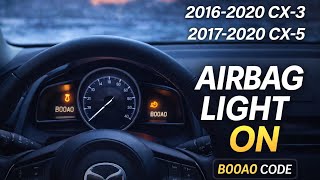
🎬 See this simple fix for a Mazda airbag light that stays on.Buying a Used 2013-2023 Mazda CX-5 Airbag

Purchasing a used, non-deployed OEM airbag can be a cost-effective solution, but it requires careful inspection and verification. For a safety-critical part, a recycled original manufacturer part is far superior to any new aftermarket alternative, as there are no legitimate aftermarket airbags.
Physical Inspection Checklist:
- Intact Connectors: Check that all electrical connectors are present, clean, and not cracked or damaged. The main connector is typically a distinct yellow color.
- No Signs of Water Damage: Avoid any airbag that shows signs of corrosion, water stains, or mildew. Moisture can compromise the internal electronics and the inflator charge.
- Original, Uncut Wiring: Ensure the wiring harness is original and has not been cut or spliced.
- No Physical Damage: Inspect the airbag module housing for cracks, deep gouges, or signs that it has been dropped or mishandled.
- Verify Part Numbers: Carefully match the part number on the used airbag with your vehicle's original part or the numbers listed in this guide. Compatibility can be very specific, especially around the 2019 model year.
Warning: Never purchase or install an airbag that has been recalled. While the CX-5 was not part of the major Takata recalls, it's a critical safety check for any used SRS component.
Professional Installation and System Reset: A Requirement

The installation of any SRS component, including a seat airbag, is not a DIY job. It requires specialized knowledge and tools to ensure safety and proper function.
Why Professional Installation is Mandatory:
- Safety Risks: Airbags contain an explosive charge. Mishandling during installation can lead to accidental deployment, causing serious injury. Technicians are trained to follow specific procedures, including disconnecting the vehicle's battery and allowing the system's capacitors to fully discharge.
- System Reset and Calibration: After an airbag is replaced, the SRS control module must be reset using a professional-grade OBD2 scanner. Standard code readers cannot clear the 'crash data' stored in the module. In many cases, the Occupant Classification System will also need to be recalibrated to ensure it correctly detects passenger weight.
- Legal and Insurance Liability: While it may not be explicitly illegal for an individual to install a used airbag on their own car in most states, repair shops and insurance companies are generally prohibited from doing so due to liability concerns. If an improperly installed airbag fails to deploy in a subsequent accident, it could lead to significant legal and insurance complications.
Replacement Costs
The cost to replace a passenger seat airbag can vary significantly based on the source of the part and labor rates. The airbag module itself is just one part of the potential cost.
| Part or Service | Estimated Cost |
|---|---|
| New OEM Airbag Module | $230 - $360 |
| Used OEM Airbag Module | $150 - $200 |
| New OEM SRS Control Module | $730 - $1,070 |
| Shop Labor (Airbag Replacement) | $200 - $600 |
| Shop Labor (SRS Module Reset/Programming) | $82 - $180 |
Frequently Asked Questions (FAQ)
What does the SRS warning light actually mean?
The SRS warning light means the vehicle's computer has detected a fault in the Supplemental Restraint System. This could be a problem with an airbag, a seat belt pretensioner, an impact sensor, the clock spring, or the control module itself. When the light is on, the entire system is disabled as a fail-safe and will not deploy in an accident.
Can I install a used airbag myself to save money?
No. This is strongly discouraged for critical safety and legal reasons. Airbags are hazardous materials that can cause severe injury if mishandled. Furthermore, the SRS system requires a full reset and potential recalibration with specialized diagnostic tools after the part is replaced to ensure it functions correctly.
Why is my passenger seatbelt alarm going off when the seat is empty?
This is a known issue on the CX-5, often caused by an overly sensitive Occupant Classification System (OCS) sensor in the seat cushion. Mazda has issued Technical Service Bulletins (TSBs) to address this, and the fix typically involves replacing the seat cushion assembly with an updated part.
Does the SRS control module need to be replaced after an airbag deployment?
Yes. After a collision that deploys an airbag, the SRS control module stores permanent 'crash data' that cannot be erased with a standard scanner. The module must either be replaced with a new one or sent to a specialized service that can professionally reset it. Attempting to reuse a module without a proper reset will result in the SRS light staying on and the system remaining inactive.
Helpful Videos
Technical Specifications
OEM Part Numbers: K123-57-KA0 KA0G-57-KA0 KD35-57-K50B KD35-57-K50C KD3557K50A KD3557K50B KD3557K50C KD3557KM0A KD3557KM0B KD3557KM0C KD3557KM0D KD3557KN0D
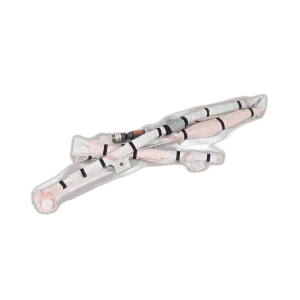
Component of the vehicle's Supplemental Restraint System (SRS). Contains a chemical propellant and inflator. Integrates with the Occupant Classification System (OCS) via sensors in the seat cushion.
We Have This Part in Stock



The information in this article is provided for general reference and educational purposes only. Vehicle specifications, procedures, and part compatibility can vary by production date, trim level, and region. Always consult your vehicle's factory service manual and verify part numbers before purchasing or performing repairs. Safety-critical components such as airbags, seat belts, and braking systems should be installed by a qualified professional.
- Mazda CX-5:
- 🎬 Helpful Videos
- 🛍️ Shop This Part
- Symptoms of a Failing Airbag System
- Known Issues, Recalls, and Technical Service Bulletins (TSBs)
- Technical Service Bulletins (TSBs)
- Recalls
- Buying a Used 2013-2023 Mazda CX-5 Airbag
- Physical Inspection Checklist:
- Professional Installation and System Reset: A Requirement
- Why Professional Installation is Mandatory:
- Replacement Costs
- Frequently Asked Questions (FAQ)
- 🎟️ Get 5% Off