

2022-2024 Kia EV6 Air Bag Module: Decoding Warning Lights and Replacement Rules
This guide covers the critical programming requirements, common fault codes, and how to safely replace the SRS module in your Kia EV6.
- If the airbag warning light is on, the entire airbag system is disabled and will not deploy in a crash.
- A new or used replacement module MUST be programmed ('variant coded') to the vehicle by a dealer or specially equipped shop.
- After an accident, the original module stores permanent 'crash data' and must be replaced or sent to a specialist for a reset.
- When buying a used module, you must verify it came from a crash-free vehicle and that the part number (95910-CV100) is an exact match.
What the Air Bag Control Module Does in Your EV6
The Air Bag Control Module is the brain of your EV6's passive safety system. It's a small but critical computer, typically located under the center console, that is responsible for one thing: protecting the vehicle's occupants during a crash. It continuously gathers information from impact sensors located at the front and sides of the vehicle, as well as sensors in the seats and seat belt buckles. In the event of a collision, the module analyzes the severity and direction of the impact and determines which specific safety devices to activate. This includes deploying the necessary airbags and triggering the seat belt pretensioners, which are explosive charges that instantly tighten the seat belts to hold occupants securely in place. When the system is functioning correctly, an airbag warning light on the dash will illuminate for about six seconds upon starting the car and then turn off.
Symptoms of a Failing Air Bag Module
The Airbag Warning Light
The most common and direct symptom of a problem with the airbag system is an illuminated Supplemental Restraint System (SRS) warning light on your instrument cluster. According to the owner's manual, you should have the vehicle serviced by a professional if you notice any of the following behaviors:
- The light does not turn on briefly when you start the vehicle.
- The light stays on after the initial 6-second system check.
- The light comes on while you are driving.
- The light blinks.
Warning: When the SRS warning light is on, the entire airbag system is deactivated. The airbags and seat belt pretensioners will NOT deploy in a crash. It is critical to have the system diagnosed and repaired as soon as possible.
Diagnostic Trouble Codes (DTCs)
A professional scan tool that can read SRS codes (which typically start with the letter 'B' for Body) is required for diagnosis. While no issues are widely reported for the EV6 specifically, common Kia airbag module codes include:
- B1620: Internal Fault in the control module.
- B1100 / B0090: Airbag Control Unit Malfunction / Internal Failure.
- B1762 / B1683: ACU (Airbag Control Unit) Coding Error, indicating a programming mismatch.
- Codes indicating high or low resistance in specific components (e.g., B1346 for the driver's airbag) often point to a wiring or component issue rather than the module itself.
In some cases, a faulty module may fail to communicate with diagnostic tools altogether, which is a strong indicator of internal module failure.
Known Issues, Recalls, and TSBs for 2022-2024 Kia EV6
As of mid-2024, there are no specific recalls or widespread Technical Service Bulletins (TSBs) for the Air Bag Control Module itself on the 2022-2024 Kia EV6. However, it's important to be aware of other vehicle recalls.
- ICCU Recall: A significant recall (NHTSA ID 24V200, Kia campaign SC302) was issued for the Integrated Charging Control Unit (ICCU), which could fail and lead to a loss of drive power. This does not directly affect the airbag module but is a critical safety update for the vehicle.
Always check the latest recall information with a Kia dealer or on the NHTSA website using your vehicle's VIN.
Replacement: Programming, Crash Data, and Costs
Critical: Programming and Variant Coding
Replacing the Air Bag Control Module in a Kia EV6 is not a simple plug-and-play job. A new module must be programmed to the vehicle using a procedure called 'variant coding'.
- What is Variant Coding? This process tells the new module about the specific safety equipment installed in your vehicle (e.g., number of airbags, types of sensors). Without correct coding, the system will not function, and the airbag light will remain on.
- Who Can Program It? This procedure requires a dealer-level diagnostic tool, such as Kia's GDS (Global Diagnostic System). A well-equipped independent shop that specializes in Hyundai/Kia may also have this capability, but it is not something a typical DIY mechanic or locksmith can perform.
- Reading the Code: The variant code, a short alphanumeric string, can be read from the original module before it is removed. This is the easiest way to ensure the new module is programmed correctly. If the old module is completely dead and cannot be read, the code must be retrieved from a Kia dealership using the VIN.
After an Accident: "Crash Data" Explained
Warning: If your EV6 has been in an accident that caused the airbags or seat belt pretensioners to deploy, the original Air Bag Control Module is permanently locked. It stores 'hard codes' or 'crash data' that cannot be erased with a standard diagnostic scanner.
After a deployment, official Kia repair procedures, along with I-CAR guidelines, mandate that the Air Bag Control Module (SRSCM) MUST be replaced along with all deployed components. However, an alternative exists: specialized mail-in services can reset your original module. These services physically access the module's memory chip to erase the crash data, restoring it to its factory state. The major advantage of this is that the module retains its original VIN and variant coding, meaning no additional programming is required upon reinstallation.
Buying a Used EV6 Air Bag Module: What You MUST Know
Purchasing a used Air Bag Control Module can be a cost-effective option, but it carries significant risks if you are not careful. For this specific part, a used OEM module is a viable alternative to an expensive new one, provided you follow these rules.
- Verify No Crash Data: This is the single most important rule. The module MUST come from a vehicle that has not been in an accident. Ask the seller for the VIN of the donor vehicle so you can run a history report. If the module has crash data stored, it is unusable unless you send it to a reset service.
- Exact Part Number Match: The part number on the replacement module must be an exact match to your original. The primary part number for this range is 95910-CV100. Using a module with a different part number, even if it looks identical, will likely result in programming failures and a non-functional system.
- Physical Inspection: When you receive the part, inspect it for any signs of physical damage, especially to the connectors and pins. Check for any evidence of water intrusion or corrosion, which can cause internal failure.
- Reputable Source: Buy from a trusted, established auto recycler that guarantees the part is crash-free and provides a warranty.
Cost Breakdown
Prices can vary based on your location and the supplier. Here are typical cost estimates:
| Part or Service | Estimated Cost |
|---|---|
| New OEM Module | $370 - $570 |
| Used OEM Module (Crash-Free) | $100 - $250 |
| Mail-in Reset Service (for crashed modules) | $50 - $75 |
| Shop Labor (Replacement & Programming) | $150 - $300 |
DIY Replacement Guide Overview
Physically swapping the module is feasible for an experienced DIYer, but programming requires professional tools. If you plan to have your original module reset, you can save on labor by removing and reinstalling it yourself.
Warning: The airbag system contains explosive devices. Failure to follow proper safety procedures can result in accidental deployment, causing serious injury or death.
- Disconnect the Battery: Disconnect the negative terminal of the 12-volt battery.
- Wait: Wait at least 3-15 minutes for the system's backup power (capacitors) to fully discharge. This is a critical step.
- Locate the Module: The Air Bag Control Module is typically located under the center console, often forward of the gear selector area. You will need to remove surrounding trim panels to access it.
- Remove the Module: Carefully disconnect the electrical connectors. Be gentle with the locking tabs. Unbolt the module from the vehicle floor (there are usually three bolts). Note the orientation of the module; it must be installed the same way.
- Install the New/Reset Module: Bolt the replacement module into place, ensuring it is secure and level. Reconnect the electrical harnesses.
- Reassemble and Reconnect: Reinstall all trim panels. Only after the module is fully installed and connected should you reconnect the 12-volt battery.
- Programming/Verification: Turn the ignition on. If you used a reset original module, the airbag light should turn off after its 6-second check. If you installed a new or used module, the light will likely stay on, and the vehicle must now be taken to a dealer or qualified shop for variant coding.
Frequently Asked Questions
Does a new or used airbag module for a Kia EV6 need to be programmed?
Yes. All new, and most used, airbag modules must be programmed to the vehicle using a process called 'variant coding'. The only exception is if you have your original module's crash data reset by a specialist service; in that case, it retains its programming and is plug-and-play.
Can I reset my airbag module myself after an accident?
No. After airbag deployment, the module stores permanent crash data that cannot be cleared with a standard OBD-II scanner. It requires specialized equipment to access the module's internal memory chip. You must either replace the module or send it to a professional mail-in reset service.
Why is my airbag light on if my EV6 hasn't been in a crash?
An airbag light in a non-crashed vehicle indicates a fault somewhere in the system. This could be the control module itself, but it is often caused by a faulty crash sensor, a bad seat belt sensor, or a damaged clock spring in the steering column. A professional diagnosis with an SRS-capable scan tool is needed to read the specific fault code and identify the problem.
Where is the Air Bag Control Module located on a 2022-2024 Kia EV6?
The Air Bag Control Module (SRSCM) is generally located in the center of the vehicle, bolted to the floor pan under the center console. Accessing it requires removing the console and surrounding trim pieces.
Technical Specifications
OEM Part Numbers: 95910CV100
The module is located under the center console and requires 'variant coding' upon replacement.
We Have This Part in Stock

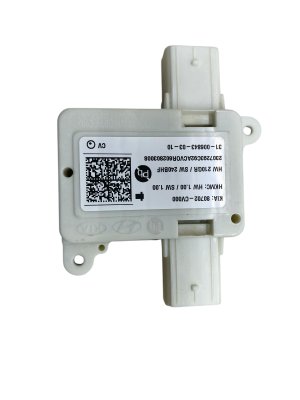

The information in this article is provided for general reference and educational purposes only. Vehicle specifications, procedures, and part compatibility can vary by production date, trim level, and region. Always consult your vehicle's factory service manual and verify part numbers before purchasing or performing repairs. Safety-critical components such as airbags, seat belts, and braking systems should be installed by a qualified professional.
- Kia EV6:
- 🛍️ Shop This Part
- What the Air Bag Control Module Does in Your EV6
- Symptoms of a Failing Air Bag Module
- The Airbag Warning Light
- Diagnostic Trouble Codes (DTCs)
- Known Issues, Recalls, and TSBs for 2022-2024 Kia EV6
- Replacement: Programming, Crash Data, and Costs
- Critical: Programming and Variant Coding
- After an Accident: "Crash Data" Explained
- Buying a Used EV6 Air Bag Module: What You MUST Know
- Cost Breakdown
- DIY Replacement Guide Overview
- Frequently Asked Questions
- 🎟️ Get 5% Off