

2011-2012 Hyundai Genesis Airbag Module: Programming, Resets, and Replacement Guide
Your complete guide to diagnosing and replacing the airbag control module in your 2011-2012 Hyundai Genesis, including critical programming and cost-saving information.
- The primary symptom of failure is a constant airbag warning light, which means your safety systems are disabled.
- A new or used replacement module MUST be professionally programmed to your vehicle's VIN to function.
- A module from a vehicle with deployed airbags contains locked 'crash data' and is unusable unless professionally reset.
- The most cost-effective solution is often to have your original module reset by a mail-in service for around $60, which requires no further programming.
Symptoms of a Failing Air Bag Control Module
The most common and serious symptom of a faulty airbag control module is a continuously illuminated airbag warning light on your instrument cluster. This light, often showing an icon of a person with an airbag, indicates that the Supplemental Restraint System (SRS) is inactive. If this light is on, the airbags and seat belt pretensioners will not deploy in an accident. In some rare cases, a failing module can cause other intermittent electrical issues.
A professional diagnostic scan is required to confirm the cause. Common Diagnostic Trouble Codes (DTCs) associated with a failed module include:
- B1620: Internal Fault in Control Module
- B1650: Crash Data Stored (after an accident)
- B1101 / B1102: General Airbag Control Module Fault
- B1346: High Resistance in Driver or Passenger Airbag Circuit
Known Issues, Recalls, and Technical Service Bulletins (TSBs)
As of mid-2026, there are no active recalls from the National Highway Traffic Safety Administration (NHTSA) specifically for the airbag control module on the 2011-2012 Hyundai Genesis sedan. Searches for this specific vehicle and part show recalls related to other components like the brake light switch and Hydraulic Electronic Control Unit (HECU) for the ABS system, but not the SRS module itself.
It is worth noting that a significant recall (NHTSA Campaign 174) was issued for the 2011-2013 Hyundai Sonata due to potential electrical overstress in the airbag control unit, which could prevent airbags from deploying. While this does not apply to the Genesis, it highlights a potential failure mode for Hyundai airbag systems of this era.
Pro Tip: Before assuming the module is bad, have a technician check all related wiring, especially the connectors under the front seats. Loose or corroded connectors are a common cause for an airbag light and are much cheaper to fix than replacing the module.
Programming, Installation, and Calibration Requirements
This is the most critical aspect of replacing the airbag module in your Genesis. Failure to follow these procedures will result in a non-functional safety system.
New or Used Module Installation
If you install a new OEM module or a used module from another vehicle, it must be programmed to your car. This process, sometimes called 'variant coding,' uses a dealer-level diagnostic tool to write your vehicle's specific VIN and equipment configuration (e.g., number of airbags, seat types) to the module. Without this step, the module will not communicate correctly with the rest of the car, and the airbag light will remain on.
Resetting Your Original Module
If your original module has stored crash data after an accident, it can be sent to a specialized repair service for a reset. These services physically access the module's internal memory chip to erase the locked crash data, restoring it to its factory state. The key benefit is that a reset module retains its original VIN and programming. Therefore, no additional programming is required upon reinstallation. You simply install it, and the system is ready once all other crash-related parts (like deployed airbags and seat belts) are replaced.
Warning: Most dealerships will refuse to install or program a used airbag control module due to liability concerns. If you plan to use a salvaged module, you must find an independent shop with the proper Hyundai-compatible diagnostic equipment (like a GDS or J2534 pass-through device) and a willingness to perform the work.
Buying a Used Air Bag Control Module: What You Must Know
Purchasing a used OEM module is a cost-effective option, but it requires careful vetting to ensure safety and compatibility.
- Verify No Crash Data: This is the single most important rule. Only buy a module from a vehicle that has NOT had its airbags deployed. A module from a wrecked car with deployed airbags will be locked with crash data and is useless until it is professionally reset. Reputable sellers will guarantee the module is from a non-deployed vehicle.
- Match the Part Number Exactly: The part number on the replacement module must perfectly match your original one. For the 2011-2012 Genesis, the primary OEM part number is 95910-3M150. Using an incorrect part number can lead to system incompatibility.
- Physical Inspection: When you receive the part, inspect the case for any signs of water damage, corrosion, or physical cracks. The connectors should be clean and the pins straight.
- No Aftermarket Options: As of now, major aftermarket manufacturers like Dorman do not produce a replacement for this specific airbag module. Your options are limited to new OEM, used OEM, or having your original module reset.
- Factor in Programming Costs: Remember that a used module will require programming by a professional, which adds to the total cost.
Replacement Cost Comparison
The costs for repairing your airbag system can vary dramatically depending on the route you choose. Labor for the physical installation is typically 1-1.5 hours.
| Part/Service | Estimated Cost | Notes |
|---|---|---|
| New OEM Module | $675 - $930 | Part only. Requires dealer programming. |
| Used OEM Module | $50 - $150 | Part only. Must be from a non-deployed car and requires professional programming. |
| Module Reset Service | $60 - $80 | You mail in your original module. No programming needed after reset. |
| Shop Labor (Installation) | $120 - $180 | To physically swap the module. |
| Shop Labor (Programming) | $150 - $300 | Estimated cost for a dealer or specialist to program a new or used module. |
Frequently Asked Questions (FAQ)
Can I replace the airbag module myself?
The physical replacement is straightforward for a DIY mechanic. It's typically located under the center console and involves removing trim and a few bolts. However, you cannot complete the job yourself unless you have access to dealer-level diagnostic tools for programming. The final, critical step of programming must be done by a professional.
Will the airbag light turn off automatically after I replace the module?
No. If you install a new or used module, the light will stay on until the module is programmed to your car's VIN. If you reinstall your original module after having it professionally reset, the light should turn off, provided all other SRS system faults (like deployed airbags or bad sensors) have been fixed.
Is it safe to buy a used airbag module from a junkyard or online?
It can be, but only if you buy from a reputable source that guarantees the module came from a vehicle where the airbags did not deploy. A module with crash data is non-functional. Always confirm the seller's return policy and guarantee before purchasing.
What's the difference between resetting my module and programming a new one?
Resetting involves clearing crash data from your car's original module, which can then be reinstalled without further programming. Programming is required when you introduce a different module (new or used) to the car; it teaches the module about the specific vehicle it's now in.
Technical Specifications
OEM Part Numbers: 95910-3M150 959103M150
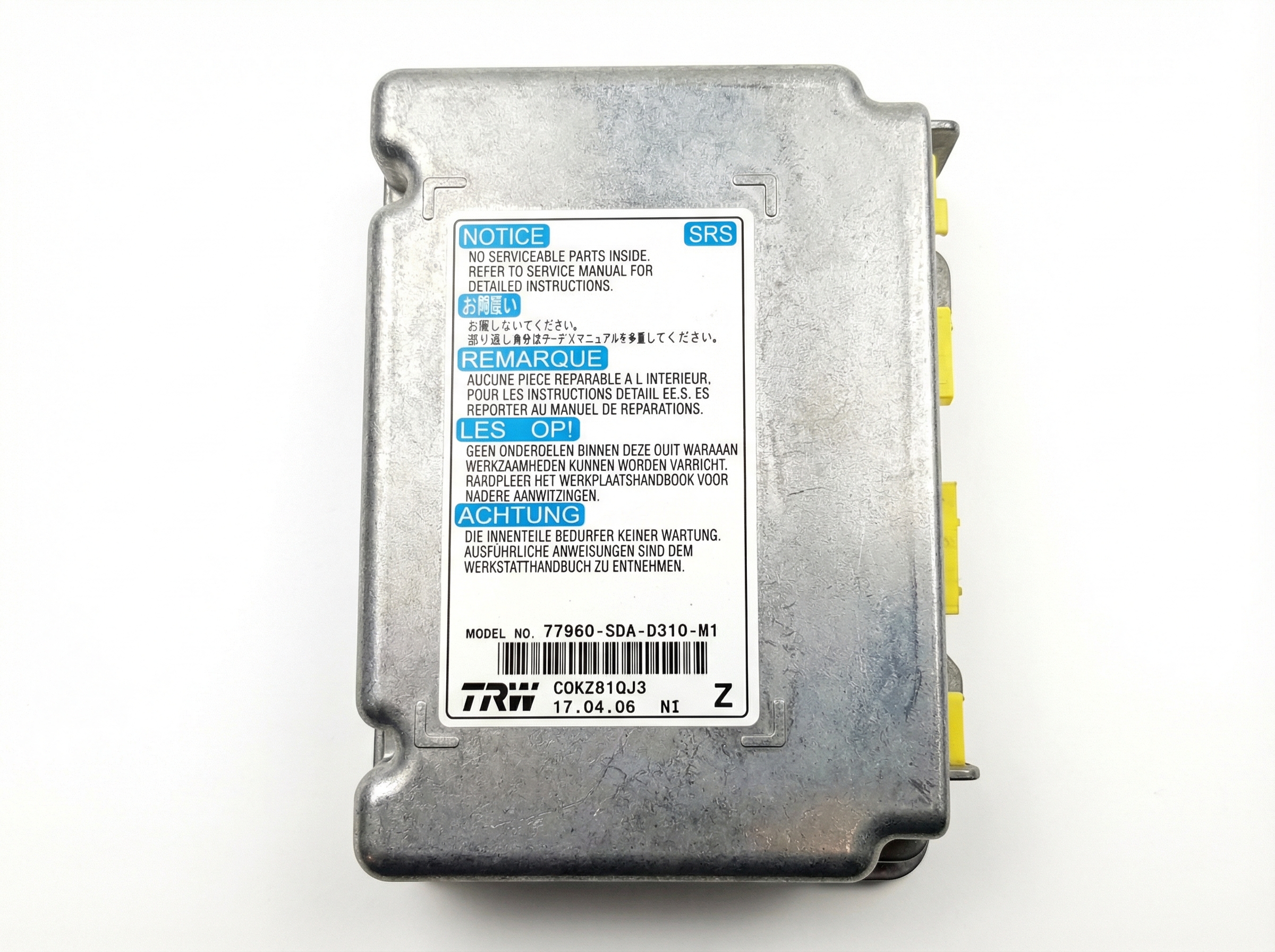
Located under the center console. Controls deployment of all airbags and seat belt pretensioners.
We Have This Part in Stock



The information in this article is provided for general reference and educational purposes only. Vehicle specifications, procedures, and part compatibility can vary by production date, trim level, and region. Always consult your vehicle's factory service manual and verify part numbers before purchasing or performing repairs. Safety-critical components such as airbags, seat belts, and braking systems should be installed by a qualified professional.
- Hyundai Genesis:
- 🛍️ Shop This Part
- Symptoms of a Failing Air Bag Control Module
- Known Issues, Recalls, and Technical Service Bulletins (TSBs)
- Programming, Installation, and Calibration Requirements
- New or Used Module Installation
- Resetting Your Original Module
- Buying a Used Air Bag Control Module: What You Must Know
- Replacement Cost Comparison
- Frequently Asked Questions (FAQ)
- 🎟️ Get 5% Off