

2017-2018 Hyundai Elantra Air Bag Module: Decoding the Airbag Light and Replacement Guide
This guide covers the common failures, recall information, and essential programming requirements for the 2017-2018 Elantra's air bag control module.
- A faulty Air Bag Control Module will disable your entire airbag system. Do not drive with the airbag light on.
- The correct OEM part number is 95910-F2000. You must match this number exactly.
- A replacement module (new or used) will likely require programming (variant coding) by a Hyundai dealer or specialist to work correctly.
- Never buy a used module from a vehicle that had its airbags deployed, as it will contain locked crash data.
Known Issues and Recalls
While the air bag control module itself has not been the subject of a specific recall for the 2017-2018 Elantra, there was a related safety recall that owners should be aware of.
Safety Recall 156 (NHTSA ID: 16V832000)
This recall concerned the driver's frontal airbag inflator on certain 2017 Hyundai Elantra vehicles. An improperly installed end seal could result in reduced inflation of the airbag during a crash, increasing the risk of injury. The remedy was for Hyundai dealers to replace the driver's frontal airbag module free of charge. While this recall did not target the control module (ACU), it highlights the integrated nature of the SRS system. You can check if a specific vehicle is affected by entering its VIN on Hyundai's recall website.
Symptoms of a Failing Air Bag Control Module


A faulty air bag control module is a serious safety concern because it can disable the entire supplemental restraint system. Here are the most common signs of a problem:
- Airbag Warning Light is On: This is the most common symptom. The SRS light on the dashboard will illuminate and stay on, indicating a fault has been detected and stored in the system.
- No Communication with Scan Tool: A professional diagnostic scanner may be unable to communicate with the SRS module. This often points to an internal failure of the module itself, such as a hardware defect or power issue.
- Stored Fault Codes: A scan tool can retrieve specific Diagnostic Trouble Codes (DTCs) from the module. Codes like B1100 (Airbag Control Unit Fault), B1101 (ACU Configuration Error), or U0001 (High-Speed CAN Communication Bus Fault) point directly to a module issue.
Pro Tip: An illuminated airbag light doesn't always mean the main control module has failed. The fault could be with a related component like a crash sensor, clock spring, or seatbelt pretensioner. A proper diagnosis with an SRS-capable scan tool is necessary to pinpoint the exact cause.
Programming and Installation Requirements

This is the most critical area to understand when replacing the air bag control module on a 2017-2018 Elantra.
After installation, the module will likely require programming or variant coding. A new or used module must be configured to the specific options on your vehicle. Failure to do so can result in fault codes like B1762 (ACU Coding Error) 🎬 Watch: How to perform Hyundai variant coding to fix B1762 and a persistent airbag light. This process typically requires a dealer-level diagnostic tool, such as a Hyundai GDS scanner. While some advanced independent shops may have this capability, a trip to the dealership is often necessary for programming.
Warning: Do not assume a used module will be plug-and-play, even if the part number is identical. It must be properly coded to your vehicle's VIN and equipment list to function correctly.
Buying a Used Air Bag Control Module for Your 2017-2018 Elantra
Purchasing a used OEM module can offer significant savings, but it requires careful attention to detail to ensure safety and compatibility.
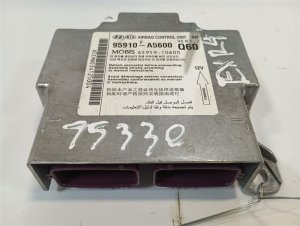
- Verify the Part Number: You must match the OEM part number exactly. For the 2017-2018 Elantra with the 1.4L or 2.0L engine, the primary part number is 95910-F2000. Do not install a module with a different part number.
- Confirm No Crash Data: This is the most important rule. If a module comes from a vehicle where the airbags deployed, it will have "crash data" permanently stored. This locks the module, rendering it useless. Always buy from reputable sellers who guarantee the module is from a non-wrecked vehicle and has no crash data.
- Inspect for Damage: When you receive the part, check for any signs of physical damage, corrosion, or water intrusion. The module is typically located in the center console, an area susceptible to spills. Any moisture damage can destroy the internal electronics.
- Budget for Programming: Assume you will need to pay for professional programming. Factor the cost of a dealer or specialist visit into the total price of your repair.
Replacement Cost Comparison
Prices can vary based on location and supplier. The following is an estimated breakdown of costs:
| Part Type | Estimated Cost |
|---|---|
| New OEM (Dealer) | $530 - $820 |
| Used OEM (Recycled) | $75 - $220 |
| Module Reset Service | $50 - $150 (You send your original module to be cleared of crash data) |
| Shop Labor for Installation & Programming | $140 - $230 |
Frequently Asked Questions (FAQ)
Can I drive with the airbag light on?
No. When the airbag warning light is on, the entire Supplemental Restraint System (SRS) is disabled. This means that in the event of an accident, the airbags and seatbelt pretensioners will not deploy, significantly increasing the risk of serious injury. You should have the vehicle serviced immediately.
Where is the airbag control module located on a 2017-2018 Elantra?
The air bag control module is typically located under the center console, between the two front seats. Accessing it requires removing parts of the console trim.
Can I reset the airbag module myself after an accident?
No, not with standard tools. After a crash that deploys the airbags, the module stores permanent "hard codes" and crash data that cannot be cleared with a regular OBD-II scanner. The module must either be replaced or sent to a specialized service that can electronically reset it to factory condition by clearing the internal memory.
Will a used airbag module from another Elantra work in my car?
It might, but with important conditions. The part number must be an exact match (95910-F2000), the module must not have crash data stored on it, and it will almost certainly need to be programmed (variant coded) to your specific vehicle by a dealer or specialist. Simply swapping the part is unlikely to solve the problem.
Helpful Videos

Technical Specifications
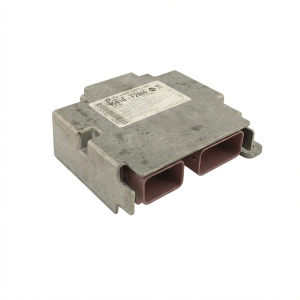
OEM Part Numbers: 95910-F2000 95910F2000
Fits 2017-2018 Hyundai Elantra sedans with 1.4L turbo or 2.0L engines.
We Have This Part in Stock



The information in this article is provided for general reference and educational purposes only. Vehicle specifications, procedures, and part compatibility can vary by production date, trim level, and region. Always consult your vehicle's factory service manual and verify part numbers before purchasing or performing repairs. Safety-critical components such as airbags, seat belts, and braking systems should be installed by a qualified professional.
- Hyundai Elantra:
- 🎬 Helpful Videos
- 🛍️ Shop This Part
- Known Issues and Recalls
- Safety Recall 156 (NHTSA ID: 16V832000)
- Symptoms of a Failing Air Bag Control Module
- Programming and Installation Requirements
- Buying a Used Air Bag Control Module for Your 2017-2018 Elantra
- Replacement Cost Comparison
- Frequently Asked Questions (FAQ)
- 🎟️ Get 5% Off