

2013-2017 Ford C-Max Air Bag Module: Programming, Recalls, and Crash Data Explained
This definitive guide covers the critical steps for replacing your C-Max's air bag module, from decoding part numbers to the mandatory reprogramming process.
- A replacement module MUST be programmed to your vehicle's VIN and options to function; it is not a plug-and-play part.
- Modules from crashed vehicles contain locked 'crash data' (DTC B1193) and are unusable until reset by a specialist service.
- A recall (14S04) was issued for 2013-2014 models for a software update. Ensure any replacement module has the latest programming.
- An illuminated airbag light means the entire safety restraint system is disabled and will not work in a crash.
Symptoms of a Failing Air Bag Control Module
The most common and obvious sign of a problem with the air bag system is a constantly illuminated airbag warning light on your instrument cluster. This light indicates that the Restraints Control Module (RCM) has detected a fault and has disabled the Supplemental Restraint System (SRS). While the car will still drive, the airbags and seatbelt pretensioners will not function in a crash.
- Airbag Warning Light: A persistent red or yellow airbag icon on the dashboard is the primary indicator of a fault.
- Diagnostic Trouble Codes (DTCs): A professional scan tool capable of reading SRS codes is needed for proper diagnosis. Common codes associated with module failure include:
- B1193: This code means "Crash Event Storage Full and Locked." It indicates the vehicle has been in an accident and the module has stored crash data, locking it from further operation. This code cannot be cleared with a standard scan tool.
- U-Series Codes (e.g., U0154): These are communication codes, such as "Lost Communication With Restraints Occupant Classification System Module," which can point to a problem with the RCM or related sensors.
- Internal module failure codes.
Known Issues, Recalls, and Technical Service Bulletins (TSBs)
Recall 14S04 / NHTSA 14V237000: Restraint Control Module Software
Ford issued a significant safety recall for 2013-2014 Ford C-Max models concerning the RCM software. An error in the programming could cause a delayed deployment of the side-curtain rollover airbag in certain crash scenarios, increasing the risk of injury. The remedy was for Ford dealers to reprogram the RCM with updated software, free of charge. Before purchasing a used module or vehicle, it is wise to check if this recall has been completed by entering the vehicle's VIN on the NHTSA website.
Warning: Even if your vehicle was not part of the recall, a used module you purchase might be. It's critical that any replacement module has the latest software, which is typically handled during the programming process.
Buying a Used 2013-2017 C-Max Air Bag Module: What to Know
Purchasing a used RCM can be a cost-effective solution, but it requires careful attention to two critical details: crash data and programming.
1. Verify the Module is "Crash-Free"
A module taken from a vehicle that was in an accident will have crash data stored and will be locked (displaying code B1193). This module is unusable until it has been sent to a specialized service to have the data cleared and the module reset. When buying a used module, always confirm with the seller that it was removed from a non-wrecked vehicle and does not contain crash data. Reputable sellers will guarantee their modules are reset or virgin.
2. Match the Part Number Exactly
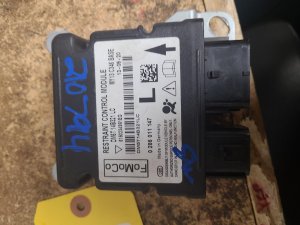
The engineering part number is printed directly on the module's label. For the 2013-2017 C-Max, it will follow a format like DM5T-14B321-XX, where 'XX' is a two-letter suffix (e.g., EB, EC, ED, etc.). While some suffixes may be interchangeable if they are simple software revisions, the safest practice is to match the full part number exactly to the one you are replacing. Using an incompatible module can lead to system malfunctions or programming failures.
3. Physical Inspection
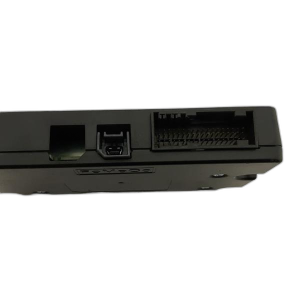
When you receive the part, inspect the casing for any signs of physical damage, cracks, or corrosion. Check the electrical connector pins to ensure they are straight, clean, and free of any green or white corrosion that would indicate water intrusion.
Programming and Calibration: The Most Important Step
A replacement Air Bag Control Module will not work by simply plugging it in. It must be programmed to your vehicle's specific Vehicle Identification Number (VIN) and factory options. This process, often called loading "As-Built" data, configures the module to know what specific safety components (e.g., number of airbags, type of seatbelts) are in your car.
- Dealer Programming: A Ford dealership can program a new or used module using their Integrated Diagnostic System (IDS). This is the most straightforward but also the most expensive option.
- Independent Shop: Many independent repair shops with professional-grade diagnostic tools (like Autel or Snap-on) or a J2534 pass-thru device can perform RCM programming.
- DIY with FORScan: For the advanced DIY mechanic, it is possible to program the module using a computer, a compatible OBDII adapter (such as a J2534 device or OBDLink EX), and FORScan software with an extended license. This involves downloading your vehicle's original As-Built data from Ford's motorcraft service website and writing it to the replacement module.
Warning: Incorrectly programming the RCM can render the module useless or, worse, lead to a non-functioning safety system. This task should only be undertaken by qualified professionals or highly experienced DIYers.
Pro Tip: An alternative to buying a used module and programming it is to send your original module (if it has crash data) to a reset service. They will clear the crash data and send it back. Since it's your original module, it retains the car's programming and becomes plug-and-play, with no additional programming needed. This is often the simplest solution after an accident.
Replacement Cost Comparison
Prices can vary significantly based on your location and the chosen repair path. The following are estimates to help you understand the potential costs.
| Service / Part | Estimated Cost |
|---|---|
| New OEM Module (Part Only) | $200 - $400 |
| Used OEM Module (Part Only) | $40 - $100 |
| Module Reset Service | $50 - $150 |
| Shop Labor (Replacement & Programming) | $250 - $500 |
| Total Dealer Replacement (New OEM Part + Labor) | $500 - $1,000+ |
Frequently Asked Questions (FAQ)
Where is the air bag module located on a 2013-2017 Ford C-Max?
The Air Bag Control Module (RCM) is located in the center of the vehicle, under the center console, often below the area of the radio and climate controls. Access requires removing the side panels of the center console.
Can I drive my C-Max with a bad airbag module?
Yes, the vehicle will still drive, but it is a significant safety risk. A bad module or an illuminated airbag light means the entire Supplemental Restraint System (airbags and seatbelt pretensioners) is disabled and will not deploy in an accident. It should be repaired as soon as possible.
Will a used airbag module from a junkyard work?
Yes, but with critical conditions. The module must not have crash data stored on it, and it absolutely must be reprogrammed to your car's VIN and specific options to function. Simply plugging it in will not work.
Why is my airbag light still on after replacing the module?
There are two likely reasons. First, the replacement module was not programmed to the vehicle. Second, there may be another fault in the SRS system, such as a bad impact sensor, clockspring, or seat sensor, that was the original cause of the problem. A full diagnostic scan is necessary to identify all fault codes.
Technical Specifications
OEM Part Numbers: DM5T14B321EB DM5T14B321EC DM5T14B321ED DM5T14B321EE DM5T14B321EF DM5T14B321EG DM5T14B321EH DM5T14B321EJ DM5Z-14B321-E DM5Z-14B321-R DM5Z14B321P
Location: Under center console. Fuse: Located in the Body Control Module (BCM) fuse panel, fuse #86 (10A).
We Have This Part in Stock


The information in this article is provided for general reference and educational purposes only. Vehicle specifications, procedures, and part compatibility can vary by production date, trim level, and region. Always consult your vehicle's factory service manual and verify part numbers before purchasing or performing repairs. Safety-critical components such as airbags, seat belts, and braking systems should be installed by a qualified professional.
- Ford C-Max:
- 🛍️ Shop This Part
- Symptoms of a Failing Air Bag Control Module
- Known Issues, Recalls, and Technical Service Bulletins (TSBs)
- Recall 14S04 / NHTSA 14V237000: Restraint Control Module Software
- Buying a Used 2013-2017 C-Max Air Bag Module: What to Know
- 1. Verify the Module is "Crash-Free"
- 2. Match the Part Number Exactly
- 3. Physical Inspection
- Programming and Calibration: The Most Important Step
- Replacement Cost Comparison
- Frequently Asked Questions (FAQ)
- 🎟️ Get 5% Off