

1994-96 Avenger, Sebring, Eclipse, Galant & Talon Airbag Module: Fixing the SRS Light and Crash Data Issues
Your definitive guide to diagnosing, replacing, and understanding the shared airbag control module in these Diamond-Star platform vehicles.
- This module is not VIN-programmed, but it stores permanent 'crash data' after an impact that disables the system.
- A used module from a wrecked car is useless until it is professionally reset to clear the stored crash data.
- The primary symptom of a fault is the SRS/airbag warning light staying on, which means the airbags will NOT deploy in an accident.
- This part fits the Chrysler Sebring COUPE only; it does not fit the convertible model.
Symptoms of a Failing Air Bag Control Module
The signs of a faulty airbag module are usually very clear, but it's important to distinguish them from other issues in the SRS system.
- Airbag/SRS Warning Light: The most common and immediate symptom is the airbag warning light (often showing an icon of a person with an airbag, or the letters "SRS") staying illuminated on your dashboard after the initial startup check. This indicates a fault has been detected, and the entire airbag system is disabled as a safety precaution.
- Failure to Deploy: In a collision, the most serious symptom is the failure of the airbags to deploy. This indicates a complete failure of the module or another critical system component.
- Intermittent Electrical Issues: In rare cases, a failing module can cause other strange electrical problems, like random warning lights or battery drain, due to internal short circuits.
- Diagnostic Trouble Codes (DTCs): A professional scan tool can read specific codes from the module. For these 1994-1996 vehicles, you may need more than a basic code reader. Codes indicating an "internal fault" or "crash data stored" point directly to a problem with the module itself. On some older systems, the airbag light may flash a sequence of blinks to indicate a specific fault code.
Known Issues, Recalls, and Technical Bulletins
While there are no widespread, major recalls specifically for the airbag control module on these exact 1994-1996 models, some related issues and common problems for electronics of this era are worth noting.
- No Specific Recalls: Searches for recalls on the 1995-1996 Dodge Avenger, 1995-1996 Chrysler Sebring Coupe, 1995 Mitsubishi Eclipse, 1994-1996 Mitsubishi Galant, and 1995 Eagle Talon do not show any specific campaigns for replacing the airbag control module. Later model year Avengers and Sebrings were involved in large airbag recalls, but these do not apply to the mid-90s generation.
- Water Intrusion: A common failure point for airbag modules in many vehicles of this period is water damage. The module is typically located on the floor, on the central transmission tunnel under the center console. Spilled drinks or a water leak from a bad seal can allow moisture to reach the module, causing corrosion on the circuit board and leading to failure.
- Capacitor Failure: Like much of the electronics from the 1990s, these modules can be susceptible to aging capacitors. When capacitors fail, they can leak, lose their ability to hold a charge, and cause the module to malfunction, triggering the SRS light.
Compatibility Warning: This module fits the 1995-1996 Chrysler Sebring COUPE models only. It does NOT fit the Sebring Convertible of the same years. The coupe was built by Mitsubishi on the DSM platform alongside the Eclipse and Talon, while the convertible was built by Chrysler on a different chassis.
The Critical Role of "Crash Data"
Understanding crash data is the single most important concept when dealing with this part. After a vehicle is in an accident, the airbag module permanently stores data about the event, even if the airbags did not deploy. This is often referred to as a "hard code" or "crash event."
- System Lockout: Once crash data is stored, the module locks itself and disables the airbag system. This is a safety feature to ensure the entire system is inspected and repaired after an incident.
- Cannot Be Cleared by Scanners: This stored crash data cannot be cleared with a standard OBD-II scanner or by disconnecting the battery. It requires specialized equipment to access the module's internal memory (EEPROM) and wipe the data.
- Used Parts Concern: A used module pulled from a vehicle that was in an accident will have this crash data stored. Installing it in your car will not solve your problem; the airbag light will remain on, and the system will stay disabled.
Buying a Used Air Bag Control Module
A used OEM module is an excellent, cost-effective choice, as new aftermarket or OEM parts are generally unavailable for vehicles of this age. However, you must be an informed buyer.
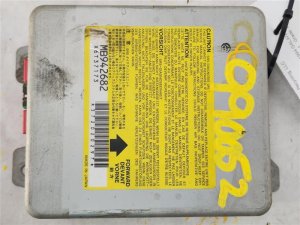
- Verify the Part Number: Match the part number on your original module exactly. The most common part numbers for this group of vehicles are Mitsubishi numbers like MB942682, MR243890, or X006T37173.
- Ask About Crash Data: This is the most important question. Only buy a module that is guaranteed to be from a non-wrecked vehicle with no airbag deployment, or one that has been professionally reset. A module with stored crash data is just a paperweight until it is sent to a reset service.
- Inspect for Damage: Check the casing for any cracks or signs of being dropped. Look closely at the connector pins for any corrosion (green or white powder), which indicates past water damage. Do not buy a module with any signs of corrosion.
- Plan for a Reset: The safest and most reliable approach is to buy a used module with a matching part number and send it to a professional SRS module reset service before installation. These services are affordable (typically under $100) and ensure the module is clear of any old fault codes or hidden crash data.
Programming and Installation Requirements
For these mid-1990s vehicles, the primary concern is not complex programming but ensuring the module is clear of data.
- No VIN Programming Required: Unlike modern vehicles, this airbag module is not typically programmed or "locked" to the vehicle's VIN. You can install a used module from another vehicle without needing a dealer to program it.
- Crash Data Reset is Key: The module MUST be free of stored crash data to function. You can either buy a module that has already been reset or send your original/used module to a reset service. After a reset service, the module is plug-and-play.
- Fault Code Clearing: After installing a clean, reset module and ensuring all other SRS components (sensors, clockspring, airbags) are properly connected, you may still need to clear any "soft" fault codes from the system using a compatible SRS diagnostic scanner. In some cases, simply disconnecting the battery during the install is sufficient.
Pro Tip: The safest procedure is to have your vehicle's original module reset. This guarantees 100% compatibility and avoids any potential issues. If your original module is physically damaged (e.g., water corrosion), the next best option is to buy a used module with the exact same part number and have it reset before installation.
Replacement Overview
Replacing the airbag module is straightforward for a DIY mechanic with basic tools. The module is typically located in the center of the vehicle, bolted to the floor under the center console or forward dash area.
- DISCONNECT THE BATTERY. This is the most critical safety step. Disconnect the negative battery terminal and wait at least 15-20 minutes for the system's backup power capacitors to fully discharge. Failure to do so could result in accidental airbag deployment.
- Access the Module: You will likely need to remove the center console trim pieces to get to the module.
- Unplug and Unbolt: Carefully disconnect the electrical connectors. They often have security tabs that need to be pressed or slid. Then, remove the bolts (usually 3 or 4) holding the module bracket to the vehicle's floor tunnel.
- Install the New Module: Bolt the replacement (and reset) module into place. Ensure the arrow on the module is pointing toward the front of the vehicle. Reconnect the electrical plugs securely.
- Reassemble and Reconnect: Reinstall the console trim, and only then, reconnect the negative battery terminal.
- Verify Operation: Turn the ignition to the 'ON' position. The SRS light should illuminate for a few seconds and then turn off. If it stays on, a fault is still present in the system that needs to be diagnosed with a scanner.
Cost Comparison
Replacing the airbag module can have a wide range of costs depending on the path you choose. Given the age of these vehicles, new parts are generally not an option.
| Part/Service | Estimated Cost | Notes |
|---|---|---|
| New OEM | $600 - $1,000+ | Likely unavailable or discontinued. Prices are estimates based on general module costs, not this specific part. |
| New Aftermarket | Not Available | No major aftermarket manufacturers produce this specific module. |
| Used OEM (Untested/As-Is) | $25 - $75 | High risk of containing stored crash data, making it non-functional without a reset. |
| Used OEM (Guaranteed Reset) | $75 - $150 | A good option if available from a reputable seller who performs the reset service. |
| Airbag Module Reset Service | $50 - $100 | You mail in your original or a used module to have the crash data professionally cleared. |
| Shop Labor for Replacement | $155 - $228 | Typically 1-2 hours of labor to access and replace the module. |
Frequently Asked Questions (FAQ)
Do I have to program a used airbag module for my 1995 Eclipse?
No, you do not need to program the module to your car's VIN. However, you absolutely MUST ensure the module is free of stored crash data. The best practice is to have any used module sent to a reset service before you install it.
Can I just disconnect the battery to clear the airbag light?
No. If the light is on due to stored crash data from an accident, disconnecting the battery will not clear it. If the light was triggered by a temporary fault (like unplugging a seat sensor with the battery connected), a scanner is usually required to clear the code after the fault is fixed.
Why is my airbag light still on after replacing the module?
There are two common reasons. First, the "new" used module you installed has crash data stored in it. Second, there is another fault in the SRS system, such as a bad clockspring, a faulty seat belt pretensioner, or a damaged crash sensor, that needs to be diagnosed and repaired.
Is it safe to drive with the airbag light on?
No. While the vehicle will drive normally, an illuminated SRS warning light means the entire airbag system is disabled. In the event of a crash, the airbags and seat belt pretensioners will not deploy, significantly increasing the risk of injury. You should have the system repaired immediately.
Technical Specifications
OEM Part Numbers: MB942682 MR243890 X006T37173
The module is typically located on the center transmission tunnel, under the instrument panel or center console. It is marked with an arrow that must point toward the front of the vehicle upon installation.
We Have This Part in Stock


The information in this article is provided for general reference and educational purposes only. Vehicle specifications, procedures, and part compatibility can vary by production date, trim level, and region. Always consult your vehicle's factory service manual and verify part numbers before purchasing or performing repairs. Safety-critical components such as airbags, seat belts, and braking systems should be installed by a qualified professional.
- Dodge Avenger:
- Chrysler Sebring:
- Mitsubishi Eclipse:
- Mitsubishi Galant:
- Eagle Talon:
- 🛍️ Shop This Part
- Symptoms of a Failing Air Bag Control Module
- Known Issues, Recalls, and Technical Bulletins
- The Critical Role of "Crash Data"
- Buying a Used Air Bag Control Module
- Programming and Installation Requirements
- Replacement Overview
- Cost Comparison
- Frequently Asked Questions (FAQ)
- 🎟️ Get 5% Off