

2017-2019 Honda CR-V ADAS Camera: Decoding 'Honda Sensing' Failures and Calibration
This guide explains common failures of the 'Honda Sensing' camera, why calibration is mandatory after replacement, and how to choose a reliable used unit.
- Professional calibration is mandatory after replacing the camera or the windshield; skipping it renders safety systems inoperable and dangerous.
- A flood of simultaneous dashboard warnings (ACC, LKAS, CMBS) is the most common sign of camera failure.
- NHTSA has investigated millions of these vehicles for "phantom braking," where the car brakes suddenly for no reason.
- Verify the exact part number by VIN before buying a used camera, as different versions exist for different trim packages (e.g., with/without rain sensors).
Common Symptoms of a Failing ADAS Camera

When the ADAS camera in a 2017-2019 Honda CR-V begins to fail, the vehicle will typically display a series of warning messages on the driver information interface. Because multiple safety systems rely on this single camera, a fault will often disable them all simultaneously. The most common symptom is a dashboard lit up with warnings.
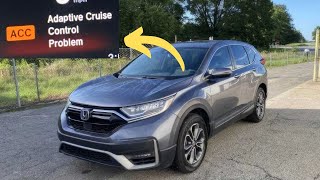
- Multiple Warning Lights: A cascade of error messages such as "Collision Mitigation System Problem," "Road Departure Mitigation System Problem," "Lane Keeping Assist Problem," and "Adaptive Cruise Control Problem 🎬 Watch: Troubleshooting adaptive cruise control warning lights" appearing at the same time often points to a camera failure.
- Diagnostic Trouble Code (DTC) U3000-49: Professional scan tools may reveal the code U3000-49, which indicates an internal electronic failure of the camera control unit. This is a strong indicator that the camera itself has failed and needs replacement.
- Inaccurate or Erratic System Behavior: Before a complete failure, you might notice the Lane Keeping Assist system struggling to stay in the lane or the Adaptive Cruise Control braking erratically. However, this can also be a symptom of a much wider-spread issue with inadvertent braking.
- "Some Driver Assist Systems Cannot Operate" Message: This message can appear if the camera's view is blocked by dirt, snow, or fog. If cleaning the windshield in front of the camera doesn't resolve the issue, it could signify a hardware fault. Overheating can also cause the camera to shut down temporarily.
Known Issues, Investigations, and TSBs
While individual camera failures occur, the Honda Sensing system in these CR-Vs has been subject to wider scrutiny and official investigations.
NHTSA Investigation into Inadvertent Braking
The National Highway Traffic Safety Administration (NHTSA) has conducted a significant investigation into the Collision Mitigation Braking System (CMBS) on 2017-2022 Honda CR-V and Accord models. The probe, which was upgraded to an Engineering Analysis, looked into nearly 3 million vehicles following thousands of complaints about the automatic emergency braking system activating unexpectedly and without obstruction, leading to sudden deceleration. This issue, known as "phantom braking," has been linked to dozens of crashes and injuries. While not always a fault of the camera itself, it highlights a critical issue within the ADAS ecosystem these cameras support.
Technical Service Bulletins (TSBs)
While no TSBs point directly to a widespread defect in the ADAS camera part itself, related bulletins can cause symptoms that owners might confuse with a camera failure:
- TSB 19-039: This bulletin addresses an issue in some 2019 CR-Vs where the Powertrain Control Module (PCM) fails to go into "sleep mode" after performing an evaporative system check. This results in a parasitic battery drain that can lead to a dead battery and various electronic issues upon startup. A low battery voltage can cause control units, including the ADAS camera, to set fault codes.
Important: The initial buyer warnings regarding fitment for AWD models only and not fitting Touring trims appear to be incorrect. The Honda Sensing suite, which uses this camera, was standard on EX, EX-L, and Touring trims for the 2017-2019 model years, which include both FWD and AWD configurations. However, different part numbers exist for models with and without rain sensors, so VIN verification is still crucial.
Buying a Used 2017-2019 CR-V ADAS Camera: What to Check

Given the high cost of a new OEM camera, a used unit is a practical choice. However, this is a sensitive electronic component, and careful inspection is key.
1. Verify the Part Number
This is the most critical step. Honda uses several part numbers for this camera, and they are not always interchangeable. Supersession is common, where a newer part number replaces several older ones. For example, part number 36163-TLA-A07 replaces previous versions like 36163-TLA-A00 through A06. Another series, such as 36163-TLA-A17, is specified for Touring models with a rain sensor and replaces numbers A10 through A16. Always verify the correct part number for your vehicle's specific VIN and trim level before purchasing.
2. Physical Inspection
- Lens Condition: Inspect the camera lens for any deep scratches, scuffs, or cloudiness. Minor surface marks are acceptable, but anything that could obstruct the view will prevent proper function and calibration.
- Housing and Connectors: Check the plastic housing for cracks or signs of heat damage. Ensure the electrical connector pins are straight, clean, and free of corrosion.
- Mounting Bracket: The camera attaches to a bracket on the windshield. Ensure the camera's mounting points are intact and not broken.
3. Why Used OEM is a Smart Choice
For a complex, software-integrated part like an ADAS camera, a used OEM unit is often superior to a new aftermarket one (if you can even find one). The hardware is designed to communicate flawlessly with the vehicle's other systems. Aftermarket versions can have a high failure rate during calibration, especially if paired with an aftermarket windshield, due to slight differences in bracket alignment and hardware quality.
Replacement and Calibration: Not a Simple DIY Job

Physically swapping the camera is straightforward for a mechanic; it's located in a housing behind the rearview mirror. However, the critical and non-negotiable step is calibration.
Warning: The ADAS camera MUST be recalibrated after replacement. This is also required after a windshield replacement, front-end collision, or suspension work. Skipping calibration can lead to safety systems that do not work or, worse, that engage at the wrong time, potentially causing a crash.
Calibration aligns the camera's view with the vehicle's centerline to ensure it accurately sees lane markings and obstacles. The process can be:
- Static Calibration: Performed in a workshop with the vehicle stationary, using specialized targets placed at precise distances and positions.
- Dynamic Calibration: Requires driving the vehicle at specific speeds on well-marked roads to allow the system to learn and verify its surroundings.
This procedure requires expensive, specialized equipment and access to manufacturer software. It is not a DIY-feasible task. Expect to have this service performed by a Honda dealership or a qualified independent shop specializing in ADAS services.
Cost Comparison: New vs. Used
| Part/Service | Estimated Cost | Notes |
|---|---|---|
| New OEM Camera | $840 - $1,280 | Price from Honda dealerships or online OEM parts stores. |
| Used OEM Camera | $200 - $350 | Price from automotive recyclers or online marketplaces. |
| New Aftermarket Camera | Not Widely Available | Due to software and calibration complexity, aftermarket options are rare and not recommended. |
| Shop Labor (Installation & Calibration) | $250 - $600+ | Calibration is the major cost. Independent ADAS specialists may be cheaper than dealerships. |
Frequently Asked Questions (FAQ)
Why did all my safety features stop working after my windshield was replaced?
The ADAS camera is mounted to the windshield. When the glass is replaced, the camera's position changes slightly, even by a fraction of a millimeter. This de-calibrates the system, disabling features like LKAS, ACC, and CMBS until a professional recalibration is performed.
Can I drive my CR-V with a faulty ADAS camera?
Yes, the vehicle is mechanically drivable, but none of the associated advanced safety features will function. This includes automatic emergency braking, lane-keeping assistance, and adaptive cruise control. You must drive with increased caution, as the safety net these systems provide will be gone.
Do I have to go to a Honda dealer for calibration?
No, but you must go to a shop with the proper ADAS calibration equipment and training. Many independent auto glass shops and repair facilities now specialize in ADAS calibration and may offer more competitive pricing than a dealership. Ensure they provide a certificate of calibration upon completion.
What's the difference between the ADAS camera and the radar sensor?
The ADAS camera is mounted on the windshield and is primarily for visual recognition of lane lines, pedestrians, and vehicles. The radar sensor is located in the front grille and uses radio waves to measure the distance and speed of objects ahead, which is crucial for Adaptive Cruise Control and Collision Mitigation Braking. The two systems work together.
Helpful Videos

Technical Specifications
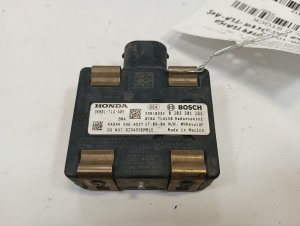
OEM Part Numbers: 36160TLAA070 36163-TLA-A00 36163-TLA-A01 36163-TLA-A02 36163-TLA-A03 36163-TLA-A04 36163-TLA-A05 36163-TLA-A06 36163-TLA-A07 36163TLAA00 36163TLAA01 36163TLAA02 36163TLAA03 36163TLAA04 36163TLAA05 36163-TLA-A10 36163-TLA-A11 36163-TLA-A12 36163-TLA-A13 36163-TLA-A14 36163-TLA-A15 36163-TLA-A16 36163-TLA-A17
Monocular camera mounted to the interior side of the windshield, behind the rearview mirror. Works in conjunction with a millimeter-wave radar sensor in the front grille.
We Have This Part in Stock



The information in this article is provided for general reference and educational purposes only. Vehicle specifications, procedures, and part compatibility can vary by production date, trim level, and region. Always consult your vehicle's factory service manual and verify part numbers before purchasing or performing repairs. Safety-critical components such as airbags, seat belts, and braking systems should be installed by a qualified professional.
- Honda CR-V:
- 🎬 Helpful Videos
- 🛍️ Shop This Part
- Common Symptoms of a Failing ADAS Camera
- Known Issues, Investigations, and TSBs
- NHTSA Investigation into Inadvertent Braking
- Technical Service Bulletins (TSBs)
- Buying a Used 2017-2019 CR-V ADAS Camera: What to Check
- 1. Verify the Part Number
- 2. Physical Inspection
- 3. Why Used OEM is a Smart Choice
- Replacement and Calibration: Not a Simple DIY Job
- Cost Comparison: New vs. Used
- Frequently Asked Questions (FAQ)
- 🎟️ Get 5% Off