

2017-2020 Tesla Model 3 Suspension: Noises, Control Arm Failures, and Recalls
This guide clarifies that 2017-2020 Model 3s have a passive coil suspension, not an active one, and details the real-world issues like control arm failures you need to know about.
- The 2017-2020 Tesla Model 3 has a passive coil suspension and does NOT have an 'Active Suspension Control Module'.
- The most common suspension failures are mechanical: squeaking front upper control arms and clunking lower control arm bushings.
- Listen for squeaks when turning and clunks over bumps; these are key signs you need an inspection.
- A recall exists for loose front lateral link fasteners (NHTSA #21V835000 / #23V-235); check if your vehicle is affected.
- Before paying for an expensive repair, always get a quote from a Tesla Service Center, as they may cover labor for known issues as a 'goodwill' gesture.
The 'Active Suspension' Misconception
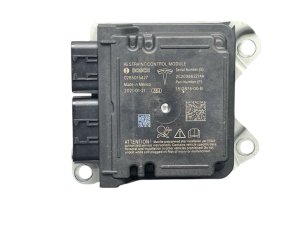
A common point of confusion for owners is whether the 2017-2020 Tesla Model 3 has an adjustable or 'active' suspension. These models do not have an active or air suspension system from the factory. They are all equipped with a standard, fixed-height coil spring and shock absorber system. Features like adjustable ride height or selectable damping modes (Comfort, Sport) were not introduced on the Model 3 until the 'Highland' refresh for Performance models in 2024. Therefore, there is no 'Active Suspension Control Module' to replace on a 2017-2020 Model 3.
If you are searching for this part, you are likely experiencing a suspension-related issue, such as a noise or a warning message on the touchscreen. This guide covers the actual common failures and what to do about them.
Known Issues, Recalls, and Technical Service Bulletins (TSBs)
While the suspension system is generally robust, some common issues and factory communications apply to these model years.
Recall: Front Suspension Lateral Link Fasteners
NHTSA Recall #: 21V835000 (later expanded by 23V-235)
Vehicles Affected: Certain 2018-2021 Tesla Model 3 vehicles.
This recall addresses an issue where the two fasteners securing the front suspension lateral link to the sub-frame could loosen over time. A loose lateral link can cause the wheel alignment to shift, leading to instability, abnormal noises, and an increased risk of a collision. Tesla Service will inspect the fasteners and tighten or replace them as needed, free of charge. A key warning sign you can detect is an abnormal noise coming from the front suspension.
TSB: Suspension/Alignment Warning Message
Bulletin #: SB-25-31-004
Tesla introduced a diagnostic feature via a firmware update that continuously monitors for changes in wheel alignment. If the system detects drift that could indicate worn bushings, loose ball joints, or other suspension problems, it will display a 'Service Required' message on the touchscreen. This warning is preventative and can be triggered even if you don't feel a problem while driving. It is designed to catch issues early before they cause significant tire wear or handling problems. If you see this alert, a physical inspection of the suspension components is required.
Common Failure: Control Arms
The most widely reported suspension issue on the 2017-2020 Model 3 is the premature failure of control arm bushings and ball joints, particularly the front upper control arms. The vehicle's heavy weight and instant torque from the electric motor put significant stress on these components.
Symptoms of Failing Control Arms
Diagnosing a failing control arm usually starts with listening for specific noises.
- Squeaking or Creaking: A noise often described as a creak, squeak, or even a 'duck call' when turning the steering wheel at low speeds or going over bumps is a classic sign of a failing front upper control arm ball joint. This is often caused by moisture getting past the seal, contaminating the grease, and causing corrosion.
- Clunking or Knocking: A clunking or crunching sound, especially during acceleration or braking, often points to failed front lower control arm bushings. When the rubber bushing tears, it allows for metal-on-metal contact between the arm and the subframe.
- Sloppy or Vague Steering: If the steering feels loose, wanders at highway speeds, or requires constant small corrections, it's a strong indicator of worn bushings that can no longer hold the wheel in proper alignment.
- Uneven Tire Wear: A visual sign of a bad control arm or bushing is accelerated wear on the inner edge of the front tires. This happens because the worn components can no longer maintain the correct alignment settings.
Pro Tip: You can perform a basic check at home. With the car parked, have a friend turn the steering wheel while you listen near the front wheels for squeaking. To check for bushing play, a technician will use a pry bar to check for excessive movement where the control arms connect to the subframe.
Buying a Used Suspension Component
Since the primary failures are mechanical, buying a used OEM suspension component like a control arm, knuckle, or shock assembly can be a cost-effective solution. However, these are high-wear items, so careful inspection is critical.
- Inspect Bushings and Ball Joints: This is the most important step. For a control arm, check the rubber bushings for any cracks, tearing, separation from the metal sleeve, or signs of leaking fluid. The ball joint boot should be intact with no rips or leaks. The joint itself should be firm with no excessive play.
- Check for Damage: Inspect the component for any signs of bending, cracking, or heavy corrosion, which could indicate it came from a vehicle involved in a collision. Do not buy a bent control arm.
- Verify Part Numbers: Tesla has released several revised versions of the front upper control arms to address the squeaking issue. When possible, try to get the latest revision. Common part numbers for the front upper right control arm include 1044326-00-H, 1044326-00-J, and 1188326-10-A. Always verify compatibility with the specific vehicle's VIN.
- Mileage Considerations: Failures are commonly reported starting around 40,000 miles. A used part from a low-mileage vehicle is a much safer bet than one from a car with 80,000+ miles, as it will likely have more remaining service life.
Cost to Repair Tesla Model 3 Suspension Issues
| Part / Service | Estimated Cost | Notes |
|---|---|---|
| New OEM Control Arm (Part Only) | $90 - $200 per arm | Price direct from Tesla can be surprisingly low for the part itself. |
| New Aftermarket Control Arm (Part Only) | $75 - $250 per arm | Quality varies. Some are designed to be more durable than the original OEM design. |
| Used OEM Control Arm | $50 - $150 per arm | Price depends heavily on condition and mileage. Inspection is key. |
| Shop Labor (Tesla Service) | $200 - $420+ | Tesla's labor rate is high (around $210/hr). However, for the known control arm issue, many owners report Tesla covering labor as a 'goodwill' gesture, even out of warranty. |
| Shop Labor (Independent Shop) | $150 - $500+ | Labor rates are often lower than Tesla's, but they may not offer the 'goodwill' parts-only pricing for common failures. |
| Wheel Alignment | $150 - $300 | An alignment is required after replacing any major suspension component like a control arm. |
Warning: Some owners have received quotes as high as $2,500 - $4,000 for suspension work. This usually involves replacing multiple components on both sides of the vehicle. Always get a detailed quote breaking down parts and labor, and check with a Tesla Service Center about potential 'goodwill' repairs for known issues before committing to an expensive repair elsewhere.
Frequently Asked Questions (FAQ)
Does my 2019 Tesla Model 3 have air suspension?
No, 2017-2020 Tesla Model 3s, regardless of trim (Standard Range, Long Range, or Performance), do not have air or adaptive suspension. They use a conventional coil spring suspension.
Why is my Tesla's screen showing a suspension warning if there's no module?
The warning is likely triggered by Tesla's alignment monitoring system (TSB SB-25-31-004) or the ABS/stability control system. The car's sensors detect that the wheels are not behaving as expected, which suggests a mechanical problem like a worn bushing or a loose component. The alert is prompting a physical inspection of the mechanical suspension parts.
Can I just lubricate the squeaky ball joint on the control arm?
Some owners have had temporary success by injecting grease into the ball joint boot. However, this is not a permanent fix. The squeaking indicates the internal components are already worn or corroded from moisture. The official and recommended repair is to replace the entire control arm assembly.
Is it safe to drive with a clunking or squeaking control arm?
While a squeaking noise is often just an annoyance at first, it indicates a developing failure. A clunking noise suggests a more advanced state of wear. Ignoring these symptoms can lead to poor handling, accelerated tire wear, and eventually, the potential for the component to separate, which is a serious safety risk. It is highly recommended to have the vehicle inspected as soon as possible.
Technical Specifications
OEM Part Numbers: 1044326-00-J 1188326-00-A 1044326-00-H 1344326-10-C 1044321-00-G 1109912-00-A
Suspension Type: Passive coil spring system. Front: Double-wishbone. Rear: Multi-link.
We Have This Part in Stock


The information in this article is provided for general reference and educational purposes only. Vehicle specifications, procedures, and part compatibility can vary by production date, trim level, and region. Always consult your vehicle's factory service manual and verify part numbers before purchasing or performing repairs. Safety-critical components such as airbags, seat belts, and braking systems should be installed by a qualified professional.
- Tesla 3:
- 🛍️ Shop This Part
- The 'Active Suspension' Misconception
- Known Issues, Recalls, and Technical Service Bulletins (TSBs)
- Recall: Front Suspension Lateral Link Fasteners
- TSB: Suspension/Alignment Warning Message
- Common Failure: Control Arms
- Symptoms of Failing Control Arms
- Buying a Used Suspension Component
- Cost to Repair Tesla Model 3 Suspension Issues
- Frequently Asked Questions (FAQ)
- 🎟️ Get 5% Off