

2020-2025 Trailblazer, Encore GX, Envista & Trax Accelerator Pedal: Failure Symptoms vs. Normal Lag
This guide explains how to diagnose a faulty accelerator pedal assembly, distinguish failure from normal turbo lag, and choose a replacement for your Chevrolet or Buick.
- A failing pedal will trigger a 'Reduced Engine Power' message and Check Engine Light; simple hesitation without these warnings is likely normal for the vehicle.
- Replacement is very easy for a DIYer, requiring only basic tools and about 30 minutes. No special calibration or relearn procedure is needed.
- The current OEM part number is 42795022, which replaces the older 42620222. Both are interchangeable.
- New aftermarket versions are not widely available, making a warrantied used OEM part a smart and cost-effective alternative to a new dealer part.
Symptoms of a Failing Accelerator Pedal Assembly
A problem with the accelerator pedal assembly will usually trigger immediate and obvious warnings from your vehicle's computer. Because the part is so critical to safety, the system has built-in checks. If the signals from the two internal sensors don't agree, the computer will enter a protective mode.
- Reduced Engine Power Message: 🎬 Watch: How to fix the Reduced Engine Power warning easily. This is the most common symptom. The driver information center will display a "Reduced Engine Power" or similar warning. The vehicle's computer, or ECM, does this to limit speed and acceleration to prevent unpredictable behavior.
- Check Engine Light: A fault in the accelerator pedal sensor circuit will almost always illuminate the Malfunction Indicator Lamp (MIL), also known as the check engine light. Common trouble codes include P2138 (Accelerator Pedal Position Sensor Correlation), as well as codes from P2122 to P2128. 🎬 See this simple and inexpensive fix for code P2138.
- Poor or No Acceleration: The vehicle may feel extremely sluggish, hesitate badly, or not respond at all when you press the gas pedal. In some cases, it may not accelerate from a stop.
- High or Erratic Idle: A faulty sensor can send incorrect signals even when your foot is off the pedal, causing the engine to idle much higher than normal (e.g., 1500-2000 RPM) or for the idle to fluctuate.
- Difficulty Shifting: The automatic transmission relies on pedal position data to know when to shift. Bad signals can cause rough or improper shifting.
Is It a Bad Pedal or Normal Lag?
Many owners of the 2024-2025 Chevrolet Trax and Buick Envista report a noticeable hesitation or "lag" when accelerating from a stop. This often feels like a 1-2 second delay before the vehicle responds normally. While these symptoms can feel like a part failure, they are often characteristic of the small turbocharged engine combined with the vehicle's auto start/stop function and transmission tuning. If you are experiencing hesitation without a Check Engine Light or "Reduced Engine Power" message, it is likely a normal characteristic of the vehicle and not a faulty accelerator pedal. Aftermarket devices like the Pedal Commander are marketed to reduce this perceived lag.
Pro Tip: Some owners of the 2024-2025 Trax have reported feeling a "click" in the accelerator pedal during rainy or snowy conditions. This is generally considered normal and is believed to be feedback from the traction control system activating, not a problem with the pedal assembly itself.
Known Issues, TSBs, and Recalls
As of early 2026, there are no active safety recalls from the National Highway Traffic Safety Administration (NHTSA) for a failing accelerator pedal assembly on the 2021-2025 Chevrolet Trailblazer, 2020-2025 Buick Encore GX, 2024-2025 Buick Envista, or 2024-2025 Chevrolet Trax.
Recalls for other GM vehicles have been issued for issues like floor mat interference or pedal entrapment, but these do not apply to the specific part or vehicles covered in this guide.
Similarly, no Technical Service Bulletins (TSBs) have been issued for widespread failure of this specific accelerator pedal assembly. While GM has issued TSBs for pedal-related issues on other models, the assembly used in these VSS-F platform vehicles has so far proven reliable.
Buying a Used Accelerator Pedal Assembly
Since this is a reliable part, a used OEM accelerator pedal assembly is an excellent cost-saving option. New aftermarket versions of this specific part are not widely available, making recycled OEM parts the primary alternative to expensive new dealer parts. Here’s what to check before you buy.
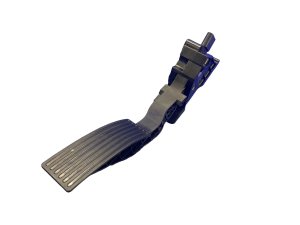
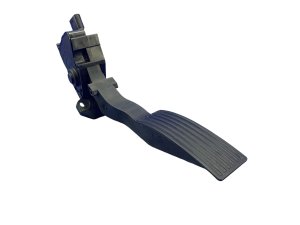
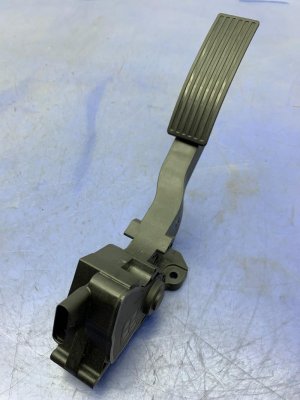
- Verify the Part Number: The most current OEM part number is 42795022. This number replaces the older part number 42620222. Ensure the part you are buying is one of these two numbers. They are physically identical and completely interchangeable.
- Inspect the Electrical Connector: This is the most critical inspection point. Look closely at the electrical pins inside the connector. They should be straight, clean, and free of any green or white corrosion. A bent or corroded pin will cause the part to fail.
- Check for Physical Damage: Inspect the black plastic pedal arm and the mounting bracket. Look for any cracks, stress marks, or signs of heavy impact. While durable, a part from a vehicle in a major collision could have hidden damage.
- Ask About a Warranty: Reputable sellers of used auto parts will offer a warranty. Since the internal electronic sensors cannot be visually inspected, a warranty protects you from receiving a part that was faulty in the donor vehicle.
Advanced Testing: If you have a multimeter, you can perform a basic function test. The sensor has two independent circuits. You need to identify the 5-volt reference, ground, and signal wires for each circuit. As you slowly press the pedal, the signal voltage on one circuit should sweep smoothly up (e.g., from ~0.5V to ~4.5V) and the other should sweep smoothly down without any dropouts or spikes.
🎬 Watch: Understanding causes and fixes for pedal sensor voltage codes.Cost Comparison
Replacing the accelerator pedal assembly is relatively inexpensive, especially if you use a recycled part and perform the labor yourself.
| Part Type | Estimated Cost |
|---|---|
| New OEM (Dealer) | $95 - $160 |
| New Aftermarket | Not Widely Available |
| Used OEM (Recycled) | $30 - $60 |
| Shop Labor | $95 - $150 |
Installation Guide
Replacing the accelerator pedal assembly is a straightforward job suitable for a beginner DIYer. It is typically mounted to the vehicle's firewall with two or three nuts and has a single electrical connector.
- Difficulty: 1/5 (Very Easy)
- Estimated Time: 30 minutes
- Tools Needed: Ratchet with a small socket set (typically 10mm or 13mm), trim removal tool (optional).
Step-by-Step Replacement
- Access the Pedal: The pedal is located in the driver's footwell. You may need to remove a small plastic trim panel to get clear access to the mounting nuts.
- Disconnect the Electrical Connector: Press the release tab on the wiring harness connector and pull it straight off the pedal assembly.
- Remove Mounting Nuts: Use a ratchet and socket to remove the two or three nuts holding the pedal assembly to the firewall studs.
- Install the New Pedal: Slide the new pedal assembly onto the mounting studs, reinstall the nuts, and tighten them securely. Do not overtighten.
- Reconnect and Test: Plug the electrical connector back in until it clicks. Turn the ignition to the 'ON' position (without starting the engine) and ensure the check engine light is not on. Start the vehicle and confirm you have normal throttle response.
Important: No programming or special "relearn" procedure is required when replacing the accelerator pedal assembly. Relearn procedures are associated with the electronic throttle body, which is a different part located on the engine.
Frequently Asked Questions (FAQ)
Is the hesitation when I accelerate from a stop sign normal on my 2024 Trax/Envista?
In most cases, yes. If you are not getting a "Reduced Engine Power" message or a Check Engine Light, the lag you feel is likely a normal characteristic of the small turbocharged engine and transmission programming, not a sign of a failing pedal.
Can I replace the accelerator pedal myself?
Yes, this is a very simple repair that most people can do at home with basic hand tools in under an hour. The part is easy to access and only held on by a few nuts and one electrical plug.
Do I need to perform a calibration or relearn procedure after installing a new pedal?
No. The accelerator pedal assembly is a plug-and-play part. The relearn procedures you may read about online are for the electronic throttle body on the engine, not the pedal itself.
What is the difference between GM part numbers 42620222 and 42795022?
Part number 42795022 is the newer, current part number that supersedes or replaces the older 42620222. They are identical in fit and function, and you can use either one for your vehicle.
Helpful Videos


Technical Specifications
OEM Part Numbers: 42795022 42620222
Drive-by-wire assembly with dual integrated Hall-effect position sensors. Operates on a 5-volt reference signal.
We Have This Part in Stock



The information in this article is provided for general reference and educational purposes only. Vehicle specifications, procedures, and part compatibility can vary by production date, trim level, and region. Always consult your vehicle's factory service manual and verify part numbers before purchasing or performing repairs. Safety-critical components such as airbags, seat belts, and braking systems should be installed by a qualified professional.
- Chevrolet Trailblazer:
- Buick Encore GX:
- Buick Envista:
- Chevrolet Trax: