

1996-2000 Toyota 4Runner AC Evaporator: Leaks, Smells, and Replacement Guide
This guide covers the common failure symptoms, replacement costs, and critical buying advice for the AC evaporator in your 3rd Generation Toyota 4Runner.
- The AC evaporator replacement is a labor-intensive job, but on a 3rd Gen 4Runner, the entire dashboard does NOT need to be removed; access is possible through the glove box.
- Symptoms of failure include warm AC, musty smells, a hissing from the dash, and the AC compressor not turning on.
- It is critical to verify if your 4Runner has manual or automatic climate control, as the evaporator assemblies can be different.
- Always replace the AC expansion valve at the same time as the evaporator. It is also highly recommended to replace the heater core, as it requires the same labor to access.
Symptoms of a Failing AC Evaporator


A failing AC evaporator in a 1996-2000 Toyota 4Runner can present several distinct symptoms. Because it's buried deep within the dashboard, confirming the failure often requires a professional diagnosis, but these signs are strong indicators.
🎬 Watch: Overview of common bad AC evaporator symptoms1. Weak or Warm Air From Vents
This is the most common symptom. If the evaporator is leaking refrigerant, the system can't reach the low temperatures needed to cool the air effectively. You might notice the air is only slightly cool or completely warm, even with the AC on its highest setting. This can also be caused by the evaporator fins being clogged with dirt and debris, which blocks airflow.
2. Musty or Moldy Smell
A persistent musty, mildew, or "dirty sock" smell coming from the vents is a classic sign of an evaporator issue. The evaporator's cold, damp environment is a perfect breeding ground for mold and bacteria. This buildup can clog the core and produce foul odors, especially when the AC is first turned on.
3. AC Compressor Doesn't Turn On or Cycles Rapidly
Your 4Runner's AC system has a low-pressure switch that prevents the compressor from engaging if the refrigerant level is too low. A significant leak in the evaporator will cause the refrigerant to escape, dropping the pressure and preventing the compressor from turning on at all. In cases of a smaller leak, the compressor might cycle on and off frequently as the pressure fluctuates around the switch's threshold.
4. Hissing Noise From the Dashboard
A faint hissing or gurgling sound coming from the passenger side of the dashboard can sometimes be heard. This is the sound of refrigerant gas escaping from a crack or pinhole leak in the evaporator core. It's often most noticeable right after you turn the AC system on or off.
5. Water Leaking Inside the Cabin
The evaporator removes moisture from the air, which normally drips out of the vehicle through a condensate drain tube. If this drain becomes clogged with debris, or if the evaporator housing is cracked, water can back up and leak onto the passenger-side floorboard. While not always a sign of a bad evaporator core itself, it indicates a problem within the HVAC housing that requires immediate attention to prevent mold and electrical issues.
Known Issues, Recalls, and TSBs
For the 1996-2000 model years, there are no specific recalls or Technical Service Bulletins (TSBs) issued by Toyota or the NHTSA directly related to the AC evaporator. Most failures are due to age-related corrosion or clogging from debris. Forum discussions among 3rd Gen 4Runner owners confirm that evaporator leaks are a known, albeit not excessively common, issue as these vehicles age. The primary vehicle-specific issue to be aware of is the difference in parts between trim levels.
Variant Differences: Manual vs. Automatic Climate Control
A critical detail for 1996-2000 4Runners is the type of climate control system. Base and SR5 models typically came with manual AC controls (dials and sliders), while the Limited trim often featured automatic climate control (a digital display with a set temperature). These systems may use different evaporator assemblies. It is crucial to verify which system your vehicle has before ordering a part. The full assembly, often associated with part number 88510-35740, is typically for models with automatic temperature control.
Warning: Always verify your original part number before purchasing a replacement. The difference between manual and automatic climate control systems can mean the part will not fit or function correctly.
Buying a Used AC Evaporator
Due to the high cost of labor, buying a used OEM evaporator can be a smart financial decision. An original Toyota/Denso part often has superior construction and a more precise fit than cheaper aftermarket alternatives. Here’s what to look for when buying a used unit.
Inspection Checklist:
- Check for Oily Residue: Any greasy or oily film on the evaporator core or inside its pipes is a dead giveaway of a refrigerant leak. The part should be completely dry.
- Inspect the Fins: Look for significant corrosion (white, powdery aluminum oxide) or physical damage. While a few bent fins are acceptable, widespread corrosion can indicate a weak point that is prone to leaking.
- Verify the Part Number: Cross-reference the part number on the used unit with your original part. For 3rd Gen 4Runners, this is the most important step to ensure compatibility between manual and automatic AC systems.
- Confirm What's Included: Ensure you are getting the correct part. Some listings are for the bare core (like 88501-35050), while others are for the complete housing assembly. For this job, getting the complete, sealed housing can sometimes be easier.
Replacement Difficulty & Procedure
Replacing the AC evaporator in a 3rd Gen 4Runner is a difficult and time-consuming job, primarily due to its location.
- Difficulty Rating: 4 out of 5
- Estimated Time: 6-9 hours
- DIY Feasible: Not for beginners. Recommended for experienced mechanics.
Unlike many vehicles that require the complete removal of the dashboard, many mechanics and DIYers have found that the 4Runner's evaporator can be accessed by removing only the glove box and associated trim. This makes the job significantly easier than a full dash pull, but it is still a complex task.
High-Level Replacement Steps:
- Evacuate Refrigerant: The AC system must be professionally and legally evacuated using a refrigerant recovery machine.
- Access the Evaporator: Remove the glove box, lower dash trim on the passenger side, and any supporting brackets to gain access to the black HVAC box containing the evaporator.
- Disconnect Lines: From the engine bay, disconnect the high and low-pressure AC lines where they meet the firewall. Special AC line disconnect tools may be required.
- Remove Housing: Unbolt the evaporator housing from inside the cabin and carefully maneuver it out from under the dashboard.
- Swap Components: Open the housing, remove the old evaporator core, and swap it with the new one. It is highly recommended to replace the AC expansion valve at the same time, as it is attached to the evaporator and is a common failure point.
- Reassembly and Recharge: Reinstall the housing, reconnect all lines with new O-rings, and reassemble the dashboard. A vacuum must then be pulled on the system to remove air and moisture before it is recharged with the correct amount of R134a refrigerant and PAG oil.
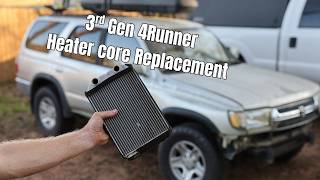
Pro Tip: While the HVAC box is removed, this is the perfect opportunity to also replace the heater core. The heater core is located in the same housing and requires the exact same labor to access. 🎬 Watch this 3rd Gen 4Runner heater core removal guide Replacing both at once can save you from having to do this entire job again in the future.
Cost Breakdown
The majority of the cost for this repair is labor due to the difficulty of accessing the part.
| Part/Service | Estimated Cost |
|---|---|
| New OEM (Dealer) | $370 - $550 |
| New Aftermarket | $75 - $140 |
| Used OEM | $100 - $175 |
| Shop Labor | $870 - $1,270 |
| Total Professional Replacement | $1,240 - $1,812 |
Frequently Asked Questions (FAQ)
Do I have to replace the expansion valve with the evaporator?
Yes, it is highly recommended. The expansion valve is inexpensive and directly attached to the evaporator. It controls refrigerant flow and can get clogged with debris, especially if the old system had a failure. Replacing it is cheap insurance against having to do the job twice.
Can I really replace the evaporator without removing the whole dashboard?
Yes, on the 1996-2000 4Runner, it is possible to remove the evaporator by only taking out the glove box and some lower dash panels. This avoids the much larger job of removing the steering column and entire dash assembly, which is required on many other vehicles.
Is a leaking evaporator dangerous?
While not immediately life-threatening, leaking refrigerant is harmful to the environment and should not be inhaled in a confined space. The biggest risk is the loss of AC function, which also includes the ability to defog/defrost your windshield effectively, creating a safety hazard in certain weather conditions.
What else should I replace while I'm in there?
The heater core. It sits in the same HVAC box as the evaporator. Since 90% of the job is getting the box out, replacing the heater core at the same time is a very common and wise preventative measure, especially on a high-mileage vehicle.
Helpful Videos




Technical Specifications
OEM Part Numbers: 88501-35050 88510-35580 88510-35730 88510-35740 88510-35870
Refrigerant Type: R134a
We Have This Part in Stock


The information in this article is provided for general reference and educational purposes only. Vehicle specifications, procedures, and part compatibility can vary by production date, trim level, and region. Always consult your vehicle's factory service manual and verify part numbers before purchasing or performing repairs. Safety-critical components such as airbags, seat belts, and braking systems should be installed by a qualified professional.
- Toyota 4Runner:
- 🎬 Helpful Videos
- 🛍️ Shop This Part
- Symptoms of a Failing AC Evaporator
- 1. Weak or Warm Air From Vents
- 2. Musty or Moldy Smell
- 3. AC Compressor Doesn't Turn On or Cycles Rapidly
- 4. Hissing Noise From the Dashboard
- 5. Water Leaking Inside the Cabin
- Known Issues, Recalls, and TSBs
- Variant Differences: Manual vs. Automatic Climate Control
- Buying a Used AC Evaporator
- Inspection Checklist:
- Replacement Difficulty & Procedure
- High-Level Replacement Steps:
- Cost Breakdown
- Frequently Asked Questions (FAQ)
- 🎟️ Get 5% Off