

Tesla Model Y & Model 3 AC Condenser & Heat Pump Guide (2020-2023)
Diagnosing AC and heating failures in heat pump-equipped Teslas, from simple sensor faults to complete condenser replacement.
- This condenser is ONLY for Model Y/3s with the heat pump system (2020+ Y, 2021+ 3).
- Loss of AC/heat is often caused by faulty P/T sensors (covered by TSB SB-21-18-002), not the condenser itself.
- Before replacing parts, check for software glitches and physically inspect the condenser for debris buildup between it and the radiator.
- Replacement is not a DIY job as it requires specialized refrigerant handling equipment.
AC Condenser for 2020-2023 Tesla Model Y & 2021-2023 Tesla Model 3

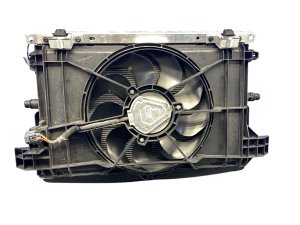
Compatibility Warning: This AC condenser (OEM Part Numbers 1077083-00-B, 107708300A, 107708300B) is ONLY for Tesla Model Y and Model 3 vehicles equipped with the factory heat pump system. This includes all 2020-2023 Model Ys and 2021-2023 Model 3s. It will not fit earlier 2017-2020 Model 3 vehicles that use a resistive heating system. Always verify the part number before purchase.
Symptoms of a Failing AC Condenser or Heat Pump System
Because the condenser is part of an integrated thermal system, a problem can manifest in several ways. It's important to distinguish between a simple condenser issue and a more complex system fault.
- Weak or Warm Air from Vents: This is the most common symptom. The AC system may struggle to cool the cabin, especially when the vehicle is stationary or moving at low speeds.
- AC System Shuts Off Intermittently: A clogged or failing condenser can cause system pressures to rise, tripping a high-pressure cutoff switch and shutting down the compressor to prevent damage.
- No Heating or Cooling: In these heat pump models, a major system fault can lead to a complete loss of both heating and cooling, often accompanied by a service warning on the touchscreen.
- Poor Windshield Defrosting Performance: The defrost function relies on the heat pump to supply warm, dry air. A system fault can make it difficult to clear a foggy or frosty windshield, which was the basis for a safety recall.
- Visible Leaks or Damage: Oily residue on the condenser fins or on the ground under the front of the car can indicate a refrigerant leak. Physical damage like bent fins from road debris is also a clear sign of a problem.
- Unusual Noises: Grinding or high-pitched whining from the front of the vehicle when the climate system is active can point to a struggling compressor, often caused by issues like a blocked condenser.
- "Climate system requires service" Warning: Tesla's onboard diagnostics will often display this message when a fault is detected in the HVAC system, such as from a failing sensor.
Known Issues, TSBs, and Recalls
Before assuming the condenser is bad, be aware of these common, documented issues that produce similar symptoms.
TSB SB-21-18-002: Faulty Refrigerant Pressure/Temperature Sensors
One of the most common causes for a loss of heating and cooling is the failure of the refrigerant pressure/temperature (P/T) sensors. These sensors can fault over time, providing incorrect data to the vehicle's computer. The system then shuts down as a precaution. Symptoms often appear suddenly. 🎬 Watch this step-by-step video on diagnosing Model Y AC failures. Tesla issued a technical service bulletin (TSB) outlining a fix that involves replacing all three P/T sensors and recharging the system. This is often misdiagnosed by owners as a major component failure when it is a much less expensive sensor issue.
NHTSA Recall 22V-050: Software-Related Heat Pump Issue
In early 2022, Tesla issued a recall for a software problem affecting some 2020-2022 Model Y and 2021-2022 Model 3 vehicles. A software bug could cause an electronic expansion valve to remain open, leading to a fail-safe compressor stoppage and loss of cabin heat, particularly in very cold weather. This issue was resolved with an over-the-air (OTA) software update (version 2021.44.30.7 or later). If your vehicle's software is up to date, this recall has been addressed.
Compressor and Supermanifold (Octovalve) Failure
A more severe and costly failure involves the AC compressor. In some cases, the compressor can fail internally, sending metal debris throughout the refrigerant lines. This contaminates the entire system, including the condenser and the complex valve body known as the "supermanifold" or "Octovalve." In this scenario, a simple condenser replacement is not enough; the compressor, supermanifold, and condenser must all be replaced, and the system lines must be thoroughly flushed. This repair can cost several thousand dollars.
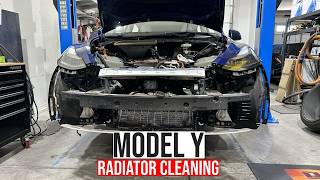
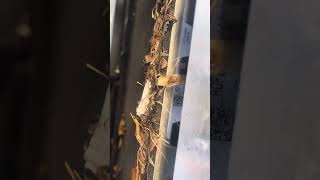
Pro Tip: Before any major repair, have the front of the vehicle inspected for debris. A thick layer of leaves, dirt, and pollen can build up between the radiator and the condenser, severely blocking airflow. Cleaning this area can sometimes restore AC performance for a very low cost.
🎬 Watch how to clean your Model Y radiator and condenser.Buying a Used AC Condenser
A used OEM condenser can be a great value, especially since the part itself is a simple heat exchanger. However, careful inspection is key to avoiding a bad part.
- Verify the Part Number: First and foremost, ensure the part number is 1077083-00-B or a compatible revision. This confirms it is for the heat pump system.
- Inspect the Fins: Look at the thin aluminum fins that run across the condenser. A few slightly bent fins are normal and can be carefully straightened with a fin comb. However, avoid units with large areas of flattened or damaged fins, as this will block airflow and reduce performance.
- Check for Leaks: Inspect the entire surface, especially around the inlet/outlet connections and the welded seams. Look for a dark, oily residue. Refrigerant carries a lubricating oil, and this residue is a tell-tale sign of a past or present leak. A perfectly clean, dry condenser is a good sign.
- Examine Connections and Mounts: Ensure the threaded connections for the AC lines are clean, undamaged, and not cross-threaded. Check that all mounting brackets are intact and not cracked or broken from a previous accident.
- Consider the Donor Vehicle: If possible, get information about the vehicle the part came from. A condenser from a low-mileage vehicle with no front-end damage is an ideal choice. Avoid parts from vehicles that had a catastrophic compressor failure, as the condenser may be full of internal debris.
Cost Comparison
The cost to fix an AC issue on these Teslas can vary dramatically depending on the root cause. The prices below are estimates and can vary by location and service center.
| Item / Service | Estimated Cost |
|---|---|
| New OEM AC Condenser (Part Only) | $300 - $450 |
| New Aftermarket AC Condenser (Part Only) | $150 - $250 |
| Used OEM AC Condenser (Part Only) | $100 - $200 |
| Shop Labor for Condenser Replacement | $300 - $500 |
| TSB P/T Sensor Replacement (at Tesla) | $450 - $900 |
| Full System Replacement (Compressor, Condenser, Supermanifold) | $3,000 - $4,500+ |
Frequently Asked Questions (FAQ)
Can I replace a Tesla AC condenser myself?
This is not recommended for DIY mechanics. Replacing the condenser requires specialized equipment to safely evacuate the R-1234yf refrigerant from the system before replacement and to recharge it afterward. Handling refrigerant is regulated and can be hazardous. This job is best left to certified technicians. The difficulty rating is 5 out of 5.
My AC stopped working after a software update. What should I do?
This is a known phenomenon. Sometimes a software glitch can temporarily disable the climate control system. Before scheduling service, try performing a two-button steering wheel reboot. If that doesn't work, let the vehicle go into a deep sleep (park it, do not open the app, and leave it for several hours). Often, the system will reset itself.
What is the difference between the condenser, compressor, and supermanifold?
Think of them as the heart, lungs, and brain of the system. The Compressor is the heart; it pumps the refrigerant. The Condenser is like the lungs; it exhales heat from the refrigerant to the outside air. The Supermanifold (Octovalve) is the brain; it's a complex valve body that directs the flow of refrigerant for heating, cooling, and battery management.
Is my AC problem covered by a recall?
There was one safety recall (NHTSA 22V-050) related to the heat pump system's defrosting ability, which was fixed by a software update. There is no active recall for the condenser or other hardware components. However, Tesla did issue a TSB for faulty P/T sensors, which may be repaired by the service center. Always check with a Tesla service center with your VIN to see if any service campaigns apply to your vehicle.
Helpful Videos



Technical Specifications
OEM Part Numbers: 1077083-00-B 107708300A 107708300B
Refrigerant Type: R-1234yf
We Have This Part in Stock



The information in this article is provided for general reference and educational purposes only. Vehicle specifications, procedures, and part compatibility can vary by production date, trim level, and region. Always consult your vehicle's factory service manual and verify part numbers before purchasing or performing repairs. Safety-critical components such as airbags, seat belts, and braking systems should be installed by a qualified professional.
- Tesla Model Y:
- Tesla Model 3: