

1993 Probe, 626 & MX-6 AC Compressor: 4-Cylinder vs. V6 and R12 vs. R134a Guide
Avoid buying the wrong part; this guide details the different compressors used on the 2.0L and 2.5L engines and explains the crucial R-12 to R-134a refrigerant issue.
- There are two different compressors for 1993 models: one for the 2.0L 4-cylinder and a different one for the 2.5L V6. They are not interchangeable.
- These vehicles likely came with R-12 refrigerant from the factory. When replacing the compressor, you should plan to convert the system to the modern R-134a standard.
- When replacing the compressor, you MUST also flush the system and install a new receiver/drier and expansion valve to prevent immediate failure of the new part.
- While you can swap the compressor yourself, the refrigerant must be recovered and recharged by a professional shop with the proper equipment.
Critical Differences: Engine and Refrigerant Type

Before buying an AC compressor for your 1993 Ford Probe, Mazda 626, or Mazda MX-6, you must identify two key things: your engine size and your refrigerant type. Getting either wrong will result in buying a part that does not fit or will not work correctly.
Engine: 2.0L 4-Cylinder vs. 2.5L V6
These vehicles were built on the same platform but offered two different engines, and each engine uses a different AC compressor. They are not interchangeable. You must verify if your car has the 2.0L inline 4-cylinder (I4) or the 2.5L V6 engine.
- 2.0L 4-Cylinder Models: Use a compressor identified by Mazda part number GA2A-61-450 or Ford part number F32Z19703A.
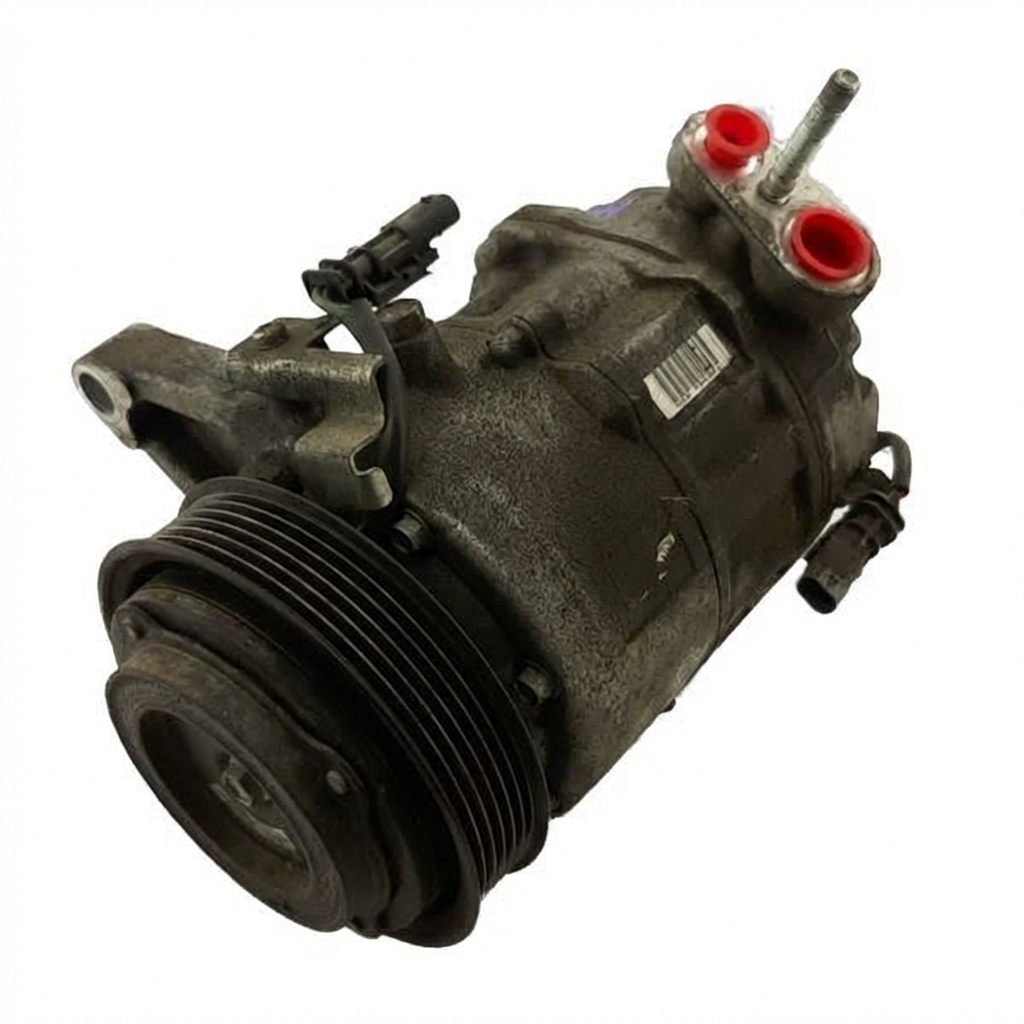
- 2.5L V6 Models: Use a distinct Panasonic (or Matsushita) N1301AE4 style compressor. This compressor has a 5-groove pulley. It is crucial to visually verify your original compressor matches this style if you have the V6 engine.
Warning: Do not order a compressor based on the vehicle model alone. Pop the hood and confirm your engine type before purchasing. A V6 compressor will not bolt onto a 4-cylinder engine, and vice-versa.
Refrigerant: R-12 (Freon) vs. R-134a
The 1993 model year was a transition period for automotive air conditioning. Most 1993 Probe, 626, and MX-6 models left the factory with an R-12 refrigerant system, also known as Freon. Newer systems use R-134a. The two refrigerants are incompatible and use different lubricating oils.
- Original R-12 System: If your system has not been converted, it uses R-12 and mineral oil.
- Converted R-134a System: Many vehicles have been converted to the more common and available R-134a, which uses PAG 46 oil. Most new and remanufactured compressors sold today are designed for R-134a and come pre-filled with PAG oil.
If you install an R-134a compatible compressor into an unconverted R-12 system, the oils will conflict and cause premature failure. If you are replacing the compressor, it is the perfect time to convert the entire system to R-134a, which involves replacing the receiver/drier, expansion valve, and all O-rings, in addition to flushing the system.
Symptoms of a Failing AC Compressor


A bad AC compressor will make itself known through several distinct symptoms. If you experience any of the following, your compressor may be the culprit.
- No Cold Air: This is the most common symptom. If the system is charged with refrigerant but the air from the vents is warm or hot, the compressor may not be pressurizing the refrigerant.
- Loud Noises When AC is On: Grinding, squealing, rattling, or chattering sounds that start when you turn on the AC point to internal mechanical failure. A worn bearing in the compressor's clutch can also cause a constant squeal or grinding noise whenever the engine is running.
- Compressor Clutch Not Engaging: The outer plate of the compressor pulley is a clutch that should click and begin spinning with the pulley when the AC is activated. If it remains stationary, the clutch coil may have failed, or the compressor itself may have seized.
- Visible Refrigerant Leaks: The compressor has seals that can fail over time, leading to leaks of refrigerant and oil. You may see a greasy, dirty film on the compressor body.
- Frequent or Rapid Cycling: A compressor that clicks on and off every few seconds can be a sign of low refrigerant, but it can also indicate an internal compressor issue or a failing clutch.
Buying a Used AC Compressor
For a vehicle of this age, a quality used OEM compressor is often a smart and economical choice compared to expensive new OEM parts or potentially unreliable aftermarket units. Here’s what to look for:
- Confirm the Engine Type: First and foremost, ensure the donor vehicle had the same engine (2.0L I4 or 2.5L V6) as yours.
- Inspect the Clutch and Pulley: The pulley should spin freely and smoothly by hand with no grinding or roughness. The clutch plate on the front should not be cracked or show signs of extreme heat (discoloration).
- Check the Ports: The inlet and outlet ports should be capped or sealed. Uncapped ports allow moisture and debris to enter the compressor, which is a major red flag. Look inside the ports if possible; any black residue or metal particles indicate a catastrophic failure ('black death'), and the compressor is junk.
- Examine the Housing: Look for any cracks in the compressor body or mounting ears. Check that the electrical connector is intact and not corroded or broken.
- Ask About the Donor Vehicle: If possible, find out the mileage of the vehicle the part came from. Lower mileage is always better. Ask if the AC was working when the part was removed.
Pro Tip: When you receive your used compressor, turn it by hand and pour out the old oil into a clear container. Check the oil for metal flakes. If you see any, the compressor has failed internally and should not be installed. Always drain the shipping oil and add the correct type and amount of new PAG 46 oil (for R-134a systems) before installation.
Installation Guide: The Non-Negotiable Steps
Replacing an AC compressor is more involved than just swapping the part. Failure to perform these steps will cause your new or used compressor to fail quickly, often voiding its warranty.
- Recover Refrigerant: The old refrigerant must be recovered by a licensed shop with an EPA-certified machine before you begin work.
- Flush The System: If your old compressor failed, it sent metal debris throughout the entire AC system. You must use an approved AC system flush solvent to clean the condenser, evaporator, and hoses. Do not flush the new compressor, receiver/drier, or expansion valve.
- Replace Key Components: It is mandatory to install a new receiver/drier (also called an accumulator) and a new expansion valve (or orifice tube). These parts trap moisture and debris, and the old ones are contaminated. Skipping this step is the #1 cause of repeat compressor failure.
- Evacuate and Recharge: After everything is installed, the system must be put under a deep vacuum for at least 30-45 minutes to boil off any moisture. Then, it must be recharged with the precise weight of R-134a refrigerant specified for your vehicle. This final step should be performed by a professional.
Cost of Replacing the AC Compressor
Prices can vary significantly based on the part source and labor rates. For a 1993 model, a full professional replacement can be costly, making a DIY or partial-DIY approach attractive.
| Part/Service | Estimated Cost | Notes |
|---|---|---|
| New OEM | $360 - $1000+ | Highest cost, ensures exact fitment. |
| New Aftermarket | $290 - $550 | Wide range of quality and price. |
| Remanufactured | $240 - $470 | A rebuilt OEM or aftermarket unit. Core charge usually applies. |
| Used OEM | $50 - $125 | Cost-effective, but requires careful inspection. |
| Shop Labor (Full Replacement) | $400 - $700+ | Includes recovery, flush, installation, evacuation, and recharge. Total job cost at a shop can exceed $1,300. |
Known Issues and Recalls
There are no known recalls or technical service bulletins (TSBs) from the NHTSA specifically for the AC compressor on the 1993 Ford Probe, Mazda 626, or Mazda MX-6. However, owners of the Mazda 626 and MX-6 should be aware of a critical safety recall for the ignition switch (NHTSA Campaign ID: 15V809000, Mazda Recall #8715J). An excess of grease in the switch can lead to overheating, smoke, and a potential fire. This repair should be performed by a Mazda dealer free of charge.
Part Number Reference

| Engine | Compressor Type | OEM Part Numbers |
|---|---|---|
| 2.0L I4 | Standard | Mazda: GA2A-61-450, GA2A-61-K00 Ford: F32Z-19703-A |
| 2.5L V6 | Panasonic / Matsushita N1301AE4 | Mazda: GB6H-61-450D Ford: F42Z-19703-B, F42Z-19703-CC |
Frequently Asked Questions (FAQ)
How do I know if I have the 4-cylinder or V6 engine?
Look at the engine cover or the valve covers. The 2.0L is an inline-four (I4) and will have one long valve cover with 4 spark plug wires coming from one side. The 2.5L V6 has two separate valve covers (one for each bank of 3 cylinders) in a 'V' shape.
Is my 1993 car R-12 or R-134a?
It was most likely R-12 from the factory. Look for labels under the hood in the engine bay. An R-134a system will have different service port fittings than an R-12 system. If you are unsure, assume it is R-12 and plan for a conversion to R-134a, as R-12 is no longer readily available.
Do I really have to flush the system and replace the drier?
Yes, absolutely. If the old compressor failed, it contaminated the entire system with metal particles. Flushing is the only way to clean it out. The receiver/drier is a filter that is now full of that same debris and moisture. Not replacing these parts will cause your new compressor to fail in a very short time.
Can I replace the compressor myself?
You can perform the physical part swap yourself if you have mechanical experience, but you legally and practically need a professional shop for the beginning and end of the job. A shop must use a special machine to recover the old refrigerant before you start and to properly vacuum and recharge the system after you are done.
Technical Specifications
OEM Part Numbers: F32Z19703A F42Z19703B F42Z19703CC GA2A61450 GA2A61K00 GB6H61450D N1301AE4
V6 Compressor: Panasonic/Matsushita N1301AE4 style with a 5-groove serpentine belt pulley. System uses PAG 46 oil with R-134a refrigerant.
We Have This Part in Stock

The information in this article is provided for general reference and educational purposes only. Vehicle specifications, procedures, and part compatibility can vary by production date, trim level, and region. Always consult your vehicle's factory service manual and verify part numbers before purchasing or performing repairs. Safety-critical components such as airbags, seat belts, and braking systems should be installed by a qualified professional.
- Mazda 626:
- Ford Probe:
- Mazda MX-6:
- 🛍️ Shop This Part
- Critical Differences: Engine and Refrigerant Type
- Engine: 2.0L 4-Cylinder vs. 2.5L V6
- Refrigerant: R-12 (Freon) vs. R-134a
- Symptoms of a Failing AC Compressor
- Buying a Used AC Compressor
- Installation Guide: The Non-Negotiable Steps
- Cost of Replacing the AC Compressor
- Known Issues and Recalls
- Part Number Reference
- Frequently Asked Questions (FAQ)
- 🎟️ Get 5% Off