

2017-2024 Model 3 & 2020-2025 Model Y ABS Sensor Failure: The Real Cause of Autopilot & Traction Control Errors
This guide explains the common symptoms, diagnosis, and replacement of the ABS wheel speed sensor on the Tesla Model 3 and Model Y, a frequent culprit behind a cascade of warning lights.
- A single failed ABS wheel speed sensor is a common cause for a cascade of warning lights, disabling ABS, traction control, and Autopilot.
- The front (1188761-00-A) and rear (1188771-00-A) sensors are different parts and are not interchangeable.
- Replacement is a simple DIY job requiring basic tools and no special programming; the system resets after a short drive.
- Before buying a new sensor, inspect the wiring harness at each wheel for physical damage, as chafing is a frequent cause of failure.
Symptoms of a Failing ABS Wheel Speed Sensor


A single faulty ABS wheel speed sensor on a 2017-2024 Tesla Model 3 or 2020-2025 Tesla Model Y can trigger a surprising and often alarming number of warning messages on the touchscreen. Because the sensor's data is used by so many different systems, its failure causes a chain reaction. Many owners first notice the issue when a cluster of alerts appears, often after hitting a bump or while driving at speed.
Common warning messages and symptoms include:
- ABS Disabled / ABS Inactive: The anti-lock braking system is turned off.
- Traction Control Disabled: The system that prevents wheel spin during acceleration is off.
- Stability Control Disabled: The system that helps prevent skids and loss of control is inactive.
- Automatic Emergency Braking (AEB) Disabled: The car will not automatically brake for obstacles.
- Regenerative Braking Disabled: The car will coast more when you lift off the accelerator, and braking will feel different.
- Cruise Control / Autopilot Unavailable: These features rely on accurate wheel speed data and will be disabled.
- Vehicle Hold Feature Unavailable: The car will not hold itself in place at a stop without the brake pedal pressed.
You can use the vehicle's Service Mode to look for specific diagnostic trouble codes (DTCs). Codes like ESP_a033 (Front Left Wheel Speed Sensor Signal Noise) or a message indicating a sensor is open or shorted to ground can pinpoint the exact faulty sensor.
Known Issues, Recalls, and Technical Service Bulletins (TSBs)
While there are no widespread recalls specifically for ABS wheel speed sensor failure on the Model 3 and Model Y, there are related service bulletins and common issues reported by owners.
- SB-24-33-006 (Model 3 2024+): For some newer Model 3 vehicles, Tesla issued a bulletin regarding a misrouted Right Hand (RH) front wheel speed sensor harness. This improper routing could cause the harness to become damaged over time, leading to sensor failure. The fix involves inspecting the harness routing and replacing the sensor if damage is found.
- Harness Damage: A common failure point is not the sensor itself, but the wiring harness connected to it. The plastic clips holding the wire can break, allowing the harness to rub against the tire or suspension components, eventually wearing through the insulation and causing a short. This is often visible upon inspection.
- No Recalls for Sensor Failure: As of mid-2024, the National Highway Traffic Safety Administration (NHTSA) has not issued a recall for the sensors themselves. Recalls that mention the ABS system, such as recall 24V051, were for software issues like the warning light font size on the display, not for mechanical failure of the sensor.
Pro Tip: Before assuming the sensor is bad, visually inspect the wiring harness for each wheel. Look for broken clips, chafing, or exposed wires, especially on the front wheels where turning can stress the harness. Sometimes, a simple repair of the wiring or re-securing the harness with a zip tie can solve the problem.
Buying a Used ABS Wheel Speed Sensor: What to Check
A used OEM (Original Equipment Manufacturer) wheel speed sensor is an excellent, cost-effective alternative to a new part from the dealer. Since these sensors are not high-wear items, a recycled part from a low-mileage vehicle can provide the same performance and reliability as a new one. Here’s what to look for:
- Verify Compatibility: The most critical step is ensuring you have the correct part. The Model 3 and Model Y use different sensors for the front and rear.
- Front (Left or Right): Part numbers include 1188761-00-A, 1188761-00-B, and older numbers like 1044761-00-A.
- Rear (Left or Right): Part numbers include 1188771-00-A and older numbers like 1044771-00-D.
- Physical Inspection: When you receive the used sensor, inspect it carefully.
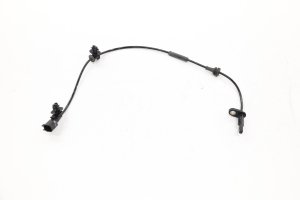
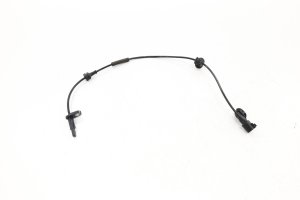
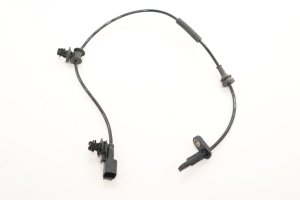
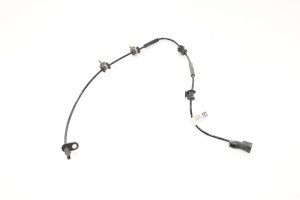
- Harness and Connector: Check the entire length of the wire for any signs of cracking, chafing, or previous repairs. Ensure the connector pins are straight and free of corrosion. The red locking tab on the connector should be intact.
- Sensor Head: The plastic sensor head should be free of cracks or physical damage.
- Mounting Points: Check that all plastic clips and the rubber grommet are present and not broken. These are essential for securing the harness correctly to prevent future damage.
- Why Used OEM is a Smart Choice: Aftermarket sensors can be a gamble. While cheaper, they may not have the same signal accuracy or durability as genuine Tesla parts, potentially causing persistent errors or failing prematurely. A used OEM sensor ensures perfect compatibility and factory-level performance.
Replacement Overview & Difficulty
Replacing an ABS wheel speed sensor on a Tesla Model 3 or Model Y is a straightforward job that most DIY mechanics can accomplish in under an hour per wheel.
- Difficulty Rating: 2 out of 5
- Tools Required: Floor jack, jack stands, jack pad adapter, wheel lug wrench (21mm), 10mm socket or wrench, and possibly a Torx T30 socket for the rear sensor bolt.
- General Steps:
- Safely jack up the vehicle using a jack pad to protect the battery and secure it with jack stands.
- Remove the wheel.
- Locate the sensor mounted on the wheel hub/knuckle. It is held in by a single 10mm (front) or Torx T30 (rear) bolt.
- Unbolt the sensor and carefully pull it out.
- Trace the wire, releasing the retaining clips and grommets from the suspension and body.
- Disconnect the electrical connector. This often involves sliding a red locking tab before pressing a release tab.
- Install the new sensor in reverse order, ensuring the harness is routed correctly and all clips are secured to prevent rubbing.
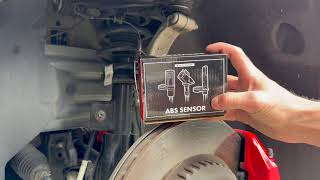
- Torque the sensor bolt to spec (5 Nm for the front). 🎬 See this step-by-step Tesla wheel speed sensor replacement walkthrough
Important: After replacement, the warning lights may not disappear immediately. You may need to drive the vehicle in a straight line at over 25 mph for a few seconds to allow the system to self-check and clear the faults. If the lights remain, double-check your work or scan for other codes.
Cost Comparison: New vs. Used
Choosing a used OEM sensor can lead to significant savings without compromising on quality.
| Part Type | Estimated Cost |
|---|---|
| New OEM (Tesla Service) | $59 - $90 per sensor |
| New Aftermarket | $20 - $65 per sensor |
| Used OEM | $30 - $50 per sensor |
| Shop Labor for Replacement | $100 - $200 per sensor |
Frequently Asked Questions (FAQ)
Do I need to replace the sensors in pairs?
No. Unlike brake pads, wheel speed sensors can be replaced individually. You only need to replace the specific sensor that has failed.
Is any programming or calibration required after installation?
No, a wheel speed sensor replacement does not require any special programming. The car's computer will automatically recognize the new sensor after a short drive, which allows the system to self-calibrate and clear the fault codes.
Will a bad wheel speed sensor cause my brakes to fail?
Your normal hydraulic brakes will still function. However, the Anti-lock Braking System (ABS) will be disabled. This means your wheels can lock up during a panic stop, increasing stopping distances and potentially causing a loss of steering control, especially on wet or slippery surfaces.
How do I know if I need a front or rear sensor?
The best way is to use the car's Service Mode to read the specific fault code, which will identify the location (e.g., 'wheel speed sensor rear right'). If you cannot access the codes, you will need to visually inspect the wiring at all four corners for damage. The front and rear sensors use different part numbers and are not interchangeable.
Helpful Videos
Technical Specifications
OEM Part Numbers: 1188761-00-A 1188761-00-B 1044761-00-A 1044761-00-E 1188771-00-A 1044771-00-D
Front Sensor Bolt Torque: 5 Nm (3.7 lb-ft). The front sensor is held by a 10mm bolt, while the rear may use a Torx T30 bolt.
We Have This Part in Stock

The information in this article is provided for general reference and educational purposes only. Vehicle specifications, procedures, and part compatibility can vary by production date, trim level, and region. Always consult your vehicle's factory service manual and verify part numbers before purchasing or performing repairs. Safety-critical components such as airbags, seat belts, and braking systems should be installed by a qualified professional.
- TESLA MODEL 3:
- TESLA MODEL Y:
- 🎬 Helpful Videos
- 🛍️ Shop This Part
- Symptoms of a Failing ABS Wheel Speed Sensor
- Known Issues, Recalls, and Technical Service Bulletins (TSBs)
- Buying a Used ABS Wheel Speed Sensor: What to Check
- Replacement Overview & Difficulty
- Cost Comparison: New vs. Used
- Frequently Asked Questions (FAQ)
- 🎟️ Get 5% Off