

2019-2024 Subaru Ascent ABS Sensor Failure: Why It Disables EyeSight & AWD
This guide explains the common symptoms of a faulty ABS wheel speed sensor on the Subaru Ascent, how to diagnose the issue, and the correct OEM part numbers for front and rear replacement.
- A faulty ABS sensor will disable critical safety systems, including ABS, traction control, AWD, and EyeSight.
- The part numbers for front and rear sensors are different, and the rear sensors are side-specific. Verify the correct part number before purchasing.
- Diagnosis requires an OBD-II scanner that can read 'C' codes to identify which of the four sensors has failed.
- Replacement is a simple DIY task with a very low torque spec (5.5 ft-lb) on the sensor's retaining bolt.
Symptoms of a Failing ABS Wheel Speed Sensor

A single faulty ABS wheel speed sensor on a 2019-2024 Subaru Ascent will trigger a cascade of warning lights on the dashboard. Because so many systems rely on accurate wheel speed data, the car's computer disables them as a precaution. This can be alarming, but it almost always points back to one of the four sensors.
- Multiple Dashboard Warning Lights: The most common symptom is the illumination of the ABS, Vehicle Dynamics Control (VDC), and traction control lights.
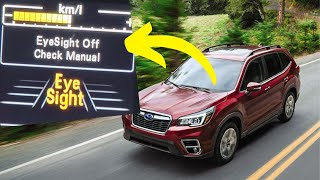
- EyeSight System Disabled: A prominent "EyeSight Disabled" message will appear. 🎬 Watch: Understanding Subaru EyeSight warning messages The EyeSight system relies on wheel speed data to function, so any fault in the ABS system will shut it down.
- Check Engine Light: A general Check Engine Light may also come on, often with code P0502, which indicates a problem with the vehicle speed signal.
- Limp Mode: In some cases, the vehicle may enter a "limp mode," where acceleration is severely limited and the vehicle may not go faster than 30 mph. This is a self-preservation measure by the car's computer.
- Cruise Control Inoperative: Both standard and adaptive cruise control will be disabled.
Common Diagnostic Trouble Codes (DTCs)
To diagnose the issue, you need an OBD-II scanner capable of reading ABS codes (which start with the letter 'C').
- P0502: A generic powertrain code for "Vehicle Speed Sensor 'A' Low Input." On the Ascent, this points to a fault in the wheel speed sensor system, not a transmission sensor.
- C0035 to C0050: These are specific ABS codes that point to a fault in a particular wheel speed sensor circuit. For example, a code for the "Front Left ABS Wheel Speed Sensor Signal" will tell you exactly which sensor to inspect.
Known Issues, Recalls, and TSBs
As of mid-2024, there are no specific recalls or widespread Technical Service Bulletins (TSBs) from Subaru for premature failure of the ABS wheel speed sensors on the 2019-2024 Ascent. Failures are typically isolated incidents caused by road debris, corrosion, or normal wear. While the Ascent has had recalls for other components like the driveshaft and fuel pump, the ABS sensors themselves have not been part of a recall campaign.
Part Number Guide: Front vs. Rear Sensors

Important: The initial part numbers provided in some databases (98231XC00A and 98237XC00A) are incorrect. Those are airbag impact sensors, not ABS wheel speed sensors. Using the wrong part will not resolve the issue. The correct part numbers are listed below.
The front and rear sensors are different parts. The rear sensors are also side-specific (left vs. right).
| Position | Part Number | Replaces Part Number | Notes |
|---|---|---|---|
| Front (Left or Right) | 27540XC00B | 27540XC00A | The same part is used for both front wheels. | 🎬 See this front ABS sensor replacement walkthrough
| Rear Right (Passenger) | 27540XC02B | 27540XC02A | Side-specific. | 🎬 Watch: How to replace a rear ABS sensor
| Rear Left (Driver) | 27540XC03B | 27540XC03A | Side-specific. |
Buying a Used Ascent ABS Sensor: What to Check

A used OEM sensor from a low-mileage vehicle can be a reliable and cost-effective repair. Since these are electronic parts, a visual inspection is key. Cheap aftermarket sensors can sometimes have incorrect resistance or signal properties, which can cause persistent issues with sensitive systems like EyeSight.
- Inspect the Wiring: This is the most critical area. Carefully examine the entire length of the wire from the sensor to the connector. Look for any cuts, scrapes, stretching, or heat damage. The wire is often the first thing to fail.
- Check the Connector: Look at the plastic connector housing for cracks. Ensure the pins inside are straight, clean, and free of any green or white corrosion.
- Examine the Sensor Head: The tip of the sensor should be clean and free of physical damage or cracks. While you can't see inside, external damage is a major red flag.
- Verify the Part Number: Double-check that the part number matches the exact position (front, rear-left, or rear-right) you need for your Ascent.
Replacement Overview & Difficulty

Replacing an ABS sensor on the Ascent is a straightforward DIY job for someone with basic tools.
- Difficulty: 2 out of 5
- Estimated Time: 0.5 - 1 hour per sensor
- Tools Needed: Jack and jack stands, socket set (10mm), torque wrench (in-lbs or low N·m), pick tool (for connectors).
Basic Steps:
- Safely raise the vehicle and remove the wheel.
- Locate the sensor connector. For the front, it's in the engine bay near the strut tower. For the rear, the connector is typically located inside the vehicle, behind the trunk trim panels. Disconnect it.
- Remove any 10mm bolts holding the sensor's wire harness to the strut or suspension components.
- Remove the single 10mm bolt holding the sensor into the wheel knuckle.
- Gently twist and pull the sensor out. It may be stuck with rust; penetrating oil can help. Be careful not to break it off in the knuckle.
- Clean the mounting hole before installing the new sensor.
- Install the new sensor and tighten the retaining bolt.
Pro Tip: The torque specification for the sensor's retaining bolt is very low: 7.5 N·m (5.5 ft-lb). Over-tightening can damage the new sensor or its plastic housing. It only needs to be snug.
Cost Comparison
Prices can vary, but this provides a general estimate of what to expect.
| Part Source | Estimated Price Range |
|---|---|
| New OEM | $60 - $90 |
| New Aftermarket | $20 - $75 |
| Used OEM | $30 - $50 |
| Shop Labor (per sensor) | $100 - $200 |
Frequently Asked Questions (FAQ)
Will a bad ABS sensor really disable my EyeSight system?
Yes, absolutely. The EyeSight system, which controls features like adaptive cruise control and pre-collision braking, requires accurate speed data from all four wheels to work safely. If any sensor provides faulty data, the entire system will shut down as a fail-safe measure and display a warning message.
Do I need to replace all four sensors at once?
No. You only need to replace the specific sensor that has failed. An ABS-capable scan tool will provide a trouble code that identifies the exact wheel location (e.g., "Rear Right Wheel Speed Sensor Circuit"), so you can replace just the one faulty part.
Is any programming or calibration required after replacing the sensor?
No, a new ABS wheel speed sensor does not require any special programming or calibration. After installation, you should use a scan tool to clear the stored ABS trouble codes. The warning lights should then go away after a short drive as the system confirms the new sensor is working correctly.
Can I just clean the ABS sensor instead of replacing it?
Sometimes, if the sensor tip is covered in metallic debris from the brakes, cleaning it can temporarily solve the problem. However, in most cases, the sensor has failed internally or the wiring is damaged. Given the low cost of the part and the importance of the safety systems it controls, replacement is almost always the correct and most reliable long-term solution.
Helpful Videos

Technical Specifications
OEM Part Numbers: 27540XC00B (Front) 27540XC02B (Rear Right) 27540XC03B (Rear Left)
Retaining Bolt Torque: 7.5 N·m (5.5 ft-lb)
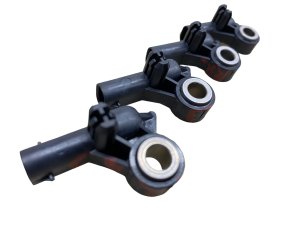
We Have This Part in Stock

The information in this article is provided for general reference and educational purposes only. Vehicle specifications, procedures, and part compatibility can vary by production date, trim level, and region. Always consult your vehicle's factory service manual and verify part numbers before purchasing or performing repairs. Safety-critical components such as airbags, seat belts, and braking systems should be installed by a qualified professional.
- SUBARU ASCENT:
- 🎬 Helpful Videos
- 🛍️ Shop This Part
- Symptoms of a Failing ABS Wheel Speed Sensor
- Common Diagnostic Trouble Codes (DTCs)
- Known Issues, Recalls, and TSBs
- Part Number Guide: Front vs. Rear Sensors
- Buying a Used Ascent ABS Sensor: What to Check
- Replacement Overview & Difficulty
- Basic Steps:
- Cost Comparison
- Frequently Asked Questions (FAQ)
- 🎟️ Get 5% Off