

Saab 9-3, 9-5 & 900 ABS Module Failure: Lights On, No Speedo, and No-Start Problems (1998-2011)
Diagnose and fix the common ABS module failure that plagues these Saabs, causing dashboard warning lights, a dead speedometer, and even preventing the car from starting.
- The most common failure is internal electronics, causing ABS/TCS lights, a dead speedometer, and sometimes a no-start condition.
- Repairing your original module is the best and cheapest option, as it avoids the need for expensive dealer programming.
- Compatibility is critical for used parts. You must match the part number AND features like Traction Control (TCS).
- On 2003+ models, replacing the module requires programming with a Saab-specific Tech 2 scanner, which usually means a trip to a specialist or dealer.
Understanding the Saab ABS System: More Than Just Brakes

On many vehicles, the ABS module is a standalone safety feature. On these specific Saab models, however, it's a critical communication hub. The ABS module, often a Bosch 5.3 unit on earlier models, not only manages the anti-lock brakes but also works with the Traction Control System (TCS) and Electronic Stability Program (ESP) to prevent wheel spin and skidding. More importantly, it processes the signal from the wheel speed sensors and sends vehicle speed data to the instrument cluster. When the module fails, it can't send this data, which is why a dead speedometer is a classic symptom. This communication breakdown can also disrupt the entire vehicle network (CAN bus), sometimes preventing the engine control module (ECU) from getting the signals it needs, leading to a no-start condition.
Common Symptoms of a Failing Saab ABS Module

A failing ABS module on a Saab 9-3, 9-5, or 900 typically doesn't happen slowly. It often presents as a sudden electronic failure with a distinct set of symptoms.
Warning Lights on the Dash
The most common sign is a sudden illumination of multiple warning lights on your dashboard. You will almost always see the ABS light, but it is often accompanied by the BRAKE and TCS or ESP lights. This indicates the systems controlled by the module are now offline.
Inoperative Speedometer
If your speedometer suddenly drops to zero while driving and stays there, a faulty ABS module is the most likely cause. The module is responsible for interpreting the raw data from the wheel speed sensors and turning it into a vehicle speed reading for the dashboard. When the module fails, that data stream stops.
No Communication and Diagnostic Trouble Codes (DTCs)
When the module fails internally, it often stops communicating with the rest of the vehicle and any diagnostic scan tool. A mechanic may report that they cannot connect to the ABS module. This often leads to communication-related fault codes, such as U0121 or U0212 (Lost Communication With ABS Control Module). You may also see false codes for wheel speed sensors, as the main module can no longer read them correctly.
No-Start Condition
In some cases, a faulty ABS module can flood the vehicle's data network with bad information, confusing other critical modules like the engine computer (ECU) or column-integrated module (CIM). This can result in a no-crank or no-start situation. A common diagnostic trick is to unplug the main electrical connector from the ABS module; if the car then starts, it's a very strong indicator the ABS module is the culprit.
Known Issues and Common Failure Points

The most common reason for failure, especially on the 1998-2002 models with the Bosch 5.3 ABS module, is not mechanical wear but an internal electronic fault. Over time, vibrations and thermal cycles cause microscopic cracks in the solder joints that connect the main electrical connector pins to the internal circuit board. This leads to intermittent or total loss of power and data communication, causing the symptoms described above. Later models use different TRW or Bosch units that can also suffer from similar internal electronic failures.
Pro Tip: The electronic control module can almost always be separated from the hydraulic pump assembly without opening any brake lines. It is held on by about six T20 Torx screws. This means you can send the module for repair without needing to bleed the entire brake system afterward, saving significant time and effort.
Buyer's Guide: Choosing a Replacement Saab ABS Pump and Module

When your ABS module fails, you have several options. Choosing the right one depends on your budget, your technical skill, and the specific year of your Saab.
The #1 Recommendation: Repair Your Original Module
For the vast majority of these vehicles, especially pre-2003 models, the best option is to remove your original electronic module and send it to a specialist for repair. Companies can rebuild your module, fixing the common internal solder joint failures for a fraction of the cost of a new part.
Advantages:
- No Programming Required: Because it is the original module that came with your car, it is already programmed and configured. Once repaired, it is plug-and-play.
- Cost-Effective: Repair services typically cost between $100 and $200, making it the most affordable solution.
- High Success Rate: The failure mode is well-known, and repairs are highly reliable, often coming with a warranty.
Buying a Used OEM Module: The Compatibility Minefield
A used module from a salvage vehicle is a cheap alternative, but it is fraught with risk. Compatibility is absolutely critical, and a mismatched module will not work.
Warning: Before buying a used module, you MUST verify compatibility. Installing the wrong module can cause system malfunctions or simply not work at all.
Use this checklist to verify a used part:
- Match the Part Number: The most important step. Find the Bosch or Saab part number printed on a sticker on your existing module and match it exactly.
- TCS / ESP: Does your car have Traction Control (TCS) or Electronic Stability Program (ESP)? The replacement module must be from a car with the exact same features. A module for a car without TCS will not work in a car with TCS.
- Engine and Transmission: On some 9-3 and 9-5 models, the module is specific to the engine (4-cylinder vs. V6) and transmission type (Automatic vs. Manual).
- FWD vs. XWD: For later model 9-3s, ensure the module is correct for Front-Wheel Drive or All-Wheel Drive (XWD) systems.
Remanufactured and New Modules
Remanufactured: Some vendors sell fully rebuilt modules on an exchange basis. You pay for the part plus a core charge, which is refunded when you send your old module back. This is faster than waiting for your own module to be repaired but costs more.
New OEM: A new module from a dealer is prohibitively expensive, often costing between $1,000 and $2,000 for the part alone. This is generally not a practical option given the affordable repair and remanufacturing alternatives.
Programming and Calibration: Will It Work Out of the Box?
This is the most important question for any electronic module replacement.
1998-2002/03 Models (Bosch 5.3 / 5.4)
If you repair your original module, no programming is needed. If you install a used module with the same part number and features (e.g., TCS), it will often work without programming. However, if the features are different, it may require a Saab Tech 2 scanner to properly configure the unit to the car.
2003+ Models (9-3) and Later 9-5
For these newer vehicles, replacing the ABS module almost always requires programming. This is not a simple swap. The procedure must be done with a dealer-level Tech 2 scan tool with access to GM's Service Programming System (SPS). The module must be programmed with the vehicle's VIN and configured for its specific options. Attempting to install a used module without programming will result in the ABS light staying on and the system not functioning.
Cost Comparison: Saab ABS Module Replacement
| Option | Estimated Part Cost | Notes |
|---|---|---|
| New OEM | $850 - $2,000+ | Extremely expensive; often not a practical choice. |
| Remanufactured (Exchange) | $150 - $400 | Faster than repair; may include a core charge. |
| Used OEM | $50 - $150 | High risk due to compatibility and unknown condition. |
| Repair Original Module | $100 - $200 | Most recommended option; avoids programming issues. |
| Shop Labor (Module Only) | $150 - $300 | For removing/installing the electronic module. Does not include brake bleeding. |
| Shop Labor (Full Pump/Module) | $300 - $500 | Higher cost due to needing to open hydraulic lines and bleed the brake system. |
Frequently Asked Questions (FAQ)
Can I still drive my Saab with a bad ABS module?
Yes, but with significant safety compromises. Your standard hydraulic brakes will still work, but you will have no anti-lock braking (ABS), traction control (TCS), or stability control (ESP). This means your wheels can lock up during hard braking, increasing stopping distances and making it easier to lose control, especially on wet or slippery roads. Additionally, your speedometer may not work, which can be a safety and legal issue.
Do I have to bleed the brakes to replace the ABS module?
No, not if you are only replacing the electronic control module. The module can be unbolted from the hydraulic pump assembly while it remains in the car. This avoids opening the sealed brake fluid system. You only need to bleed the brakes if you replace the entire pump and module assembly.
Why did my speedometer stop working when the ABS light came on?
Because the ABS module is responsible for processing the signals from the wheel speed sensors and calculating the vehicle's speed. It then sends this information to the instrument cluster to drive the speedometer. When the module fails, it can no longer perform this calculation, and the speedometer stops receiving data.
Can an independent mechanic program a new or used Saab ABS module?
It depends on the shop and the year of the car. For later models (2003+), programming requires a specific tool called a Tech 2 and an active subscription to the online Service Programming System (SPS). Many general repair shops do not have this equipment. You will likely need to go to a Saab specialist or a GM dealership that is willing to program a part they did not supply.
Technical Specifications
OEM Part Numbers: 0273004451 13246533 13246535 30571094 30589228 4779500 4779526 5390091 93170632 93185677 93185682 93190839 93196758 93196759 0273004151 0273004221 0273004222 0273004223 0273004578
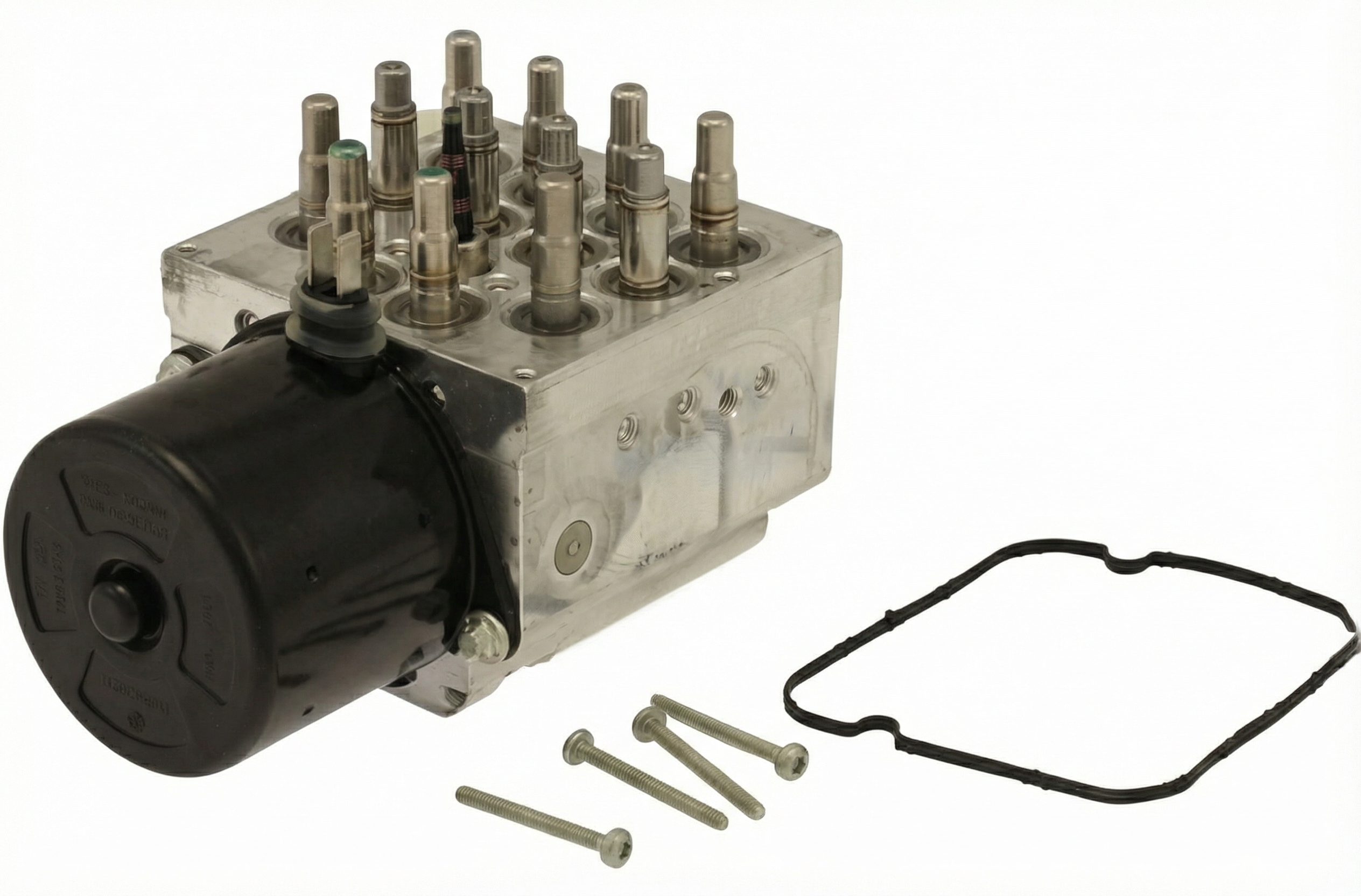
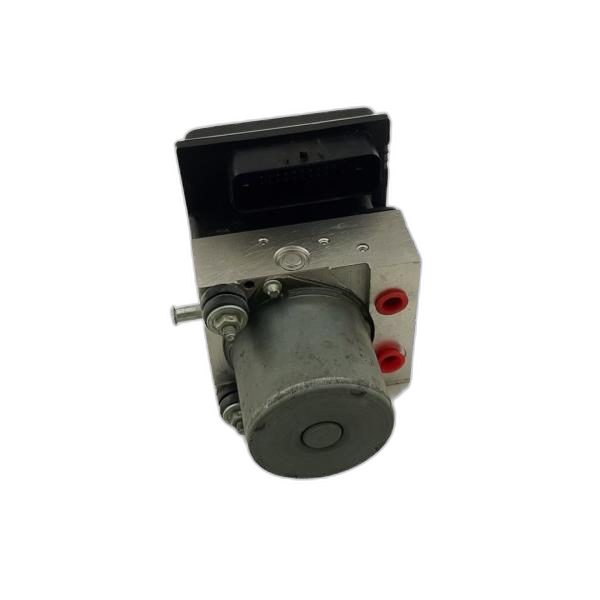
Primarily Bosch 5.3, 5.4, or TRW electronic control modules paired with a hydraulic control unit (HCU). The electronic module is typically removable from the HCU via six T20 Torx screws.
We Have This Part in Stock



The information in this article is provided for general reference and educational purposes only. Vehicle specifications, procedures, and part compatibility can vary by production date, trim level, and region. Always consult your vehicle's factory service manual and verify part numbers before purchasing or performing repairs. Safety-critical components such as airbags, seat belts, and braking systems should be installed by a qualified professional.
- Saab 9-3:
- Saab 9-5:
- Saab 900:
- 🛍️ Shop This Part
- Understanding the Saab ABS System: More Than Just Brakes
- Common Symptoms of a Failing Saab ABS Module
- Warning Lights on the Dash
- Inoperative Speedometer
- No Communication and Diagnostic Trouble Codes (DTCs)
- No-Start Condition
- Known Issues and Common Failure Points
- Buyer's Guide: Choosing a Replacement Saab ABS Pump and Module
- The #1 Recommendation: Repair Your Original Module
- Buying a Used OEM Module: The Compatibility Minefield
- Remanufactured and New Modules
- Programming and Calibration: Will It Work Out of the Box?
- 1998-2002/03 Models (Bosch 5.3 / 5.4)
- 2003+ Models (9-3) and Later 9-5
- Cost Comparison: Saab ABS Module Replacement
- Frequently Asked Questions (FAQ)
- 🎟️ Get 5% Off