

2006-2012 Toyota RAV4 ABS Module: Calibration, Part Matching & Replacement
A complete guide to diagnosing the common ABS/VSC/Brake light issue, finding the correct part number, and understanding the critical post-replacement calibration for your RAV4.
- A replacement ABS module does NOT require VIN programming, but it MANDATES a 'Zero Point Calibration' to make the VSC/ABS system work.
- Part compatibility is extremely complex. You must match the OEM part number exactly, considering the year, drivetrain, engine, 3rd-row seat option, and country of origin (VIN starting with 'J' vs. '2').
- Before replacing the module, rule out simpler issues like a faulty brake light switch (a common cause for C1249 code) or bad wheel speed sensors.
- Properly bleeding the brakes after replacement requires a bidirectional scan tool to cycle the internal ABS pump and purge all trapped air.
Symptoms of a Failing 2006-2012 RAV4 ABS Module


A failing ABS module in this generation of RAV4 typically announces itself with a distinct and alarming cluster of dashboard lights.
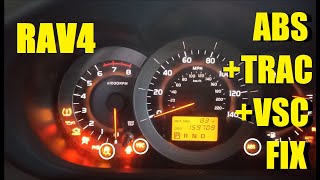
- Warning Light Cluster: The most common symptom is the simultaneous illumination of the ABS, VSC, and Brake warning lights. These lights often appear together because the systems are interconnected; a fault in the ABS automatically disables VSC and TRAC.
- Unusual Brake Pedal Feel: The brake pedal may feel hard to press, spongy, or unresponsive. In some cases, the module can fail internally and apply brake pressure on its own, making the vehicle feel like it's losing power or dragging the brakes.
- Wheels Locking Up: During a hard stop, the primary function of ABS may fail, causing one or more wheels to lock up and skid. This is most noticeable on wet or slippery surfaces.
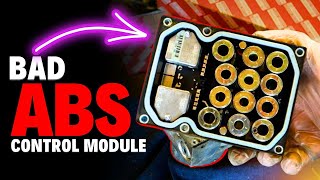
- ABS Pump Constantly Running: You may hear a buzzing or humming noise from the engine bay, which is the ABS pump motor running continuously, even when the vehicle is parked. 🎬 Watch: A visual guide to bad ABS module symptoms This indicates an internal electrical failure in the module.
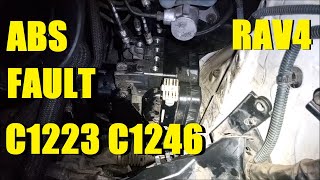
- Diagnostic Trouble Codes (DTCs): A proper OBD-II scanner that can read ABS codes is essential for diagnosis. Common codes pointing to a faulty module include:
- C1223: ABS Control System Malfunction
- C1241: Low or High Power Supply Voltage
- C1246: Master Cylinder Pressure Sensor Malfunction
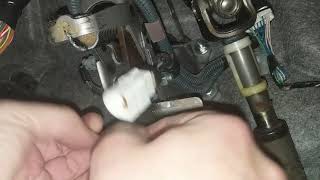
Pro Tip: Before condemning the expensive ABS module, check for simpler causes. The code combination C1223, C1241, and C1249 is often caused by a faulty brake light switch located on the brake pedal, which is an inexpensive and easy part to replace. 🎬 See how to fix codes C1223, C1241, and C1249 Also, ensure your battery and charging system are healthy, as low voltage can trigger a C1241 code.
Known Issues and Service Campaigns
While there wasn't a formal recall for the ABS module on all 2006-2012 RAV4s, Toyota did issue a Limited Service Campaign (LSC 90D) for some 2007-2011 models related to the brake actuator assembly. This campaign addressed internal malfunctions that could cause the ABS/VSC lights to illuminate. It's worth checking with a Toyota dealer with your VIN to see if your vehicle was covered or if the repair was previously performed.
The #1 Challenge: Finding the Correct Replacement Part

Sourcing a replacement ABS module for the 2006-2012 RAV4 is notoriously complex. The correct part depends on a combination of factors, and using the wrong one will result in system incompatibility. You must match the OEM part number from your original unit exactly. Visual similarity is not enough.
Key compatibility factors include:
- Model Year: Part numbers change throughout the generation.
- Drivetrain: Front-Wheel Drive (FWD/4x2) and Four-Wheel Drive (4WD/4x4) models use different modules.
- Engine: 4-cylinder and 6-cylinder models may require different parts.
- Third-Row Seating: The presence of a third-row seat is a critical factor for some years and configurations.
- Country of Origin: Your Vehicle Identification Number (VIN) will tell you where the car was built. A VIN starting with 'J' indicates Japan, while a VIN starting with '2' indicates Canada (North American market). Many modules are specific to the build location.
Due to the complexity, always verify the part number on your existing module before ordering a replacement. The provided OEM part numbers in the database are a starting point, but physical verification is the only way to guarantee a match.
Buying a Used 2006-2012 RAV4 ABS Module
Given that a new OEM ABS module can cost over $1,700, a used OEM unit is often the most practical and cost-effective solution. Aftermarket options exist, but their quality and longevity can be questionable. A recycled OEM part from a reputable seller offers factory fit and function at a significant discount.
What to Inspect:
- Part Number: This is the most critical step. Ensure the part number on the used unit is an exact match to your original module.
- Electrical Connector: Check the connector and pins for any signs of corrosion, moisture, or damage. Bent or corroded pins will cause communication errors.
- Hydraulic Block: Inspect the aluminum block for heavy corrosion or physical damage. Check the brake line ports for stripped or damaged threads.
- Source Vehicle Information: If possible, get the mileage from the donor vehicle. A part from a lower-mileage vehicle is always preferable.
Replacement and Calibration Procedure

Replacing the ABS module is a moderately difficult job that can be done by a skilled DIY mechanic, but it has critical steps that must be followed precisely.
Warning: The most important step after installation is not traditional programming, but a procedure called Zero Point Calibration. Failure to perform this calibration will leave the VSC and ABS lights on and the system inoperative.
Replacement Overview:
- Disconnect the battery.
- Depress the brake pedal several times to relieve any residual pressure.
- Disconnect the main electrical harness from the module.
- Using flare nut wrenches to prevent stripping, carefully disconnect all brake lines leading to the module. It is highly recommended to label each line to ensure correct reassembly.
- Unbolt the module and its bracket from the vehicle's chassis.
- Installation is the reverse of removal.
Brake Bleeding (Scan Tool Required):
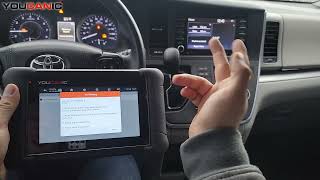
Once the new module is installed, the brake system must be bled to remove all air. A simple manual bleed is often insufficient because air can get trapped inside the new module's internal passages. The proper method requires a bidirectional scan tool that can activate the ABS pump and cycle the solenoids to force all trapped air out into the lines where it can be bled from the calipers. 🎬 Watch: How to perform ABS bleeding with a scan tool The typical procedure is to manually bleed the system, use the scan tool to cycle the pump, and then manually bleed the system a second time.
Zero Point Calibration:
Zero Point Calibration is a process that resets and calibrates the Yaw Rate Sensor, Deceleration Sensor, and Steering Angle Sensor. It tells the VSC system the vehicle's baseline for being stationary on a level surface and driving straight. This procedure is mandatory after replacing the ABS module or performing a wheel alignment.
While it can be done with a Toyota Techstream scan tool, it can often be performed without one using a paperclip or jumper wire to short specific terminals in the OBD-II port. The exact procedure can vary slightly by year, but generally involves:
- Parking on a level surface with the steering wheel straight.
- Using a jumper wire to connect and disconnect specific pins (often Ts and CG) on the OBD-II port in a specific sequence to clear old data and then initiate the calibration.
- The VSC warning light will blink in a specific pattern to confirm the calibration is complete.
Cost Comparison
| Part Type | Estimated Cost |
|---|---|
| New OEM | $1,700 - $2,300+ |
| New Aftermarket | $350 - $600 |
| Remanufactured | $250 - $500 |
| Used OEM | $150 - $350 |
| Shop Labor | $100 - $250 |
Frequently Asked Questions (FAQ)
Does a used 2006-2012 RAV4 ABS module need to be programmed?
No, it does not require VIN programming in the way many other vehicle modules do. However, it is absolutely mandatory to perform a Zero Point Calibration after installation. Without this calibration, the ABS and VSC systems will not function, and the warning lights will remain on.
Can I drive my RAV4 with the ABS and VSC lights on?
Yes, but with significant caution. When these lights are on, your conventional braking system will still work, but the anti-lock (ABS), traction control (TRAC), and vehicle stability control (VSC) functions are disabled. This means your wheels can lock up during a hard stop, increasing the risk of skidding, especially on wet or loose surfaces.
Why are my ABS, VSC, and Brake lights all on at the same time?
These systems are all controlled by the ABS module. When the module detects a critical fault within the system, it shuts down all related safety functions (ABS, VSC, TRAC) as a fail-safe measure and illuminates all corresponding lights to alert the driver to the malfunction.
Could my problem just be a bad wheel speed sensor?
Yes. A faulty wheel speed sensor is a very common issue that will also trigger the ABS/VSC lights. A proper diagnosis with an OBD-II scanner that can read ABS codes is necessary. The scanner will show specific codes related to a particular wheel speed sensor (e.g., 'Right Front Wheel Speed Sensor Circuit Malfunction'), whereas a failing module is more likely to show general system failure codes like C1223 or C1246.
Helpful Videos
Technical Specifications
OEM Part Numbers: 44050-42320 44050-42321 440500R062 440500R080 440500R081 440500R082 4405042190 4405042320 4405042321 4405042540 445400R052 445400R070 4454042290 44050-42190 44050-42200 44050-42210 44050-42240 44050-42300 44050-42330 44050-42350
Integrated unit containing electronic control module, hydraulic pump, and solenoid valve block. Controls ABS, VSC, and TRAC systems.
We Have This Part in Stock



The information in this article is provided for general reference and educational purposes only. Vehicle specifications, procedures, and part compatibility can vary by production date, trim level, and region. Always consult your vehicle's factory service manual and verify part numbers before purchasing or performing repairs. Safety-critical components such as airbags, seat belts, and braking systems should be installed by a qualified professional.
- Toyota RAV4:
- 🎬 Helpful Videos
- 🛍️ Shop This Part
- Symptoms of a Failing 2006-2012 RAV4 ABS Module
- Known Issues and Service Campaigns
- The #1 Challenge: Finding the Correct Replacement Part
- Buying a Used 2006-2012 RAV4 ABS Module
- What to Inspect:
- Replacement and Calibration Procedure
- Replacement Overview:
- Brake Bleeding (Scan Tool Required):
- Zero Point Calibration:
- Cost Comparison
- Frequently Asked Questions (FAQ)
- 🎟️ Get 5% Off