

2009-2013 Highlander ABS Module: FWD vs. AWD, Part Numbers & Zero Point Calibration
This guide covers common failures, programming needs, and how to choose the correct used ABS module for your FWD or AWD Highlander.
- You must match the part number exactly to your vehicle's drivetrain (FWD vs. AWD).
- A "Zero Point Calibration" is mandatory after installation to re-enable the VSC and TRAC systems and turn off the warning lights.
- The vehicle is drivable with a failed module, but critical safety systems (ABS, VSC, TRAC) will be disabled.
- Failure is almost always indicated by the ABS, VSC, and TRAC warning lights all appearing on the dashboard at once.
Symptoms of a Failing ABS Control Module

When the ABS module begins to fail, your vehicle will give you several clear warning signs. The most common symptom is the illumination of multiple warning lights on your dashboard at the same time.
- ABS, VSC, and TRAC Lights On: The most frequent indicator is having the ABS, VSC, and TRAC warning lights all come on and stay on. This signals a fault within the integrated brake control system.
- Brake Malfunction Message: A "Check VSC System" or similar brake malfunction message may appear on the multi-information display.
- Unresponsive or Hard Brake Pedal: In some failure modes, especially those involving the internal pump or accumulator, you may experience a loss of power brake assist, resulting in a brake pedal that is very hard to press.
- Audible Buzzing or Pump Noise: You might hear a continuous or intermittent high-pitched buzzing or the sound of the electric pump motor running for an unusually long time. This can indicate an internal leak or a failing pump motor.
- Diagnostic Trouble Codes (DTCs): A capable OBD-II scanner can pull specific codes from the ABS system. Common codes pointing to a faulty module include C1252 (Brake Booster Pump Motor On Time Abnormally Long), C1256 (Accumulator Low Pressure), C1300 (Skid Control ECU Malfunction), and C1391 (Abnormal Leak of Accumulator Pressure).
Known Issues, Recalls, and Technical Service Bulletins (TSBs)
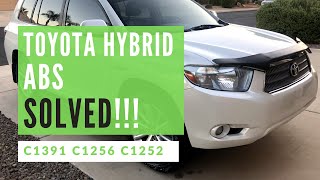
While no specific recalls were found for the ABS control module on non-hybrid 2009-2013 Toyota Highlanders, Toyota has issued TSBs for similar issues on related models. For example, TSB-0064-19 addresses internal brake fluid leaks 🎬 Watch: How to fix ABS faults on a 2009 Hybrid Highlander in the actuator for 2008-2010 Highlander Hybrid models, which cause similar symptoms and DTCs. Always check for any open recalls or TSBs related to your specific vehicle's VIN with a Toyota dealer.
Compatibility Warning: The ABS control module for the 2009-2013 Highlander is NOT compatible with Hybrid models. Hybrid Highlanders use a different and more complex brake actuator system.
Decoding Part Numbers & Vehicle Compatibility

Choosing the correct ABS module is critical, as they are specific to the vehicle's drivetrain. Using the wrong module will result in system incompatibility and warning lights. Always match the part number from your original unit to the replacement part.
| Part Number | Drivetrain | Model Years | Notes |
|---|---|---|---|
| 44050-0E130 | FWD (2WD) | 2009-2010 | Fits US-built models. |
| 44050-48530 | FWD (2WD) | 2008-2011 | Fits Japan-built models. |
| 44050-0E161 | AWD (4WD) | 2012-2013 | Fits All-Wheel Drive models. |
| 44540-0E201 / 44540-0E202 | AWD (4WD) | 2011-2013 | Fits models from August 2011 onwards. |
This table is based on available parts data and may not be exhaustive. Always verify the part number on your specific vehicle before ordering.
Installation and Programming: The Zero Point Calibration

This is the most important step after replacing the ABS module. While the module itself does not typically require VIN programming like an engine computer, the vehicle's safety systems must be recalibrated to recognize the new component. This procedure is called Zero Point Calibration.
Zero Point Calibration resets the learned values for the steering angle sensor, yaw rate sensor, and deceleration sensor. Without this calibration, the VSC and TRAC lights will likely remain on, and the systems will not function correctly.
How to Perform a Zero Point Calibration:
This calibration can be performed in two ways:
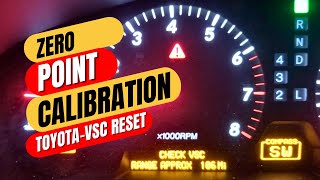
- With a Professional Scan Tool: Most modern bidirectional scan tools have a specific function under the ABS or Chassis menu for "Zero Point Calibration". 🎬 See how to perform the calibration using a professional scan tool This is the most reliable method. The tool guides you through the process, which involves keeping the vehicle stationary on a level surface while the calibration is performed.
- Manual Method (Jumper Wire): On many Toyota models, it's possible to perform the calibration without a scan tool by using a jumper wire to short specific pins in the OBD-II port (DLC3). This procedure typically involves connecting terminals Ts (pin 12) and CG (pin 4) in a specific sequence while turning the ignition on and off. This method should only be attempted if you are confident in identifying the correct pins and following the procedure exactly as described in a service manual. 🎬 Watch: How to perform the manual VSC reset method
Pro Tip: After replacing the module and before starting the calibration, it's a good practice to bleed the entire brake system to remove any air that may have entered when disconnecting the brake lines.
Buying a Used 2009-2013 Highlander ABS Module

A used OEM ABS module can be a cost-effective and reliable alternative to an expensive new unit. Because these are primarily electronic and hydraulic parts with few mechanical wear items, a tested unit from a reputable recycler is often a smart choice.
- Verify the Part Number: This is the most critical step. Due to the differences between FWD and AWD models, you must match the part number exactly. Do not rely on visual appearance alone.
- Inspect for Damage: When you receive the part, check the aluminum block for any signs of heavy corrosion or physical damage. Ensure the electrical connector and all pins are clean, straight, and free of corrosion. Make sure the brake line ports are not stripped or damaged.
- Check the Source: If possible, choose a module from a lower-mileage vehicle that was not involved in a major front-end collision.
- Why Used OEM is a Good Choice: A genuine Toyota OEM module is designed specifically for your vehicle's systems. Unlike some new aftermarket parts that can have compatibility or quality issues, a used OEM part offers proven performance and fitment. Repairing your original module is also a good option as it eliminates any programming concerns.
Cost Comparison
Prices can vary significantly based on the supplier and part condition. Here is a general cost estimate:
| Part Type | Estimated Cost |
|---|---|
| New OEM | $1,000 - $1,350+ |
| New Aftermarket | Not widely available |
| Remanufactured | $250 - $500 |
| Used OEM | $150 - $350 |
| Shop Labor (Replacement & Bleeding) | $150 - $250 |
| Shop Labor (Diagnostics & Calibration) | $95 - $170 |
Frequently Asked Questions (FAQ)
Do I need to program a replacement ABS module?
While you don't need to "program" the VIN into the module in most cases for this vehicle, you absolutely must perform a Zero Point Calibration after installation. Without this step, the VSC and TRAC systems will not work, and the warning lights will stay on.
Can I drive with a bad ABS module?
Yes, but with significant loss of safety features. Your standard brakes will still function, but you will not have Anti-lock Brakes (ABS), Vehicle Stability Control (VSC), or Traction Control (TRAC). This means your wheels can lock up during a panic stop, and the vehicle will not assist you in a skid. Drive with extreme caution, especially on wet or slippery roads, and have the module replaced as soon as possible.
What is the difference between the ABS module and the ABS pump?
For the 2009-2013 Highlander, these are part of the same assembly. The unit is officially called the Brake Actuator Assembly and includes the electronic control module, the hydraulic pump, and the solenoid valve block all in one piece.
Can an independent mechanic perform the Zero Point Calibration?
Yes, any qualified shop with a modern, professional-grade bidirectional scan tool can perform the Zero Point Calibration. It does not have to be done at a Toyota dealership. Some advanced DIYers can also perform the calibration using the manual jumper wire method.
Helpful Videos

Technical Specifications
OEM Part Numbers: 440500E130 440500E161 4405048530 445400E201 445400E192 445400E092 445400E202
The unit is an integrated Brake Actuator Assembly, combining the electronic control unit (ECU), hydraulic pump, and solenoid valve block. It operates on the vehicle's 12V electrical system.
We Have This Part in Stock



The information in this article is provided for general reference and educational purposes only. Vehicle specifications, procedures, and part compatibility can vary by production date, trim level, and region. Always consult your vehicle's factory service manual and verify part numbers before purchasing or performing repairs. Safety-critical components such as airbags, seat belts, and braking systems should be installed by a qualified professional.
- Toyota Highlander:
- 🎬 Helpful Videos
- 🛍️ Shop This Part
- Symptoms of a Failing ABS Control Module
- Known Issues, Recalls, and Technical Service Bulletins (TSBs)
- Decoding Part Numbers & Vehicle Compatibility
- Installation and Programming: The Zero Point Calibration
- How to Perform a Zero Point Calibration:
- Buying a Used 2009-2013 Highlander ABS Module
- Cost Comparison
- Frequently Asked Questions (FAQ)
- 🎟️ Get 5% Off