

2008-2013 Highlander ABS Module: Calibration, Compatibility, and Common Failures
This guide covers the common failures, critical compatibility differences, and necessary calibration steps for replacing the ABS module in your 2008-2013 Toyota Highlander.
- Compatibility is critical: AWD and FWD modules are not interchangeable, and neither are Hybrid and non-Hybrid units. Always match the part number on your original module.
- Replacement requires a "Zero Point Calibration" for the VSC system to function. This can be done with a professional scan tool or a complex manual procedure.
- Hybrid models (2008-2010) were subject to a Customer Support Program for internal brake actuator leaks, a common failure point.
- Driving with a failed module is possible but unsafe, as ABS, traction control, and stability control will be disabled, increasing the risk of skidding.
Symptoms of a Failing ABS Module

When the ABS module in a 2008-2013 Toyota Highlander begins to fail, it typically announces the problem with a distinct set of dashboard warnings. Because the ABS, traction control, and Vehicle Stability Control (VSC) systems are all managed by this single unit, a failure here will disable all of them.
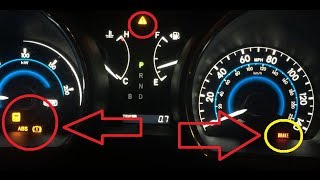
- ABS, VSC, and Brake Warning Lights: The most common symptom is having the ABS, VSC, and general brake warning lights all illuminate on the dashboard simultaneously. 🎬 Watch: How to diagnose and fix these dashboard warning lights
- Unresponsive or Spongy Brake Pedal: You might notice the brake pedal feels different, sometimes becoming hard to press or feeling unresponsive. In some cases, it may require more effort to stop the vehicle.
- Wheels Locking Up: The primary job of the ABS is to prevent wheels from locking during a hard stop. If the module fails, your wheels can lock up and skid, especially on wet or slippery surfaces, increasing stopping distances.
- Audible Pump Noise: Some drivers may hear the ABS pump motor running continuously or at unusual times, which can indicate a problem within the hydraulic actuator unit.
Known Issues, Recalls, and Technical Service Bulletins (TSBs)

While there hasn't been a direct recall for the ABS module on all 2008-2013 Highlanders, there are significant related service campaigns and TSBs, particularly for Hybrid models.
Customer Support Program for Hybrid Models (ZKC)
Toyota initiated a Customer Support Program for certain 2008-2010 Highlander Hybrid models concerning internal malfunctions of the Brake Actuator Assembly. Owners reported various brake system warning lights illuminating. TSB-0064-19 was released for 2008-2010 Highlander Hybrids that stored DTCs C1391, C1252, C1253, and C1256, which could be caused by a small internal brake fluid leak inside the actuator. While this program extended warranty coverage, it was not a formal recall and had specific time and mileage limits.
Related Diagnostic Trouble Codes (DTCs)
A faulty ABS module can trigger a variety of DTCs. Common codes associated with ABS actuator failure on this platform include:
- C1391: Abnormal Leak in Accumulator
- C1252: Brake Booster Pump Motor On Time Abnormally Long
- C1253: Hydro-Booster Pump Motor Relay Malfunction
- C1256: Accumulator Low-Pressure Malfunction
- C1300: Skid Control ECU Malfunction
It's important to note that other issues, like a faulty wheel speed sensor or even low brake fluid from a leaking caliper, can also trigger the ABS and VSC lights. Always perform a proper diagnosis before replacing the module.
Compatibility Warning: The ABS module assembly is specific to your vehicle's drivetrain. Modules for All-Wheel Drive (AWD) and Front-Wheel Drive (FWD) models are NOT interchangeable. Furthermore, Hybrid and non-Hybrid models use different units. Always match the OEM part number from your original module to the replacement part to ensure compatibility.
Buying a Used ABS Control Module: What to Look For

Purchasing a used ABS module can save you a significant amount of money, but careful inspection is key. Since these units are often VIN-specific, getting the right one is critical.
- Verify the Part Number: This is the most important step. The part number is printed on a label on the module. Match it exactly. Part numbers like 44050-48340 are for AWD models. Do not rely on a visual match alone.
- Inspect for Corrosion: Check the aluminum housing and electrical connectors for any signs of white, chalky corrosion. This indicates water intrusion, which is a common cause of electronic failure.
- Check the Connectors: Ensure the electrical connector pins are straight, clean, and free of damage. Bent or corroded pins can prevent the module from communicating with the vehicle.
- Source from a Reputable Seller: Buy from a seller that offers a warranty and a clear return policy. This protects you in case the part is defective. A 1-year warranty is a good sign of a quality part.
- Why Used OEM is Often Better: For a complex electronic part like an ABS module, a used OEM unit is often more reliable than a new, cheap aftermarket alternative. The OEM part was designed and tested specifically for your vehicle, reducing the risk of software or communication issues.
Programming and Calibration: Is a Dealer Visit Required?

Replacing the ABS module is not a simple plug-and-play job. After installation, the system requires a Zero Point Calibration. This procedure calibrates the steering angle sensor, yaw rate sensor, and deceleration sensor so the VSC system knows the vehicle's orientation.
There are two ways to perform this calibration:
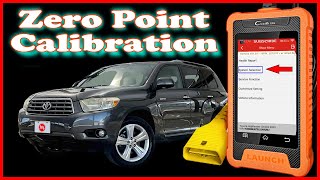
- With a Diagnostic Scan Tool: This is the preferred method. Toyota's Techstream software or a high-end aftermarket scanner (like some Autel or Launch models) can initiate the calibration process through the vehicle's diagnostic port. 🎬 See how to perform a Zero Point Calibration with a scan tool This is the most reliable way to ensure it's done correctly.
- Without a Scan Tool (Manual Method): It is possible to perform the calibration by using a wire or paperclip to short specific pins (Ts and CG) in the DLC3 diagnostic connector in a specific sequence. This method requires carefully following a series of steps involving turning the ignition on and off and connecting/disconnecting the pins. 🎬 Watch: Step-by-step manual Zero Point Calibration without a scanner While it can work, it is more complex and carries a risk of error.
Pro Tip: While some sources suggest 2003-2015 Toyota SUVs are "plug-and-play," the requirement for Zero Point Calibration on the 2008-2013 Highlander means that at a minimum, this electronic setup procedure is necessary for the VSC system to function correctly after module replacement.
Replacement Cost Comparison
The cost of replacing the ABS module can vary dramatically depending on the type of part you choose.
| Part Type | Estimated Cost |
|---|---|
| New OEM | $1,180 - $1,610 |
| Remanufactured | $400 - $700 |
| Used OEM | $150 - $480 |
| Shop Labor | $250 - $450 (includes installation, brake bleeding, and calibration) |
Frequently Asked Questions (FAQ)
What is Zero Point Calibration?
Zero Point Calibration is an electronic procedure that resets and calibrates the sensors used by the Vehicle Stability Control (VSC) system, including the yaw rate, deceleration, and steering angle sensors. It must be performed after replacing the ABS module or other related suspension/steering components to ensure the VSC system functions correctly.
Can I drive with a bad ABS module?
Yes, but with significant risks. Your vehicle's conventional hydraulic brakes will still work, but you will not have anti-lock brakes (ABS), traction control, or stability control. This means your wheels can lock up during hard braking, increasing the risk of skidding and losing control, especially on slippery roads. It is highly recommended to get the issue repaired as soon as possible.
Do I need to bleed the brakes after replacing the ABS module?
Yes. The ABS module is a hydraulic component connected to all of your brake lines. When you replace it, air will enter the system. You must perform a full brake bleed procedure on all four wheels to remove the air and ensure a firm brake pedal and proper braking function. Some advanced scan tools may be required to cycle the ABS pump during the bleeding process to purge all trapped air.
Why are my ABS, VSC, and Brake lights all on at once?
These systems are all interconnected and rely on the same control module and sensors. When the main ABS module detects a critical internal fault, it shuts down all related safety systems (ABS, VSC, and traction control) and illuminates their respective warning lights to alert the driver that these features are disabled.
Helpful Videos

Technical Specifications
OEM Part Numbers: 44050-0E130 44050-0E140 44050-48340 44050-48530 44050-48590 440500E130 440500E140 440500E161 4405048340 4405048530 4405048590 44510-48080 44540-48230 44540-48420 445400E201
The assembly includes the ABS control module, pump, and modulator valve.
We Have This Part in Stock



The information in this article is provided for general reference and educational purposes only. Vehicle specifications, procedures, and part compatibility can vary by production date, trim level, and region. Always consult your vehicle's factory service manual and verify part numbers before purchasing or performing repairs. Safety-critical components such as airbags, seat belts, and braking systems should be installed by a qualified professional.
- Toyota Highlander:
- 🎬 Helpful Videos
- 🛍️ Shop This Part
- Symptoms of a Failing ABS Module
- Known Issues, Recalls, and Technical Service Bulletins (TSBs)
- Customer Support Program for Hybrid Models (ZKC)
- Related Diagnostic Trouble Codes (DTCs)
- Buying a Used ABS Control Module: What to Look For
- Programming and Calibration: Is a Dealer Visit Required?
- Replacement Cost Comparison
- Frequently Asked Questions (FAQ)
- 🎟️ Get 5% Off