

2010-2020 Toyota Camry ABS Module: Decoding Failures, Part Numbers, and Calibration
This guide breaks down the common ABS module failures, complex part compatibility, and crucial calibration steps for the 2010-2020 Toyota Camry.
- Part compatibility is extremely complex and varies by Camry generation (2010-11, 2012-17, 2018-20). You must match the OEM part number exactly.
- A failing module on 2010-2011 models often causes widespread electrical issues, including dead or erratic dashboard gauges.
- After replacement, a 'Zero Point Calibration' is mandatory to make the VSC/TRAC system work correctly and turn off the warning lights.
- Repairing your original module (especially for 2010-11 models) or buying a used OEM part offers huge savings over a new dealer part, but be prepared for calibration and potential programming steps.
Critical Compatibility Warnings: Read First!

Warning: The 2010-2020 Toyota Camry spans three distinct generations with different ABS systems. Part compatibility is extremely complex. You MUST match the OEM part number from your original module exactly. Failure to do so will result in a non-working part, even if it physically fits.
Before purchasing a replacement, identify your Camry's generation and specific details:
- XV40 Generation (2010-2011): Known for a specific electronic failure mode in the module.
- XV50 Generation (2012-2017): Compatibility often depends on whether the vehicle has a Pre-Collision System (PCS).
- XV70 Generation (2018-2020): Compatibility is highly specific, depending on where the vehicle was manufactured (Japan or North America), engine type, and trim level (L, LE, SE, XLE, etc.). Hybrid models use different modules.
Known Issues & Recalls by Vehicle Generation

2010-2011 Camry (XV40)
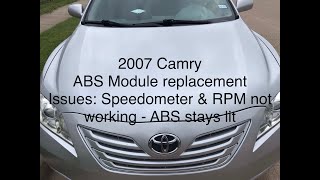
This generation is notorious for a specific failure within the electronic portion of the ABS module. When it fails, it can disrupt the vehicle's entire communication network, leading to a bizarre set of symptoms beyond just the ABS light. Many owners report that the speedometer, tachometer, and temperature gauges stop working or flicker erratically. The air conditioning may also blow hot air. In these cases, the problem is almost always the ABS control module itself.
2012-2017 Camry (XV50)
For these models, part compatibility is often tied to the vehicle's options, most notably the Pre-Collision System (PCS). Modules for vehicles with and without PCS are not interchangeable. When searching for a used part, you must verify that it came from a vehicle with the same braking options as yours. The part is typically sold as a complete unit with the pump and actuator attached.
2018-2020 Camry (XV70)
This is the most complex generation for part matching. The initial data highlights several key warnings that are critical for buyers:
- Build Location Matters: Some modules are specific to Japan-built models, while others are for North American-built models. They are not interchangeable.
- Trim & Drivetrain Specifics: Compatibility can be limited to specific trim levels like L, LE, and SE, and may not fit XLE, XSE, Hybrid, or All-Wheel Drive (AWD) models.
Pro Tip: For the XV70 generation, always provide your vehicle's 17-digit VIN to the parts supplier to ensure you receive the correct module.
Additionally, there was a recall (Toyota #J0K/JLD) for some 2018 Camry models related to the brake booster vacuum pump. While not the ABS module, a failure of this pump can also cause a sudden loss of braking assistance. It's wise to check if your vehicle was affected by this recall.
Symptoms of a Failing ABS Control Module


Diagnosing a bad ABS module starts with recognizing the signs. While a bad wheel speed sensor can cause similar issues, a faulty module has its own 🎬 Watch: How to replace front ABS sensors on 2012-2017 models. distinct set of symptoms.
- ABS and/or TRAC Warning Lights: The most common symptom is a constantly illuminated ABS light on the dashboard. Often, the Traction Control (TRAC) or Vehicle Stability Control (VSC) light will come on as well, as these systems are disabled.
- Instrument Cluster Chaos (2010-2011 Models): As mentioned above, a key indicator for early models is the failure of multiple gauges like the speedometer, tachometer, and temperature gauge.
- Unresponsive or Spongy Brake Pedal: The pedal may feel different, requiring more effort to press or feeling mushy.
- Loss of Anti-Lock Function: During a hard stop, the wheels may lock up and skid, as the primary function of the ABS is disabled.
- Associated OBD-II Codes: A proper diagnosis requires a scan tool capable of reading 'C' (Chassis) codes. Common codes include C0121 (ABS Control Module), C0110 (ABS Pump Motor Relay), C0273/C0278 (Solenoid/Motor Relay Circuit), and C1210/C1336 (Zero Point Calibration Undone).
Buying a Used ABS Control Module
Given the high cost of a new OEM module, a used part is an excellent value. However, you must be a careful shopper. Here’s what to look for:
- EXACT Part Number Match: This is the most important rule. Do not rely on visual similarity. Remove your old module and get the OEM part number printed on its label. Match this number exactly to the used part you are buying.
- Inspect the Connectors: Check the electrical connector pins on the used module. Ensure they are straight, clean, and free of any corrosion or damage.
- Consider a Repair Service: For 2010-2011 models with the common electronic failure, a repair service can be the best option. You send your original module to be rebuilt, which costs around $150-$200. The major advantage is that this completely avoids any potential need for programming, as you are reinstalling your vehicle's original, now-repaired unit.
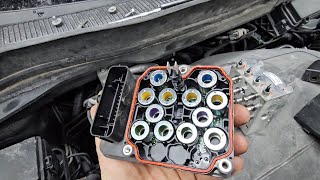
- Buy the Assembly: For 2012 and newer models, the module is often sold with the pump and actuator attached. This is often the standard way they are sold in the recycled parts market. 🎬 Watch: A time-saving trick to replace the module without bleeding brakes.
- Ask About the Donor Vehicle: If possible, get the VIN of the vehicle the part came from. This can help you verify its original configuration (e.g., with or without Pre-Collision System).
Programming and Calibration Requirements
Warning: Replacing the ABS module is not always a simple plug-and-play repair. You may need to perform additional electronic procedures.
Module Programming
Whether a replacement module needs to be programmed to your vehicle's VIN depends on the model year and the part itself. There is conflicting information, but the general consensus is:
- Repairing Your Original Module: No programming is needed.
- Replacing with a Used Module: For older models (XV40), if you only swap the electronic portion, you can often avoid programming. For newer models (XV50, XV70), it is more likely that a used module will need to be programmed by a dealer or a well-equipped independent shop to function correctly with your car's specific VIN and options.
Zero Point Calibration
This is a required step on most Toyota vehicles after replacing the ABS module or disconnecting the battery. The VSC/TRAC system needs to know the 'zero' position of the steering wheel, as well as data from the yaw rate and deceleration sensors. If this calibration is not performed, the TRAC/VSC lights will likely stay on, and you may get fault codes like C1210 or C1336.
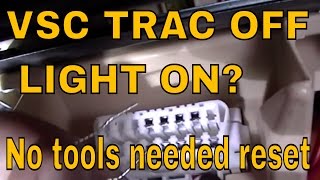
This procedure can be performed with a professional scan tool. Some models also have a manual procedure that involves using a paperclip or jumper wire to short specific terminals in the OBD-II port while following a sequence of steps. Many DIY videos are available online demonstrating this process.
🎬 See this hidden trick for performing a manual Zero Point Calibration.Cost of Replacement
| Part/Service | Estimated Cost |
|---|---|
| New OEM Module/Assembly | $900 - $2,500+ |
| New Aftermarket Module | Not commonly available |
| Used OEM Module/Assembly | $100 - $400 |
| Remanufacture/Repair Service | $150 - $250 |
| Shop Labor (Module Only) | $75 - $150 |
| Shop Labor (Full Assembly w/ Bleed) | $250 - $500+ |
Frequently Asked Questions (FAQ)
Can I drive my Camry with a bad ABS module?
Yes, but with caution. Your car will still have its standard hydraulic brakes, but the anti-lock (ABS), traction control (TRAC), and vehicle stability control (VSC) safety features will be disabled. This means your wheels can lock up during a hard stop, increasing stopping distances and reducing steering control, especially on wet or icy roads. It is highly recommended to get the issue fixed as soon as possible.
Do I need a special scanner to diagnose the ABS light?
Yes. A basic OBD-II code reader that only reads 'P' (Powertrain) codes will likely show no codes. You need a more advanced scan tool that can read 'C' (Chassis) codes to communicate with the ABS module and retrieve the specific fault codes that will point you to the problem.
What is Zero Point Calibration and do I have to do it?
Zero Point Calibration is a mandatory procedure that resets the sensors for the Vehicle Stability Control (VSC) system. It tells the computer the vehicle's straight-ahead position. You MUST perform this calibration after replacing the ABS module or the VSC/TRAC lights will not turn off. It can be done with a scan tool or, on some models, a manual jumper wire procedure.
Is it better to repair my module or buy a used one?
For 2010-2011 models with the common electronic failure (erratic gauges), repairing your original module is often the best choice because it guarantees no programming will be needed. For newer models, buying a quality used module is a great value, but be prepared for the possibility that it may need programming and will definitely require Zero Point Calibration.
Helpful Videos

Technical Specifications
OEM Part Numbers: 44050-06170 44050-06240 4405006130 4405006170 4405006240 4405006260 4405006270 4405006400 4405033660 44540-06080 44540-06180 4454006080 4454006180 4454006290 4454033660
Varies significantly by part number and vehicle generation. Must match original part.
We Have This Part in Stock



The information in this article is provided for general reference and educational purposes only. Vehicle specifications, procedures, and part compatibility can vary by production date, trim level, and region. Always consult your vehicle's factory service manual and verify part numbers before purchasing or performing repairs. Safety-critical components such as airbags, seat belts, and braking systems should be installed by a qualified professional.
- Toyota Camry:
- 🎬 Helpful Videos
- 🛍️ Shop This Part
- Critical Compatibility Warnings: Read First!
- Known Issues & Recalls by Vehicle Generation
- 2010-2011 Camry (XV40)
- 2012-2017 Camry (XV50)
- 2018-2020 Camry (XV70)
- Symptoms of a Failing ABS Control Module
- Buying a Used ABS Control Module
- Programming and Calibration Requirements
- Module Programming
- Zero Point Calibration
- Cost of Replacement
- Frequently Asked Questions (FAQ)
- 🎟️ Get 5% Off