

Tesla ABS Module Failure (2016-2025 S/X/3/Y): Warning Lights, Programming & Replacement
This guide decodes the cascade of warning lights from a faulty ABS module and explains the mandatory programming required for replacement on your Tesla Model S, Model X, Model 3, or Model Y.
- A replacement ABS module is NOT plug-and-play; it requires mandatory programming and calibration using Tesla's proprietary "Toolbox" software by a dealer or specialist.
- A faulty wheel speed sensor can cause the exact same cascade of warning lights and should be ruled out before replacing the entire expensive module.
- Failure of the ABS module will disable critical safety systems including traction control, stability control, regenerative braking, and Autopilot.
- You must match the OEM part number from your original module exactly, as several different, non-interchangeable versions exist across these models and years.
Symptoms of a Failing Tesla ABS Module
A problem with the ABS module in a Tesla Model S, Model X, Model 3, or Model Y rarely presents as a single warning light. Instead, owners typically experience a sudden cascade of alerts on the central touchscreen as multiple systems that rely on the ABS module go offline.
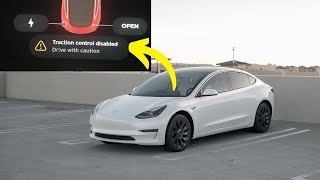
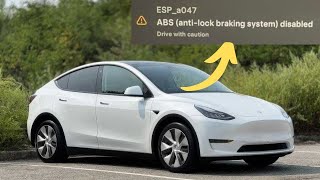
- Multiple Warning Lights: The most common sign is the simultaneous appearance of alerts for "ABS Disabled," "Traction Control Disabled," and "Stability Control Disabled."
- Loss of Driver-Assist Features: You will likely see messages stating that cruise control, automatic emergency braking, and Autopilot features are unavailable.
- Disabled Regenerative Braking: The vehicle will lose its characteristic regenerative braking function, causing it to coast more freely when you lift off the accelerator and requiring more use of the physical brake pedal. This is one of the most noticeable symptoms.
- "Vehicle Hold" Unavailable: The feature that holds the car in place at a stop without you needing to press the brake pedal will be disabled.
- Changes in Brake Feel: While the primary hydraulic braking system will still function, some drivers report a different or spongy pedal feel.
Pro Tip: Before assuming the entire module has failed, check the wheel speed sensors. A single faulty wheel speed sensor can cause the exact same cascade of warning lights and is a much cheaper and simpler part to replace. You can check for specific wheel speed sensor fault codes in the vehicle's Service Mode.
🎬 Watch: How to replace a faulty wheel speed sensorCommon Diagnostic Trouble Codes (DTCs)
You can access your Tesla's diagnostic system to find specific error codes. On your touchscreen, navigate to Controls > Software, then press and hold the "Model" name for about four seconds and enter the access code "service". 🎬 Watch: How to access Tesla diagnostic software Look for codes related to the stability and braking systems, such as:
- ESP_a067, ESP_a080, DL_a222, DL_a223: These codes point to general failures in the ABS/ESP system.
- ESP_a001_ecuGenericFault: Indicates an internal electronic fault in the ABS/ESP control unit.
- ESP_a017_netOvervoltage: Suggests an overvoltage condition in the ABS unit or its network.
Known Issues, Recalls, and Vehicle-Specific Information
While the ABS module function is similar across the Tesla Model S, Model X, Model 3, and Model Y, there are important generational and model-specific differences to be aware of.
Recall 24V051: Incorrect Warning Light Font Size
In early 2024, Tesla issued a widespread recall for most 2012-2024 models because the font size for the Brake, Park, and ABS warning lights on the display was smaller than the federally mandated 3.2mm. This does not indicate a problem with the ABS module itself. The fix is a simple over-the-air (OTA) software update from Tesla and requires no physical repair.
Vehicle Fitment and Compatibility Warnings
The initial data provided for this part contained several conflicting warnings, which highlights a critical point: multiple versions of this module exist, and they are not interchangeable. You must verify the part number on your original module matches exactly before purchasing a replacement.
- Model S / Model X: The compatible modules change significantly with the 2021 "Refresh" (also known as Palladium or Plaid). Parts for 2016-2020 models are generally not compatible with 2021+ models. For example, part number 1037797-00-D is listed for the 2016-2021 Model X and older Model S vehicles.
- Model 3: This guide covers models from 2017 up to 2023. The refreshed 2024+ "Highland" version of the Model 3 uses a different architecture and this part is not compatible.
- Model Y: The ABS module is shared with the Model 3 for the years covered (2020-2025).
- Part Number Conflicts: It is common to see a part like 1044745-00-B listed for both the Model 3/Y and the 2021+ Model X. This makes visual confirmation and part number matching absolutely essential.
Warning: A replacement ABS control module—whether new or used—is NOT plug-and-play. It absolutely must be electronically configured to your specific vehicle to function. Physically swapping the module is only half the job.
Programming and Installation Requirements
This is the most critical information for anyone replacing this part. If you install a new or used ABS module without programming it, the warning lights will remain, and the ABS, traction control, and stability control systems will stay disabled. The car's computer will not recognize the new part until it is properly configured to the vehicle's VIN.
Who Can Program the Module?
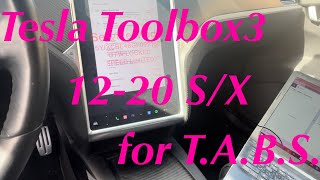
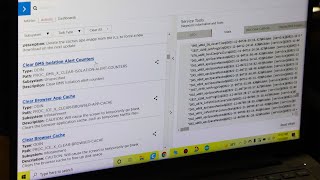
This procedure requires Tesla's proprietary "Toolbox 3" diagnostic software. Your options are limited:
- Tesla Service Center: The most straightforward option. They have the tools and procedures to guarantee a correct installation, programming, and calibration.
- Specialized Independent Shop: A small but growing number of independent repair shops that specialize in Teslas may have a legitimate subscription to the Toolbox 3 software. You must verify this with the shop beforehand. A general mechanic or a DIY-er cannot perform the necessary software configuration. 🎬 See this deep dive on using Toolbox 3
The installation process itself involves disconnecting the 12V battery, removing the underhood storage unit ('frunk tub'), carefully disconnecting the brake lines and electrical connector, and swapping the module. After the new part is installed, the procedure requires a full brake system bleed and the software configuration using Toolbox.
Buying a Used ABS Control Module
Given the high cost of a new module, a used OEM part is an excellent value. However, you must be careful to get a compatible and functional part.
- Match the Part Number EXACTLY: This is the most important rule. As noted above, there are many variations. Find the part number on your vehicle's original module and buy one with the identical number. Do not rely on year/model descriptions alone.
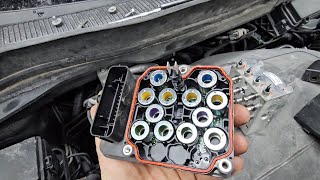
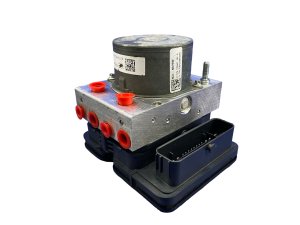
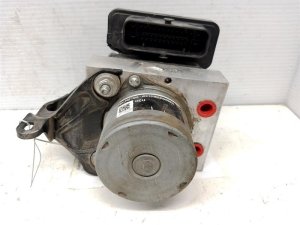
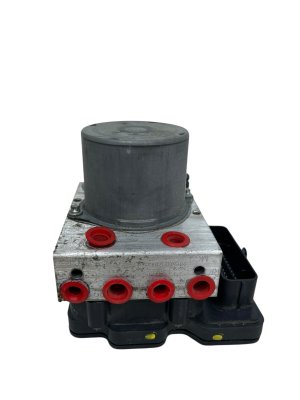
- Inspect the Connectors: Look for clean, corrosion-free pins on the main electrical connector. Any signs of water damage or bent pins are a major red flag.
- Check the Hydraulic Ports: Ensure the ports where the brake lines connect are clean and the threads are not damaged. The unit should have been capped or sealed after removal to prevent contamination.
- Source from a Reputable Recycler: Purchase from a seller that offers a warranty and has a good reputation. This provides protection if you receive a defective part.
- Factor in Programming Costs: Remember that even with a perfectly good used module, you will still need to pay for professional programming and installation. Factor this into your total cost.
Cost Breakdown
The cost to replace a Tesla ABS module can vary significantly based on the model, year, and your choice of parts and labor.
| Item | Estimated Cost | Notes |
|---|---|---|
| New OEM (from Tesla) | $1000 - $1800+ | Often difficult to purchase without installation at a Tesla Service Center. Price can be very high. |
| New Aftermarket | Not Widely Available | Unlike other vehicles, new aftermarket modules for these Teslas are not common. |
| Used OEM | $250 - $500 | Excellent value, but you must match the part number exactly and ensure it's from a reputable source. |
| Remanufactured | $400 - $600 | Some services offer to repair your existing module, which can be a good option. |
| Shop Labor (Install & Program) | $300 - $600 | Includes physical replacement, brake system bleeding, and mandatory software programming. Tesla's flat rate time is around 2.5 hours. |
Frequently Asked Questions (FAQ)
Can I drive my Tesla with the ABS warning lights on?
Yes, but with significant risk. Your primary hydraulic brakes will still work, but all electronic safety aids like Anti-lock Braking (ABS), Traction Control, and Stability Control will be disabled. This dramatically increases the risk of losing control on slippery roads or during an emergency maneuver. Driver aids like Autopilot will also be unavailable. It is strongly recommended to have the vehicle serviced as soon as possible.
Why did so many warning lights appear at once?
The ABS module is a central hub for data from the wheel speed sensors. This data is shared with many other systems, including traction control, stability control, regenerative braking, and Autopilot. When the ABS module fails, all of these dependent systems lose their primary source of data and shut down as a safety precaution, triggering a cascade of warnings.
Can my regular mechanic replace and program a Tesla ABS module?
Probably not. While any qualified mechanic can physically swap the part, the mandatory programming requires Tesla's proprietary "Toolbox 3" software. Unless your mechanic is a certified Tesla specialist with a subscription to this software, they will not be able to complete the job. The car will not function correctly without this step.
Will replacing the ABS module fix my disabled regenerative braking?
Yes. The loss of regenerative braking is a direct symptom of the ABS module failure. Once a new, correctly programmed module is installed and functioning, the regenerative braking system will be restored along with the other safety systems.
Helpful Videos
Technical Specifications
OEM Part Numbers: 1037797-00-D 1038119-00-D 1044745-00-B 1044745-00-E 1044746-00-A 1420783-00-D 1420784-00-D 162067100B 1620741-00-A 1659474-00-A 1660580-00-A
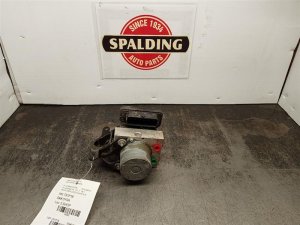
The ABS module is an electro-hydraulic unit consisting of a pump, valve body, and an electronic control unit. It operates on the vehicle's 12V system and communicates with other vehicle systems via the CAN bus network.
We Have This Part in Stock



The information in this article is provided for general reference and educational purposes only. Vehicle specifications, procedures, and part compatibility can vary by production date, trim level, and region. Always consult your vehicle's factory service manual and verify part numbers before purchasing or performing repairs. Safety-critical components such as airbags, seat belts, and braking systems should be installed by a qualified professional.
- Tesla X:
- TESLA S:
- Tesla 3:
- Tesla Y:
- 🎬 Helpful Videos
- 🛍️ Shop This Part
- Symptoms of a Failing Tesla ABS Module
- Common Diagnostic Trouble Codes (DTCs)
- Known Issues, Recalls, and Vehicle-Specific Information
- Recall 24V051: Incorrect Warning Light Font Size
- Vehicle Fitment and Compatibility Warnings
- Programming and Installation Requirements
- Who Can Program the Module?
- Buying a Used ABS Control Module
- Cost Breakdown
- Frequently Asked Questions (FAQ)
- 🎟️ Get 5% Off