

2026 Tesla Model Y ABS Module: Failure Warnings & Mandatory Programming
A complete guide to the symptoms, replacement costs, and critical software requirements for the 2026 Tesla Model Y ABS control module.
- A replacement ABS module is NOT plug-and-play. It requires mandatory software programming and calibration using Tesla's proprietary 'Toolbox' software to function.
- A faulty module disables critical safety systems including ABS, traction control, stability control, and Automatic Emergency Braking.
- Before replacing the module, rule out simpler issues like a faulty wheel speed sensor or a low 12V battery, which can cause identical warning lights.
- You must match the OEM part number exactly. RWD and AWD models may use different modules, and they are not interchangeable.
Symptoms of a Failing 2026 Model Y ABS Module


A problem with the ABS module on a Tesla Model Y typically triggers a cascade of warnings on the center touchscreen, as numerous systems rely on its data. You will almost certainly see the primary ABS warning light illuminate, but the failure often disables other related functions.
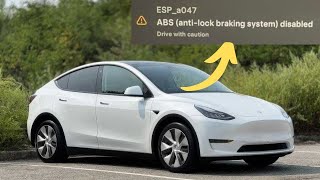
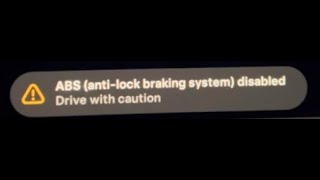
- Multiple Warning Lights and Messages: The most common sign is a cluster of alerts appearing simultaneously. These often include "ABS Disabled," "Traction Control Disabled," "Stability Control Disabled," and "Automatic Emergency Braking (AEB) Unavailable."
- Loss of Driver-Assist Features: Because Autopilot and Cruise Control depend on the stability and traction systems, they will be disabled and unavailable for use.
- Regenerative Braking Disabled: The car may disable or limit regenerative braking, meaning it will not slow down as aggressively when you lift your foot off the accelerator.
- Changes in Brake Pedal Feel: While less common, the brake pedal might feel different, sometimes described as spongy or requiring more effort, especially if the issue involves a hydraulic leak.
- "Brake Fluid Low" Warning: In some cases, a failure can be caused by a leak at the module itself. A Reddit user with a 2026 Model Y reported a flood of system failures that were ultimately traced back to a loose brake line fitting on the Hydraulic Control Unit (HCU), causing a low fluid situation.
Before You Replace: Essential Diagnostics
The symptoms above do not always mean the entire ABS module has failed. Performing some basic diagnostics can save you from a very expensive misdiagnosis.
- Check for Simpler Faults: A single faulty wheel speed sensor can cause the exact same array of warning lights. 🎬 Watch: How to diagnose and replace a faulty speed sensor. These sensors are much cheaper and easier to replace than the entire ABS module. Likewise, a failing 12V auxiliary battery can sometimes cause voltage-sensitive modules like the ABS controller to throw errors.
- Enter Service Mode: You can check for specific fault codes directly on your Tesla's touchscreen. Navigate to Controls > Software, then press and hold the "Model Y" name for about four seconds. When prompted, enter the code "service". In Service Mode, look for alerts under the Chassis or Service Alerts sections. Codes like
ESP_a075_ReRWSSSignalNoisemight point to a wheel speed sensor, while other codes may confirm an internal module or pump fault.
Warning: A sudden appearance of multiple brake-related warnings could indicate a serious issue like a brake fluid leak. Pull over safely and inspect for any visible fluid loss around the wheels or under the front of the vehicle. Do not continue driving if the brake pedal feels spongy or goes to the floor.
CRITICAL: Programming and Calibration Requirements

Physically swapping the ABS module is only half the job. A replacement unit—whether brand new or used—is NOT plug-and-play and will not function until it is electronically configured to your vehicle.
According to Tesla's official Service Manual for the Model Y, the following software procedures are mandatory after installing a new ABS modulator:
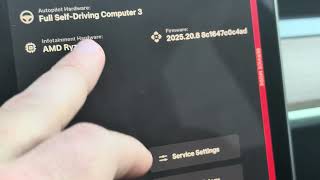
- Redeploy Vehicle Firmware: This step, performed with Tesla's proprietary "Toolbox" diagnostic software, is required for the car's systems to recognize and communicate with the new hardware.
- Brake Fluid Bleed/Flush: The software contains a specific routine to cycle the ABS pump and valves to ensure all air is purged from the hydraulic unit.
- Brake Stiffness Test: Another software routine is run to test and calibrate the newly installed unit.
Without these steps, the warning lights will remain, and all related safety systems will be inoperative. This work must be performed by a Tesla Service Center or a well-equipped independent repair shop that subscribes to and has expertise with Tesla's Toolbox software.
🎬 Learn more about how Tesla Toolbox software handles module programming.Buying a Used 2026 Model Y ABS Module
Purchasing a used OEM ABS module can offer significant savings over a new part from Tesla. However, there are critical factors to consider to ensure you get a compatible and functional part.
Compatibility Warning: The ABS module may have different variations for Rear-Wheel Drive (RWD) and All-Wheel Drive (AWD) models. You must verify that the part number on your original module matches the replacement unit exactly. Even a one-letter difference in the suffix (e.g., -00-H vs. -20-G) can indicate a different hardware or software version that may be incompatible.
What to Look For:
- Match the Part Number: The most important step. The known OEM part numbers are 2188745-00-H and 2188745-20-G. Locate the part number on your vehicle's original module and match it precisely.
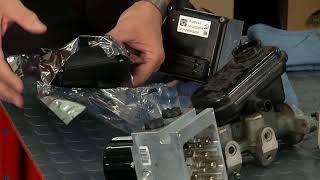
- Physical Inspection: When the part arrives, inspect it carefully. Look for any signs of damage, such as cracks in the black plastic electronic housing or corrosion on the aluminum hydraulic block. Ensure all electrical connector pins are straight and clean.
- Reputable Source: Buy from an established automotive recycler or parts supplier that offers a warranty and has good reviews. This provides a safety net in case the part is Dead on Arrival (DOA).
- Programming Logistics: Before you buy a used module, confirm that you have a plan for programming. Some eBay sellers note that Tesla Service Centers may refuse to install or program used parts. It is crucial to check with your local Tesla Service Center or a trusted independent Tesla specialist beforehand to ensure they are willing and able to program a customer-supplied used module.
Cost Breakdown for Replacement
The cost to replace a Model Y ABS module is significant, largely due to the mandatory software procedures and the price of the part itself.
| Part/Service | Estimated Cost | Notes |
|---|---|---|
| New OEM Module | $1,000 - $1,800+ | Purchased directly from Tesla Service. Price can vary. |
| Used OEM Module | $75 - $650 | Wide price range depending on the source (recycler vs. reseller) and condition. |
| Remanufactured Module | $150 - $400 | Services exist that rebuild your original module, which avoids the need for programming. This is a good option if available. |
| Shop Labor | $300 - $600 | Includes physical replacement, bleeding the brake system, and the required software programming/calibration. Tesla's flat rate time is 2.1 hours for the replacement, plus diagnostics and programming. |
Frequently Asked Questions (FAQ)
Do I have to go to a Tesla dealer to replace the ABS module?
For most owners, yes. While an independent mechanic can physically swap the part, the mandatory firmware deployment and calibration requires Tesla's proprietary Toolbox software. Only Tesla Service Centers and some highly specialized independent shops have access to this system.
Can I drive my Model Y with a bad ABS module?
Yes, but with significant risk. The vehicle will still brake using the standard hydraulic system, but key safety features like anti-lock brakes, traction control, and stability control will be disabled. This dramatically increases the risk of skidding and losing control during an emergency stop or on slippery surfaces.
Will a used ABS module from another 2026 Model Y work in my car?
It can, but only if two conditions are met: 1) The part number on the used module must exactly match your original part. 2) The used module MUST be programmed to your car's VIN using Tesla's software after installation. It is not a plug-and-play part.
What is the difference between the ABS module and the HCU?
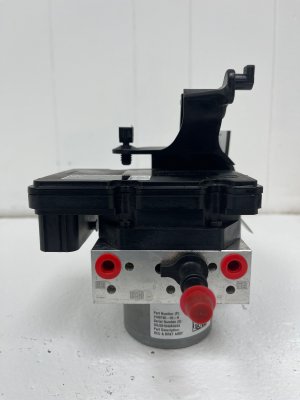
In the Tesla Model Y, they are the same unit. The part is an integrated assembly that includes the electronic 'module' (the computer) and the 'HCU' or Hydraulic Control Unit (the valve block and pump that controls brake fluid pressure). It is often referred to as the ABS Modulator.
Helpful Videos
Technical Specifications
OEM Part Numbers: 2188745-00-H 2188745-20-G
Integrated electronic control module and hydraulic modulator unit (HCU). Requires post-installation firmware deployment and calibration via Tesla Toolbox software.
We Have This Part in Stock

The information in this article is provided for general reference and educational purposes only. Vehicle specifications, procedures, and part compatibility can vary by production date, trim level, and region. Always consult your vehicle's factory service manual and verify part numbers before purchasing or performing repairs. Safety-critical components such as airbags, seat belts, and braking systems should be installed by a qualified professional.
- TESLA MODEL Y:
- 🎬 Helpful Videos
- 🛍️ Shop This Part
- Symptoms of a Failing 2026 Model Y ABS Module
- Before You Replace: Essential Diagnostics
- CRITICAL: Programming and Calibration Requirements
- Buying a Used 2026 Model Y ABS Module
- What to Look For:
- Cost Breakdown for Replacement
- Frequently Asked Questions (FAQ)
- 🎟️ Get 5% Off