

Saab 900 & 9000 ABS Module Guide (1990-1994): Diagnosis, Location & Replacement
This definitive guide covers the unique, non-programmable ABS control module for the 1990-1994 Saab 900 and 1990-1991 Saab 9000, including how to pull blink codes and key differences between models.
- This module requires NO programming; it is a plug-and-play part, making used or rebuilt units an excellent option.
- Fitment is very specific: 1990-93 Saab 900, 1994 Saab 900 Convertible ONLY, and 1990-91 Saab 9000.
- Always check external parts like wheel speed sensors and wiring for faults before replacing the module, as they are the most common cause of the ABS light.
- The module location is different: under the right-rear seat on the 900, and in the engine bay on the 9000.
Key Vehicle Fitment & Compatibility Warnings
This specific ABS control module fits a narrow range of classic Saabs. It is critical to understand the model year and chassis differences, as they share very little with the models that followed.
- 1990-1993 Saab 900 (All models)
- 1994 Saab 900 CONVERTIBLE ONLY
- 1990-1991 Saab 9000
1994 Saab 900 Warning: In 1994, Saab produced two different '900' models. The new-generation 900 (often called the NG900) was introduced for coupes and sedans. The 1994 Saab 900 Convertible, however, was still built on the original 'classic' 900 platform. This guide and this part ONLY apply to the 1994 Saab 900 Convertible. The ABS module for the 1994+ NG900 coupe/sedan is a completely different part located in the engine bay.
Crucial Location Differences
To confirm you have the right part, check the mounting location in your vehicle. This is the easiest way to distinguish between different Saab ABS systems.
- On Saab 900 models covered here, the ABS control module is located inside the car, underneath the right-hand (passenger side) rear seat cushion.
- On Saab 9000 models, the module is located in the engine compartment, typically on the side of the battery tray or near the firewall.
Symptoms of a Failing ABS Control Module
The most common symptom is an illuminated "ANTI-LOCK" warning light on the instrument cluster. Often, the main brake warning light will come on as well. This indicates the ABS system has detected a fault and has shut itself down. While the module itself can fail, it's more common for the light to be triggered by a faulty wheel speed sensor or a problem with the ABS hydraulic pump.
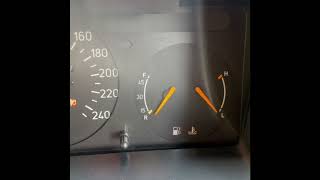
🎬 Watch a video demonstrating common Saab 900 ABS failure causesHow to Diagnose the System & Read Fault Codes
These pre-OBD-II vehicles have a built-in diagnostic system that flashes fault codes through the "ANTI-LOCK" dashboard light. The procedure requires a simple jumper wire or a switch to ground a diagnostic connector.
- Locate the Diagnostic Connector:
- Saab 900: A two-pin connector is attached to the ABS module harness, located under the rear seat with the module itself.
- Saab 9000: The diagnostic plug is located in the engine bay, near the ABS ECU.
- Retrieve Codes:
- Turn the ignition key OFF.
- Connect your jumper wire or switch to the two pins of the diagnostic connector. If using a switch, turn it to the 'ON' (closed) position.
- Turn the ignition key to the 'ON' or 'RUN' position. The ANTI-LOCK light should stay off.
- Disconnect the jumper wire or turn your switch to the 'OFF' (open) position.
- The ANTI-LOCK light will flash, starting with one long 2.5-second flash to signal the beginning of the code sequence.
- Count the short flashes for each of the four digits in the code. There will be a pause between each digit. Write down the code. 🎬 Watch this step-by-step video on reading Saab 900 ABS blink codes
- If multiple codes are stored, the sequence will repeat for the next code.
Common Blink Codes
After retrieving the codes, you can identify the problem area. Wheel speed sensor faults are very common.
| Code | Meaning | Common Cause |
|---|---|---|
| 1233 | Left Front Wheel Sensor | Broken wire in sensor harness, dirty sensor ring, failed sensor. |
| 1241 | Right Front Wheel Sensor | Broken wire in sensor harness, dirty sensor ring, failed sensor. |
| 1311 | Left Rear Wheel Sensor | Broken wire in sensor harness, dirty sensor ring, failed sensor. |
| 1243 | Right Rear Wheel Sensor | Broken wire in sensor harness, dirty sensor ring, failed sensor. |
| 1222 | Main Valve Fault | Internal ABS hydraulic unit issue or wiring harness problem. |
| 4444 | No Faults Stored | The system is operating correctly. |
| 0000 | End of Readout | All stored codes have been displayed. |
Pro Tip: Before replacing the module, always inspect the wheel speed sensors and their wiring first. Wires can break from suspension movement, and the toothed sensor rings on the hubs can get clogged with dirt or rust, causing a bad signal. Cleaning the rings and testing sensor resistance with a multimeter can often solve the problem without replacing expensive parts.
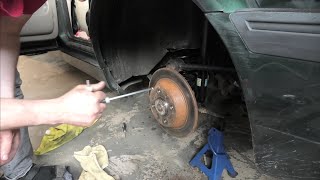
🎬 See how to replace a rear ABS wheel speed sensorBuying a Used ABS Control Module
A used OEM module is often the most practical and affordable solution for these vehicles. Because new parts are largely unavailable and aftermarket options are non-existent, a quality recycled part is a great choice.
- No Programming Required: This is the most important takeaway. Unlike modern cars, this ABS module is not coded to the vehicle's VIN. It is a plug-and-play part. Any replacement module with a matching part number will function without needing a dealer visit for programming.
- Match the Part Number: Verify the Bosch part number (e.g., 0227400182) on your original module and match it to the replacement. While several part numbers exist, matching them is the safest way to ensure compatibility.
- Physical Inspection: When buying a used module, especially one from a Saab 9000 that was mounted in the engine bay, check the connectors for any signs of green or white corrosion from water intrusion. For Saab 900 modules, check for any signs of moisture or rust from interior leaks.
- Consider a Rebuild Service: If you can confirm your module is faulty, sending it to a specialist for repair is an excellent option. This guarantees you get the correct part back, and it requires no programming.
Cost Comparison
Repair costs for this system are significantly lower than for modern vehicles, primarily because the parts are simpler and labor is more straightforward.
| Part/Service | Estimated Cost | Notes |
|---|---|---|
| New OEM | N/A | No longer available from the manufacturer. |
| New Aftermarket | N/A | Aftermarket manufacturers do not produce this part. |
| Used OEM | $100 - $400 | Price varies by condition and seller. |
| Remanufactured / Rebuild Service | $150 - $350 | A cost-effective option if your module is confirmed faulty. |
| Shop Labor | $50 - $150 | Typically 0.5-1.0 hour of labor. Replacement is faster on the 9000 (engine bay) than the 900 (under rear seat). |
Frequently Asked Questions (FAQ)
Does the 1990-1994 Saab ABS module need to be programmed?
No. This module is from a pre-OBD-II era and is not linked to the vehicle's VIN. As long as the part number matches, it is a direct replacement that does not require any special programming or dealer tools.
Is it safe to drive with the ABS light on?
Yes, but with caution. When the ABS light is on, the anti-lock function is disabled, and your car's brakes will operate like a conventional system without ABS. This means the wheels can lock up during hard braking, especially on wet or slippery surfaces, increasing the risk of skidding. Your standard power brakes will still work.
Where is the ABS module located on my Saab 900 or 9000?
The location is different for each model. On the 1990-1994 classic Saab 900, it is found under the rear passenger-side seat cushion. On the 1990-1991 Saab 9000, it is in the engine compartment, near the battery.
How do I clear the ABS fault codes after a repair?
After you have read all the codes and the system displays the '0000' (end of readout) code, you can erase the memory. To do this, simply drive the vehicle at a speed above 20 mph. If the fault has been properly repaired, the light will go out and stay out. If the problem persists, the light will come back on.
Helpful Videos
Technical Specifications
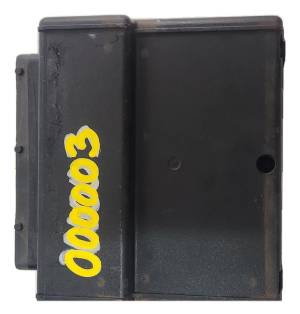
OEM Part Numbers: 0227400182 4002176 8826992
System Type: Bosch ABS. Diagnostic Method: Blink Codes via diagnostic connector.
We Have This Part in Stock



The information in this article is provided for general reference and educational purposes only. Vehicle specifications, procedures, and part compatibility can vary by production date, trim level, and region. Always consult your vehicle's factory service manual and verify part numbers before purchasing or performing repairs. Safety-critical components such as airbags, seat belts, and braking systems should be installed by a qualified professional.
- Saab 900:
- Saab 9000:
- 🎬 Helpful Videos
- 🛍️ Shop This Part
- Key Vehicle Fitment & Compatibility Warnings
- Crucial Location Differences
- Symptoms of a Failing ABS Control Module
- How to Diagnose the System & Read Fault Codes
- Common Blink Codes
- Buying a Used ABS Control Module
- Cost Comparison
- Frequently Asked Questions (FAQ)
- 🎟️ Get 5% Off