

1994 Pontiac Grand Prix ABS Module: Solving ABS Lights and Brake Issues
This guide covers the common failures of the Delco VI ABS system in your 1994 Grand Prix, and confirms that replacement modules do not require expensive dealer programming.
- The ABS module for a 1994 Grand Prix does NOT require any programming; it is a plug-and-play part.
- Failures are most often caused by faulty wheel speed sensors or wiring, not the module itself. Proper diagnosis with a scan tool is recommended.
- When the ABS light is on, your normal brakes will still work, but the anti-lock safety feature is disabled.
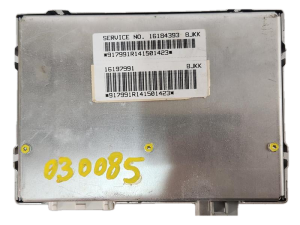
- When buying a used part, ensure the part number (e.g., 16184393 or 16197991) is an exact match to your original.
Symptoms of a Failing 1994 Grand Prix ABS Module
When the ABS system has a problem, your vehicle's primary braking system will still work, but the anti-lock safety feature will be disabled. Diagnosing the issue correctly is key, as the module itself is not always the cause. Common symptoms often point to simpler failures in the system.
- ABS Warning Light: The most common symptom is a solid, illuminated 'ABS' light on your dashboard. This indicates the system has detected a fault and has disabled itself.
- 'TRAC OFF' Light: If your Grand Prix is equipped with traction control, this light may also come on, as the traction control system relies on the same sensors as the ABS.
- Brakes Locking Up: During a hard stop or on a slippery surface, you may feel the wheels lock up and skid. This confirms the anti-lock function is not working.
- Spongy or Low Brake Pedal: A brake pedal that feels soft or travels almost to the floor can sometimes be caused by a failure within the ABS hydraulic unit's motor pack, which is attached to the module. This specific failure may be accompanied by fault codes related to the ABS motors.
- Unusual Noises or Pedal Pulsation: While rare, a faulty module could cause the ABS pump to activate at the wrong times, leading to a pulsating pedal or buzzing from the pump when not braking hard.
Diagnosing the Problem: Module, Sensor, or Something Else?
Before condemning the expensive control module, it's important to rule out more common and less expensive failures. The Delco ABS VI system in the 1994 Grand Prix most often experiences issues with its supporting components.
- Check Fuses and Fluid: Always start with the basics. Check the ABS-related fuses in the fuse panel and ensure the brake fluid reservoir is full.
- Inspect Wheel Speed Sensors: A faulty wheel speed sensor or its wiring is the most frequent cause of an ABS light. Visually inspect the sensors (located at the wheel hubs) and their wiring for any signs of damage, corrosion, or debris buildup. Wires can become brittle and crack over time.
- Read the Fault Codes: The 1994 Grand Prix is an OBD-I vehicle, but it requires a scan tool to read ABS codes; you cannot use the paperclip method to get flash codes from the diagnostic port for the ABS system. A scan tool can pinpoint the exact nature of the fault, such as a specific wheel speed sensor failure or an internal module error. Note that disconnecting the battery will not clear stored ABS codes.
Pro Tip: Many ABS faults on these cars are caused by bad wheel speed sensor wiring. Before replacing a sensor, carefully check the entire length of its harness for cracks, corrosion, or loose connections, especially where the wire flexes with the suspension.
Buying a Used 1994 Grand Prix ABS Module: What You Must Know
If diagnosis confirms the ABS control module has failed, a used OEM unit is an excellent, cost-effective option. The key advantage for this specific vehicle is its simplicity.
- NO PROGRAMMING REQUIRED: A replacement ABS module for a 1994 Pontiac Grand Prix does not need to be programmed or flashed to the vehicle. These older systems are plug-and-play. You can install a compatible used module, and it will function correctly without a trip to the dealer. This is a major benefit over modern vehicles that require expensive VIN programming.
- Match Part Numbers: Compatibility is critical. Ensure the part number on the replacement module exactly matches your original unit. The most common OEM part numbers are 16184393 and 16197991. The module is typically sold with the hydraulic pump/motor assembly attached.
- Physical Inspection: When buying a used assembly, inspect it for signs of heavy corrosion, especially around the electrical connector pins and brake line ports. Check that the plastic housing isn't cracked and that the unit doesn't show signs of having been opened or tampered with.
- Why Used OEM is a Good Choice: For a vehicle of this age, new OEM parts are often discontinued and extremely expensive if found. A used OEM module is built to the original factory standards and avoids the compatibility issues that can sometimes arise with aftermarket parts. Since no programming is needed, it's a straightforward swap.
Cost Breakdown for ABS Module Replacement
Costs can vary significantly depending on the part source and labor rates. Diagnosis is often a separate charge.
| Item | Estimated Cost |
|---|---|
| New OEM | $800+ (Largely unavailable) |
| New Aftermarket | Not commonly available |
| Remanufactured | $150 - $300 |
| Used OEM | $50 - $125 |
| Shop Labor (Replacement Only) | $130 - $200 |
| Shop Labor (Diagnosis) | $110 - $160 |
Known Issues, Recalls, and TSBs
Research conducted through the National Highway Traffic Safety Administration (NHTSA) database did not reveal any specific safety recalls for the ABS control module or hydraulic unit on the 1994 Pontiac Grand Prix. The most widely reported issues are failures of the wheel speed sensors and their wiring harnesses, as is common for the Delco ABS VI system.
Frequently Asked Questions (FAQ)
Does a used 1994 Grand Prix ABS module need to be programmed?
No. The ABS control module for this vehicle is plug-and-play. It does not store the vehicle's VIN and does not require any special programming or calibration after installation.
Can I drive my car with the ABS light on?
Yes, but with caution. When the ABS light is on, the anti-lock braking feature is disabled. Your standard brakes will still function, but your wheels can lock up during a panic stop, increasing the risk of skidding, especially on wet or icy roads.
Where is the ABS module located on a 1994 Grand Prix?
The ABS module and pump assembly (hydraulic modulator) is located in the engine compartment, typically on the driver's side, mounted near the master cylinder. It is a metal block with several brake lines and a large electrical connector attached to it.
What causes the Delco ABS VI system to fail?
The most common points of failure are not the electronic module itself, but the external wheel speed sensors and their wiring, which are exposed to the elements. The motors within the hydraulic unit can also fail, leading to a soft pedal. While the electronic module can fail, it's important to diagnose the system properly before replacing it.
Technical Specifications
OEM Part Numbers: 16184393 16197991
System Type: Delco ABS VI, 3-Channel
We Have This Part in Stock

The information in this article is provided for general reference and educational purposes only. Vehicle specifications, procedures, and part compatibility can vary by production date, trim level, and region. Always consult your vehicle's factory service manual and verify part numbers before purchasing or performing repairs. Safety-critical components such as airbags, seat belts, and braking systems should be installed by a qualified professional.
- Pontiac Grand Prix:
- 🛍️ Shop This Part
- Symptoms of a Failing 1994 Grand Prix ABS Module
- Diagnosing the Problem: Module, Sensor, or Something Else?
- Buying a Used 1994 Grand Prix ABS Module: What You Must Know
- Cost Breakdown for ABS Module Replacement
- Known Issues, Recalls, and TSBs
- Frequently Asked Questions (FAQ)
- 🎟️ Get 5% Off