

2007-2013 Nissan Altima ABS Module: Decoding the ABS, VDC, and SLIP Lights
This guide explains the common failures, complex compatibility, and replacement procedures for the 2007-2013 Nissan Altima ABS control module.
- Part compatibility is extremely complex. You must match the OEM part number from your original module, paying close attention to Sedan/Coupe, engine size, and especially whether the vehicle has Vehicle Dynamic Control (VDC).
- A replacement module (new or used) will almost always require programming or initialization with a professional scan tool to configure it to your car's VIN and options.
- After installation, the brake system must be bled using a scan tool's "ABS Bleed" function to cycle the pump and purge trapped air. A standard bleed is not sufficient.
- The most common symptom of failure is the combination of ABS, VDC, and SLIP lights on the dashboard, but always check the brake fluid level first as low fluid can cause similar warnings.
Known Issues and Common Failure Symptoms

When the ABS module in a 2007-2013 Nissan Altima begins to fail, it usually makes its presence known with a distinct set of warnings on your dashboard.
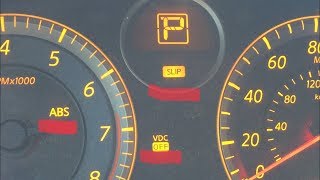
The Dashboard "Trifecta": ABS, VDC, and SLIP Lights
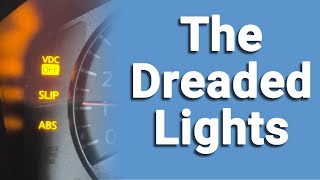
The most common symptom of a failing ABS module is the simultaneous illumination of the ABS, VDC, and SLIP warning lights. These systems all rely on data from the wheel speed sensors, which is processed by the ABS module. When the module can no longer process this information correctly, it disables all related safety features, triggering their respective warning lights. In some cases, a simple issue like low brake fluid can also cause these lights to appear, so it's always wise to check the brake fluid level first.
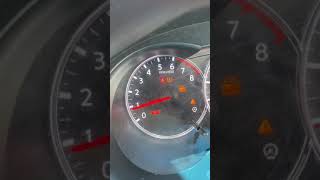
🎬 Watch: How low brake fluid triggers these dashboard warning lights.Other Symptoms of Failure
- Unresponsive or Hard Brake Pedal: The brake pedal may feel unusually stiff or require more effort to press, especially during sudden stops.
- Wheels Locking Up: During hard braking, the wheels may lock and skid, indicating the anti-lock function is not working. This is a serious safety concern, particularly on wet or slippery roads.
- ABS Pump Runs Constantly: You might hear a buzzing or humming sound from the engine bay, even when the car is off. This can be the ABS pump motor running continuously due to an internal electronic fault in the module.
- Inaccurate Speedometer: In some vehicles, the ABS module and its wheel speed sensors provide the data for the speedometer. A faulty module can cause the speedometer to work erratically or not at all.
Common Diagnostic Trouble Codes (DTCs)
A scanner capable of reading ABS codes is essential for diagnosis. Common codes associated with a faulty module or its related components include:
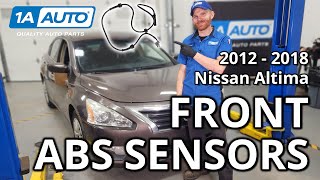
- C1101 - C1108: These codes correspond to faults with the individual wheel speed sensors (e.g., C1101 for Right Rear, C1102 for Left Rear, etc.). While these codes often point to a bad sensor, they can also be triggered by a faulty module that cannot read a good sensor. 🎬 See this guide on how to replace front wheel sensors.
- U0121: Lost Communication with ABS Control Module. This code indicates a communication breakdown between the ABS module and the rest of the vehicle's computer network.
- C1111: ABS Actuator / Pump Motor Fault. This code points directly to a problem with the hydraulic pump portion of the ABS assembly.
- C1197: A Nissan-specific code that, on 2013 models, may be resolved by reprogramming the ABS control unit per Technical Service Bulletin NTB13-013.
CRITICAL: Compatibility and Part Number Verification

Sourcing a replacement ABS module for a 2007-2013 Altima is extremely complicated. There are many variations, and installing the wrong one will result in it not working. You must match the OEM part number from your original unit to the replacement part. The module is located under the hood, near the passenger side (RH) fender.
Warning: Visually inspect your original module and write down the part number before ordering. Do not rely on a vehicle lookup alone. Failure to match the part number will lead to incompatibility.
Key compatibility factors include:
- Vehicle Dynamic Control (VDC): The most important distinction is whether your Altima has VDC (also called stability control). Modules for VDC and non-VDC cars are not interchangeable.
- Engine Size: Modules are often specific to the 2.5L 4-cylinder or 3.5L V6 engine.
- Body Style: There are different parts for 4-door Sedan and 2-door Coupe models.
- Drivetrain: Some modules are specific to the transmission type, such as Automatic (CVT) or Manual (MT).
- Hybrid Models: The Altima Hybrid uses a unique ABS module that is not compatible with gasoline-only models.
Buying a Used ABS Control Module

Given the high cost of a new OEM module, a used unit from a reputable recycler is a very popular and cost-effective solution. For an electronic part like this, a used OEM module is often more reliable than a cheap, new aftermarket alternative.
What to Look For:
- Exact Part Number Match: This is non-negotiable. Verify the part number on the seller's listing matches the number on your original module.
- Physical Condition: Inspect the used module for any signs of damage, such as cracks in the plastic housing, bent or corroded connector pins, or evidence that the unit has been opened.
- Reputable Seller: Purchase from a seller that offers a warranty and a clear return policy.
- Mileage: While not as critical for the electronics, lower mileage is always preferable for the integrated hydraulic pump and motor, which are mechanical components subject to wear.
Programming and Installation Requirements

Does a used ABS module need to be programmed?
Yes, in most cases, a replacement module will require some form of programming or initialization. While some sellers may claim a part is "plug-and-play," this is rarely true for modern vehicle electronics. The replacement module needs to be configured to your vehicle's specific VIN and options.
For models with VDC, a Steering Angle Sensor Calibration is often required after replacement. This procedure teaches the new module the steering wheel's center position, which is critical for the stability control system to function correctly.
This programming can typically be done by a Nissan dealership or a qualified independent shop with a professional-grade scan tool (such as an Autel or Snap-on). It is not always necessary to go to a dealer.
Brake Bleeding After Installation
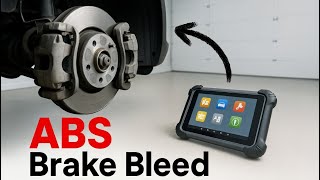
After replacing the ABS module assembly, you must bleed the entire brake system to remove air from the lines. Because air can get trapped inside the new module's hydraulic passages, a standard brake bleed is often not enough. To do the job correctly, you need a bidirectional scan tool that can perform an "Automated Bleed" or "ABS Bleed" function. This procedure commands the scan tool to cycle the internal solenoids and pump motor inside the ABS unit, forcing any trapped air out into the brake lines where it can be bled out 🎬 Watch: How to perform a proper ABS brake bleed procedure. from the calipers. Attempting to skip this step will likely result in a spongy or soft brake pedal and compromised braking performance.
Replacement Cost Comparison
Prices can vary significantly based on the specific part number and your location. The estimates below are for the common non-VDC sedan models.
| Part Type | Estimated Cost |
|---|---|
| New OEM | $750 - $900 |
| New Aftermarket | $350 - $600 |
| Remanufactured | $200 - $400 |
| Used OEM | $50 - $250 |
| Shop Labor | $150 - $300 |
Frequently Asked Questions (FAQ)
Can I drive my Altima with a bad ABS module?
Yes, but with caution. Your standard hydraulic brakes will still function, but you will not have anti-lock brakes, traction control, or stability control (VDC). This means your wheels can lock up during a panic stop, increasing the risk of skidding and losing steering control. It is highly recommended to get the issue repaired as soon as possible.
Is the ABS module the same as the ABS pump?
They are two separate components, but on the 2007-2013 Altima, they are bolted together and typically sold as a single unit called the ABS pump and module assembly. The module is the electronic controller, and the pump is the hydraulic block with the motor that generates pressure.
Why are my ABS, VDC, and SLIP lights all on at once?
This is the most common sign of an ABS system fault. All three of these safety systems rely on the same wheel speed sensor inputs. When the ABS module fails or can't get proper data, it shuts down all related systems as a precaution, causing all three lights to illuminate. The root cause could be the module itself, a faulty wheel speed sensor, or even low brake fluid.
Can I just replace the electronic part of the module without opening brake lines?
On some vehicles, it is physically possible to unbolt just the electronic control module from the hydraulic block without disconnecting the brake lines, which avoids the need for bleeding. However, this is a delicate procedure. The solenoids that pass from the module into the hydraulic block can be easily damaged. While it can save time, it carries a risk of damaging the replacement module if not done perfectly. For most DIY mechanics, replacing the complete assembly is the safer method.
Helpful Videos
Technical Specifications
OEM Part Numbers: 47660-ZX60B 47660-ZX60C 47660JA000 47660JA00A 47660JA10A 47660JB10A 47660JB11A 47660JB11C 47660ZX00B 47660ZX65B 47660ZX65C 47830-JA800 47830JA800
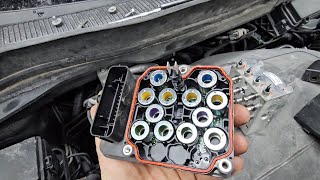
The ABS module is typically located in the engine compartment on the passenger (RH) side, mounted to the hydraulic control unit. It connects via a multi-pin electrical connector and has ports for multiple brake lines.
We Have This Part in Stock



The information in this article is provided for general reference and educational purposes only. Vehicle specifications, procedures, and part compatibility can vary by production date, trim level, and region. Always consult your vehicle's factory service manual and verify part numbers before purchasing or performing repairs. Safety-critical components such as airbags, seat belts, and braking systems should be installed by a qualified professional.
- Nissan Altima:
- 🎬 Helpful Videos
- 🛍️ Shop This Part
- Known Issues and Common Failure Symptoms
- The Dashboard "Trifecta": ABS, VDC, and SLIP Lights
- Other Symptoms of Failure
- Common Diagnostic Trouble Codes (DTCs)
- CRITICAL: Compatibility and Part Number Verification
- Buying a Used ABS Control Module
- What to Look For:
- Programming and Installation Requirements
- Does a used ABS module need to be programmed?
- Brake Bleeding After Installation
- Replacement Cost Comparison
- Frequently Asked Questions (FAQ)
- 🎟️ Get 5% Off