

2023-2026 Mazda CX-50 ABS Module: Gas vs. Hybrid, Recalls, and Programming Guide
This guide covers the critical differences between gasoline and hybrid ABS modules for the Mazda CX-50, a major safety recall, and the required programming after replacement.
- A critical recall (NHTSA 23V-275) exists for the 2023 CX-50 ABS unit; check if your vehicle needs a free replacement from Mazda before buying a part.
- Gasoline and Hybrid ABS modules are NOT interchangeable. The hybrid uses a Toyota-based system, and you must match your original part number exactly.
- Any replacement ABS module (new or used) MUST be programmed to your vehicle's VIN by a dealer or a qualified independent shop with advanced scan tools.
- Driving with the ABS light on is possible but disables key safety features like anti-lock braking, traction control, and stability control.
Symptoms of a Failing ABS Module

A failing ABS module will almost always alert you with one or more warning lights on your dashboard. Because the ABS module is tied into other vehicle safety systems, you may see several lights appear at once.
- ABS Warning Light: The most common symptom is the illumination of the ABS warning light on the instrument cluster. This indicates the system has detected a fault and has disabled the anti-lock function. 🎬 Watch: How to fix ABS and traction lights on any car
- Traction Control (TCS/DSC) Light: Since the ABS module controls traction and stability control, this light will often come on along with the ABS light.
- Brake Warning Light: In some cases, the main red "BRAKE" warning light may illuminate. This can indicate a more serious issue with the braking system, such as low fluid or a problem with the hydraulic unit. If this light is on, the vehicle may not be safe to drive.
- Unusual Brake Pedal Feel: While your standard brakes should still work, you might notice a change in pedal feel. However, in most cases, braking will feel normal under regular conditions.
- Loss of ABS or Traction Control: During a hard stop, especially on a wet or loose surface, you may notice the wheels lock up and skid—something a functioning ABS system is designed to prevent. Similarly, you may notice the wheels spin easily when accelerating from a stop.
An OBD-II scanner can retrieve specific Diagnostic Trouble Codes (DTCs) to help pinpoint the issue. Common Mazda chassis codes (starting with 'C') related to the ABS system include:
- C1095: ABS pump motor circuit failure.
- C1145, C1155, C1165, C1175: Faults related to the wheel speed sensors.
- C1288: Pressure transducer (brake pressure sensor) circuit failure.
- B1342: A generic code for a fault within the ABS control module itself.
Known Issues, Recalls, and Technical Service Bulletins (TSBs)

NHTSA Recall 23V-275: Damaged ABS Hydraulic Control Unit
CRITICAL RECALL: Mazda issued a safety recall for certain 2022-2023 CX-30 and 2023 CX-50 vehicles due to a manufacturing defect in the ABS Hydraulic Control Unit (HCU). This defect can cause an unexpected increase in brake pedal travel and reduce braking ability, increasing the risk of a crash. The recall notice states that all subject CX-50 vehicles require the ABS HCU to be replaced with a new, improved part. Before purchasing a used part or attempting a repair, check with a Mazda dealer or on the NHTSA website to see if your vehicle is affected by this recall, as the repair will be performed free of charge.
Technical Service Bulletins (TSBs)
While not direct recalls, Mazda has issued several TSBs related to the braking system on the CX-50 that may be relevant during diagnosis:
- SA-016-24: Addresses customer concerns about brake noise, brake judder, or brake dragging.
- SA-007-24a: Provides information for dealers to address concerns of unintended braking from the Smart Brake Support (SBS) system.
CRITICAL: Gasoline vs. Hybrid Model Compatibility

The single most important factor when buying a replacement ABS module for a 2023-2026 Mazda CX-50 is the vehicle's powertrain. The modules for gasoline and hybrid models are completely different and are NOT interchangeable.
Gasoline Models (2.5L & 2.5L Turbo)
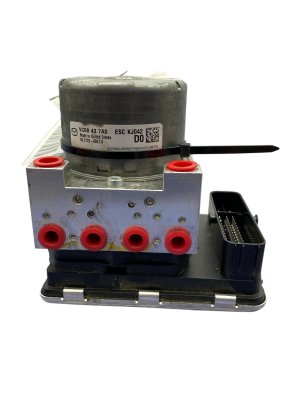
These models use a Mazda-designed braking system. The ABS pump and module assembly is a specific Mazda part. Part numbers for the non-hybrid models include VAY0-43-7A0A. Always match your original part number exactly.
Hybrid Models
The Mazda CX-50 Hybrid uses a powertrain and braking system sourced from Toyota. This system incorporates regenerative braking, which feels different and requires completely different hardware and software. Because of this, the ABS module is a Toyota-based part. The part number 47070-48090, which fits other Toyota hybrids like the Corolla and Prius, was included in the initial vehicle data and is likely the system used. Forum users confirm the brake feel is distinctly different from other Mazdas, a clear sign of the Toyota system.
Warning: Installing a gasoline-engine ABS module in a hybrid vehicle, or vice-versa, will not work. It will result in system failure, multiple warning lights, and a non-functional ABS system. You MUST purchase a module that matches your vehicle's exact powertrain and original part number.
Programming and Calibration: A Required Step

Replacing the ABS control module on a 2023-2026 Mazda CX-50 is not a plug-and-play job. The replacement module, whether new or used, must be electronically programmed to the vehicle.
- VIN Programming: The module's software must be configured with your vehicle's unique Vehicle Identification Number (VIN). This allows it to communicate correctly with the Engine Control Module (ECM), Body Control Module (BCM), and other electronic systems.
- Configuration: The module must be configured for the specific options on your vehicle (e.g., trim level, tire size).
- Calibration: After installation and programming, procedures like steering angle sensor calibration and brake pressure sensor calibration may be required.
This programming requires specialized diagnostic tools, such as the official Mazda dealer tool (MDARS) or high-level professional aftermarket scan tools 🎬 Learn how to program an ABS module using specialized software from brands like Launch or Autel. While some advanced independent shops can perform this service, a Mazda dealership is guaranteed to have the correct equipment and software.
Buying a Used 2023-2026 CX-50 ABS Module

A used OEM module can be a cost-effective alternative to a brand-new part, especially if the vehicle is out of warranty. However, careful purchasing is key.
Why Choose a Used OEM Module?
For a complex electronic part like this, a used original equipment (OEM) module is often a better choice than a new, unproven aftermarket part. An OEM part guarantees the same fit, quality, and performance as the original. Given the newness of this vehicle, quality aftermarket options are not yet widely available.
How to Verify Compatibility
- Match the Part Number EXACTLY: This is the most important step. Find the part number on your original module and ensure the replacement you buy has the identical number.
- Confirm the Powertrain: Double-check that the donor vehicle had the same engine as yours (Gasoline or Hybrid). Do not trust a seller who says they are interchangeable.
- Check for Recall Status: Be aware that a used part may have come from a vehicle that was subject to the ABS recall. While difficult to verify, buying from a reputable recycler is your best bet.
What to Inspect
When you receive the used part, inspect it carefully:
- No Physical Damage: Check the housing for cracks or damage.
- Clean Connectors: The electrical connector pins should be straight, clean, and free of corrosion.
- Intact Hydraulic Block: Ensure the hydraulic portion (if included) shows no signs of leaking brake fluid and that the brake line ports are clean and undamaged.
Replacement Cost Comparison
The cost to replace the ABS module can vary significantly based on the part source and labor rates. Note that programming costs are additional to the labor for physical installation.
| Item | Estimated Cost |
|---|---|
| New OEM Module (Gasoline, Part Only) | $475 - $700 |
| New Aftermarket Module | Not widely available as of early 2026 |
| Used OEM Module | $150 - $400+ |
| Remanufactured Module | Not widely available as of early 2026 |
| Shop Labor (Installation & Bleeding) | $200 - $400 |
| Shop Labor (Programming) | $100 - $250 |
| Total Estimated Cost (New OEM) | $775 - $1350+ |
| Total Estimated Cost (Used OEM) | $450 - $850+ |
Frequently Asked Questions (FAQ)
Can I just replace the electronic part of the ABS module without the pump?
On many ABS units, the electronic control module is bolted to the hydraulic pump block. It is sometimes possible to separate the two, which would allow you to replace only the failed electronic portion without opening the hydraulic brake lines, thus avoiding the need to bleed the brakes. However, this depends on the specific design and whether the module is sold separately. This is a delicate procedure that should only be attempted by those comfortable with the process.
Is it safe to drive with the ABS light on?
You can drive the vehicle, but with reduced safety. When the ABS light is on, your anti-lock brakes, traction control, and stability control are disabled. Your standard hydraulic brakes will still function, but your wheels can lock up and skid during a panic stop. If the red "BRAKE" warning light is also on, you should pull over safely and have the vehicle towed, as this could indicate a more severe failure in the base braking system.
Can an independent mechanic program a new or used ABS module?
Yes, many independent auto repair shops that specialize in diagnostics or specific car brands have the high-end scan tools required to program a Mazda ABS module. However, it's crucial to confirm with the shop beforehand that they have the specific capability for a late-model Mazda. If in doubt, a Mazda dealership is the most reliable option for programming.
Will a module from a different trim level work?
It is not recommended. While the part number might be the same, different trim levels can have different software configurations related to features like tire size, advanced driver-assistance systems (ADAS), and more. Using a module from a vehicle with different options can cause programming conflicts or system malfunctions. Always prioritize matching the part number and ensuring the donor vehicle's powertrain and trim are as close as possible to yours.
Helpful Videos
Technical Specifications
OEM Part Numbers: VAY0-43-7A0A VAY0437A0A VA40-43-7A0A VA40437A0A VA41-43-7EY VCY8-43-7A0 VCY8437A0 VC67-437AZ VC88437A0 47070-48090
The ABS module assembly consists of an electronic control unit, a hydraulic block with solenoid valves, and a pump motor. The system operates on the vehicle's 12V electrical system. Specific internal specifications are not publicly available.
We Have This Part in Stock



The information in this article is provided for general reference and educational purposes only. Vehicle specifications, procedures, and part compatibility can vary by production date, trim level, and region. Always consult your vehicle's factory service manual and verify part numbers before purchasing or performing repairs. Safety-critical components such as airbags, seat belts, and braking systems should be installed by a qualified professional.
- Mazda CX-50:
- 🎬 Helpful Videos
- 🛍️ Shop This Part
- Symptoms of a Failing ABS Module
- Known Issues, Recalls, and Technical Service Bulletins (TSBs)
- NHTSA Recall 23V-275: Damaged ABS Hydraulic Control Unit
- Technical Service Bulletins (TSBs)
- CRITICAL: Gasoline vs. Hybrid Model Compatibility
- Gasoline Models (2.5L & 2.5L Turbo)
- Hybrid Models
- Programming and Calibration: A Required Step
- Buying a Used 2023-2026 CX-50 ABS Module
- Why Choose a Used OEM Module?
- How to Verify Compatibility
- What to Inspect
- Replacement Cost Comparison
- Frequently Asked Questions (FAQ)
- 🎟️ Get 5% Off