

2020-2026 Sonata & K5 ABS Module Failure: A Guide to Part Numbers, Programming, and Replacement
This in-depth guide covers the common failure symptoms, complex part variations, and mandatory programming for the ABS control module in the 2020-2025 Hyundai Sonata and 2021-2026 Kia K5.
- A replacement ABS module for these vehicles MUST be programmed ('Variant Coding') to the car's VIN and options by a dealer or properly equipped shop.
- Part numbers are extremely specific. You must match the number from your original module exactly, as compatibility depends on engine, drivetrain (FWD/AWD), and features.
- After installation, a special 'ABS Bleed' procedure using a bidirectional scan tool is required to remove air from the new unit.
- These specific models (2020+ Sonata, 2021+ K5) are NOT part of the widespread Hyundai/Kia ABS module fire recalls that affected older models.
Symptoms of a Failing ABS Control Module

A faulty ABS module on a Hyundai Sonata or Kia K5 will almost always provide clear warnings on your dashboard. Because the module controls multiple systems, you'll likely see several lights appear at once.
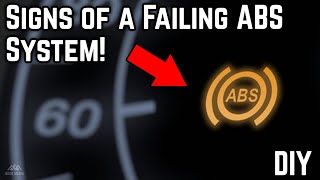
- ABS Warning Light: The most common symptom is a solid amber ABS light on the instrument cluster. This means 🎬 Watch: A professional guide to diagnosing common ABS warning lights. the anti-lock braking function has been disabled by the system due to a fault.
- Traction Control (TCS) / Stability Control (ESC) Lights: Since the TCS and ESC systems rely on the same hardware as the ABS, their warning lights will also illuminate. Your dashboard may show a car icon with squiggly lines behind it.
- Brakes Locking Up: Without a functional ABS module, the system can no longer prevent wheel lock-up. In a panic stop, one or more wheels may lock and skid, increasing stopping distance and causing a loss of steering control.
- Unresponsive or Spongy Brake Pedal: In some cases, a failing module can affect the feel of the brake pedal, making it feel unusually hard, spongy, or unresponsive.
- Associated OBD-II Codes: A diagnostic scan will typically reveal specific trouble codes. While many codes can point to a bad module, a common one for Hyundai/Kia vehicles requiring programming is C1702 (Variant Coding Error). Other codes may relate to wheel speed sensor communication or pump motor faults.
Known Issues, Recalls, and Technical Service Bulletins (TSBs)

ABS Module Fire Recalls: Not for These Models
Hyundai and Kia have issued widespread recalls in the past for older models due to ABS modules that could short circuit and cause an engine compartment fire, even when the vehicle is parked. However, as of early 2026, the 2020-2025 Hyundai Sonata and 2021-2026 Kia K5 are NOT included in these specific ABS module fire recalls.
Fuel Tank Fire Risk Recall (1.6L Turbo Only)
It is important not to confuse the ABS issue with a separate recall. Certain 2020-2023 Sonatas and 2021-2024 K5s equipped with the 1.6L turbocharged engine were recalled for an issue where a faulty fuel system valve could cause the gas tank to expand, contact hot exhaust components, and create a fire risk. This issue is unrelated to the braking system.
ABS Software Updates
Some owners have reported the availability of ABS software updates at dealerships for 2025 and prior model year vehicles. If you are experiencing intermittent ABS issues, it's worth checking with a dealer to see if a software update is available for your VIN before replacing the entire module.
Buying a Used ABS Control Module: What You MUST Know

Purchasing a used ABS module is a great way to save a significant amount of money, but it requires careful attention to detail. A new OEM module can cost over $1,000, while a quality used OEM unit can often be found for a fraction of that price. Follow these guidelines to ensure you buy the right part.
1. Match the Part Number EXACTLY
This is the most critical step. The ABS module for the Sonata and K5 is not a one-size-fits-all part. There are numerous variations based on the vehicle's specific configuration. You must find the part number on your original module and match it precisely. Factors that determine the correct part number include:
- Engine: 1.6L Turbo, 2.5L Non-Turbo, 2.5L Turbo
- Drivetrain: Front-Wheel Drive (FWD) or All-Wheel Drive (AWD)
- Features: Presence of the Automatic Engine Stop/Start system
Warning: The initial data for this guide highlighted several specific fitments. For example, some modules fit 1.6L FWD models with the Stop/Start feature, while others fit models without it. Other modules are specific to 2.5L FWD or 2.5L AWD models. Do not guess; physically verify the part number on your car's original unit before ordering.
2. Inspect the Used Unit
When you receive the used module, inspect it carefully before installation. Look for:
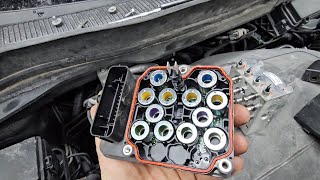
- No Corrosion: Check the electrical connector pins for any signs of green or white corrosion.
- No Physical Damage: Ensure the plastic housing and aluminum hydraulic block are free of cracks or heavy damage.
- Intact Brake Line Ports: Make sure the threaded ports for the brake lines are clean and not cross-threaded.
3. Be Prepared for Programming
A used ABS module is NOT a plug-and-play part. It must be electronically programmed to your vehicle's VIN and specific options. Any seller claiming a used module is "pre-programmed" is likely being misleading, as programming must be done while the module is installed in the target vehicle. This process is detailed in the next section.
Programming and Calibration Requirements
Warning: A replacement ABS module—whether new or used—MUST be programmed to your vehicle. If this step is skipped, the ABS, traction control, and stability control systems will not work, and warning lights will remain illuminated on your dashboard.
Variant Coding
For Hyundai and Kia vehicles, this programming process is called "Variant Coding." This procedure uses a diagnostic scan tool to write the vehicle's configuration data to the replacement module, ensuring it communicates correctly with the car's other computers. If not performed, the module will store a C1702 "Variant Coding Error" fault code.
Who Can Program the Module?
- Hyundai/Kia Dealerships: Dealers have the factory GDS (Global Diagnostic System) scan tool and can perform the variant coding.
- Independent Repair Shops: Many independent shops that specialize in diagnostics have high-end bidirectional scan tools (such as Autel or Snap-on) that are capable of performing variant coding for Hyundai and Kia vehicles.
- Mobile Programmers / Automotive Locksmiths: Some specialized mobile technicians and locksmiths have the necessary tools and can program modules on-site.
Pro Tip: If your old module can still communicate with a scan tool, ask the technician to read and save the original "Variant Code" before removing it. Providing this code can sometimes simplify the programming process for the new unit.
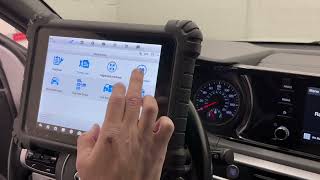
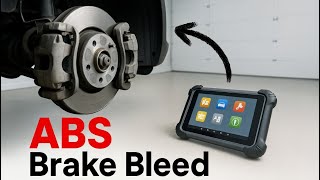
Automated ABS Bleed
After the new module is installed and the brake lines are reconnected, air will be trapped inside the new hydraulic unit. A standard brake bleeding procedure is not enough to remove this air. A scan tool must be used to perform an "Automated Bleed" or "ABS Bleed" procedure. This function cycles the internal solenoids and pump motor inside the ABS unit to push all trapped air out to the calipers, where it can be bled out normally. Skipping this step will result in a spongy brake pedal and compromised braking performance.
🎬 Watch: How to perform an automated ABS brake bleed procedure.Cost Comparison
The cost to replace an ABS module can vary significantly depending on the parts source and labor rates.
| Item | Estimated Cost | Notes |
|---|---|---|
| New OEM Module | $520 - $1,400+ | Price varies widely by part number. |
| Used OEM Module | $100 - $250 | A cost-effective option, but requires careful part number matching and inspection. |
| Remanufactured Module | $150 - $400 | Your original module is sent out for repair. This avoids programming issues if only the electronics are repaired. |
| Shop Labor (Replacement) | $150 - $300 | Typically 1.5-2.5 hours to physically swap the unit and perform the ABS bleed. |
| Shop Labor (Programming) | $100 - $200 | Cost for variant coding and automated bleed procedure. |
| Total Estimated Cost (with Used Part) | $350 - $750 | Includes used part, installation, bleeding, and programming. |
| Total Estimated Cost (with New Part) | $770 - $1,900+ | Includes new OEM part, installation, bleeding, and programming. |
Frequently Asked Questions (FAQ)
Do I absolutely have to program a replacement ABS module?
Yes. For the 2020-2025 Sonata and 2021-2026 K5, programming (Variant Coding) is mandatory for both new and used modules. Without it, your ABS and stability control systems will not function, and warning lights will stay on.
Can I drive my car with a bad ABS module?
You can, but it is not recommended. Your standard hydraulic brakes will still function, but you will not have anti-lock brakes, traction control, or stability control. This significantly increases the risk of skidding and losing control in an emergency stop or on slippery roads.
Why are there so many different part numbers for the same vehicles?
The part numbers differ to account for variations in vehicle equipment. The ABS module's software must be tailored to the car's specific engine (1.6L vs 2.5L), drivetrain (FWD vs AWD), and other features like the auto stop/start system. Using the wrong part number will result in a failed installation, even if it physically fits.
What is an "ABS Bleed" and why is it necessary?
When you replace the ABS hydraulic unit, air gets trapped inside its complex valve system. An "ABS Bleed" is a special procedure performed with a scan tool that activates the ABS pump and valves to force this trapped air out so the entire brake system can be properly bled. Without this step, your brake pedal will feel spongy and unsafe.
Helpful Videos
Technical Specifications
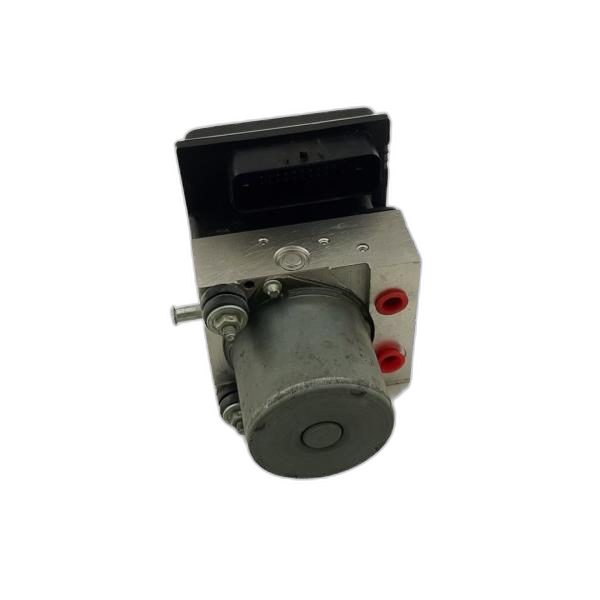
OEM Part Numbers: 58910-L0100 58910-L1310 58910-L1410 58940-L1000 59795-L0000 59796-L0000 28900L2610 58900-L2210 58900-L2810 58900-L3100 58900-L3200 58900L2210 58900L3100 58910-L2210 58910-L2610
Module compatibility is determined by vehicle engine, drivetrain (FWD/AWD), and presence of auto stop/start feature. The assembly consists of an electronic control unit and a hydraulic pump/valve body.
We Have This Part in Stock





The information in this article is provided for general reference and educational purposes only. Vehicle specifications, procedures, and part compatibility can vary by production date, trim level, and region. Always consult your vehicle's factory service manual and verify part numbers before purchasing or performing repairs. Safety-critical components such as airbags, seat belts, and braking systems should be installed by a qualified professional.
- Kia K5:
- HYUNDAI Sonata:
- 🎬 Helpful Videos
- 🛍️ Shop This Part
- Symptoms of a Failing ABS Control Module
- Known Issues, Recalls, and Technical Service Bulletins (TSBs)
- ABS Module Fire Recalls: Not for These Models
- Fuel Tank Fire Risk Recall (1.6L Turbo Only)
- ABS Software Updates
- Buying a Used ABS Control Module: What You MUST Know
- 1. Match the Part Number EXACTLY
- 2. Inspect the Used Unit
- 3. Be Prepared for Programming
- Programming and Calibration Requirements
- Variant Coding
- Who Can Program the Module?
- Automated ABS Bleed
- Cost Comparison
- Frequently Asked Questions (FAQ)
- 🎟️ Get 5% Off