

2010-2024 Jeep Wrangler ABS Module: Failure Symptoms, Programming, and Replacement Costs
This guide covers common ABS module failures in Jeep Wrangler JK and JL models, including critical programming steps and how to choose the right used part.
- A replacement ABS module (new or used) is NOT plug-and-play; it absolutely requires programming to your Jeep's VIN to function correctly.
- The most common symptoms of failure are the ABS, ESP/BAS, and traction control warning lights all illuminating at once.
- Compatibility is critical. You must match the part number exactly or use a verified superseded part, paying close attention to build dates and options like Forward Collision Warning or 4xe hybrid systems.
- DIY programming is possible using affordable tools like the AlfaOBD or JScan app and a compatible OBD2 dongle, which can save a costly trip to the dealer.
Symptoms of a Failing ABS Module

When the ABS module in a Jeep Wrangler begins to fail, it typically provides clear warnings on the dashboard. Recognizing these signs is the first step in diagnosing the problem.
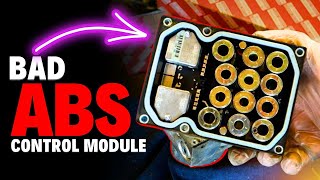
🎬 Watch: 6 symptoms of a bad ABS module- ABS, ESP/BAS, and Traction Control Lights: The most common symptom is the simultaneous illumination of the Anti-lock Brake (ABS), Electronic Stability Program (ESP), Brake Assist System (BAS), and Traction Control warning lights. This indicates the entire stability system is offline due to a fault.
- Red "BRAKE" Light: In some cases, the primary red "BRAKE" warning light will also illuminate, pointing more directly to a failure within the ABS module or its associated hydraulic unit.
- Cruise Control Not Working: As a safety measure, the vehicle's computer will disable the cruise control function when a fault in the stability system is detected.
- Hard or Unresponsive Brake Pedal: A loss of ABS assistance can make the brake pedal feel stiff and difficult to press, particularly during sudden stops.
- Inaccurate Speedometer: In many modern vehicles, the speedometer relies on data from the wheel speed sensors, which are processed by the ABS module. A module failure can cause an inaccurate or dead speedometer.
- Diagnostic Trouble Codes (DTCs): A scanner capable of reading ABS codes is essential for proper diagnosis. Common codes pointing to an internal module failure include:
- C2200: Antilock Brake Module Internal Failure
- C2116: ABS Pump Motor Low Voltage
- U0121: Lost Communication With ABS Module
Pro Tip: Before condemning the ABS module, always check for simpler issues first. Inspect the related fuses, check the brake fluid level, and have all four wheel speed sensors tested. A faulty wheel speed sensor can cause identical warning lights but is a much cheaper and simpler repair.
🎬 See this step-by-step ABS and traction control diagnosisKnown Issues, Recalls, and Technical Service Bulletins (TSBs)

While there have not been widespread safety recalls specifically for the 2010-2024 Wrangler ABS module itself, owners should be aware of related issues and software updates.
- Part Backorders (JL Models): Owners of newer (2018+) Jeep Wrangler JLs have reported significant difficulties in sourcing new replacement ABS modules, with parts being on backorder for many months. Some reports indicate that newly sourced modules have had programming issues, further complicating repairs.
- Software Updates (TSBs): Jeep has released several TSBs to address software bugs and improve the performance of the ABS system. These updates are performed by a dealer. Examples include TSB #08-136-18 and #08-040-19 for JL models, which address MIL illumination and potential hard brake pedal feel. TSB #0809923 for 2022 models also involves a flash for the ABS module.
- Early JK Recall (2007 Models): While outside the 2010+ range, it's notable that very early JK models were part of a recall (F50) to reprogram the ABS control module software to prevent rear brake lock-up.
Buying a Used ABS Control Module

Due to the high cost of new units and potential backorders, a used OEM ABS module is often a practical choice. However, careful selection is critical to ensure compatibility and avoid installation headaches.
1. Verify Compatibility by Part Number
This is the most important step. The part number on the used module must match the one on your original module or be a verified superseded number. Part numbers vary significantly based on year, generation, and vehicle options.
- JK Generation (2010-2018): Look for build date cutoffs. For example, part number 68145835AE (which replaces 68145835AA, AB, AC, AD) is specified for vehicles built up to 06/29/2014.
- JL Generation (2018-2024): Compatibility is even more complex. Modules differ for models with and without the Forward Collision Warning system. There are also specific modules for the 4xe Plug-in Hybrid models that are not interchangeable with standard gasoline Wranglers.
Warning: Do not purchase a module based on vehicle year alone. Always physically check the part number on your existing module before ordering a replacement.
2. Physical Inspection
When you receive the used module, inspect it carefully:
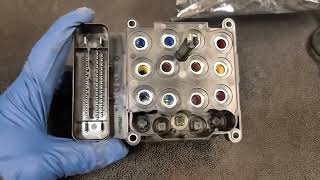
- Connectors: Check the electrical connector pins for any signs of corrosion, moisture, or damage.
- Housing: Look for cracks or damage to the plastic electronic module and the aluminum hydraulic block (if it's an assembly).
- Seals: Ensure the seals that go between the electronic module and the hydraulic block are present and in good condition if you are only replacing the electronic portion. 🎬 Watch: How to replace the module without bleeding brakes
3. Why Choose Used OEM?
For a complex electronic part like the ABS module, a used OEM unit is often a better choice than a new aftermarket one. Used OEM modules were designed and tested by the manufacturer for your specific vehicle, ensuring proper communication with other vehicle systems. Aftermarket modules can sometimes have compatibility or programming issues. Remanufactured modules are also a good option, as they are often rebuilt to correct original design flaws.
Programming and Calibration Requirements

Warning: A replacement ABS module, whether new or used, is NOT a plug-and-play part. It must be programmed to your vehicle's VIN and configuration. Failure to do so will result in the ABS and traction control lights staying on and the system not functioning.
Programming syncs the module with your Jeep's specific equipment, such as tire size, axle gear ratio, and other enabled features. After installation, an "ABS Initialization" or similar procedure must be performed. You have several options for this critical step:
- Jeep Dealership: The dealer uses the proprietary wiTECH software to perform the programming. This is the most reliable but also the most expensive option, with programming costs typically ranging from $150 to $200.
- Independent Repair Shop: A well-equipped independent shop that services Chrysler/Jeep vehicles may have a high-end bidirectional scan tool (like a Launch scanner) or a subscription to the dealer software that allows them to perform the initialization.
- DIY with Advanced Scan Tools: For the tech-savvy owner, programming can be done at home. This requires a bidirectional scan tool or a specific app/dongle combination. Popular options for Jeep owners include AlfaOBD and JScan. These apps, paired with a compatible OBD2 adapter (like an OBDLink MX+ or VGATE iCar), give you access to dealer-level functions, including the "ABS Initialization" and "Write VIN" routines. This is the most cost-effective method but requires some technical confidence.
Cost Comparison
The cost of replacing a Jeep Wrangler ABS module can vary widely depending on the source of the part and labor rates.
| Item | Estimated Cost | Notes |
|---|---|---|
| New OEM | $650 - $1,700+ | Price varies greatly by part number and dealer. Can be on backorder. |
| New Aftermarket | $140 - $400 | Limited availability and potential compatibility issues. |
| Used OEM | $250 - $600 | A cost-effective option, but requires careful part number matching. |
| Remanufactured | $600 - $1,300 | Often comes with a warranty and may have internal flaws corrected. |
| Shop Labor | $185 - $275 | Includes installation and brake bleeding (if hydraulic unit is replaced). Programming is an additional cost. |
Frequently Asked Questions (FAQ)
Can I drive my Wrangler with a bad ABS module?
Yes, but with significant risk. Your normal hydraulic brakes will still work, but you will not have anti-lock brakes, traction control, or electronic stability control. This means your wheels can lock up during a hard stop, increasing the risk of skidding and loss of control, especially on wet or slippery surfaces. It is highly recommended to repair the issue as soon as possible.
Do I have to go to the dealer for programming?
No, not necessarily. While the dealer is a guaranteed option, many independent shops with advanced scan tools can program the module. Additionally, DIY-ers can successfully program the module using tools like AlfaOBD or JScan with a compatible OBD2 adapter.
What's the difference between the ABS module and the ABS pump?
The ABS module is the electronic computer, while the ABS pump (or hydraulic control unit) is the mechanical part with valves that controls brake fluid pressure. They are often bolted together into a single assembly. In many cases, only the electronic module fails and can be replaced separately without opening any brake lines, which avoids the need for brake bleeding.
Will a used ABS module from another Wrangler work in my Jeep?
Only if the part number is an exact match or a verified superseded part number for your specific vehicle. Factors like build date, 2-door vs. 4-door, and optional features like Forward Collision Warning all determine the correct part number. After installation, it will still need to be programmed to your Jeep's VIN.
Helpful Videos
Technical Specifications
OEM Part Numbers: 68067457AA 68145835AA 68145835AB 68145835AC 68145835AD 68145835AE 68211530AA 68438389AB 68438389AC 68438389AD 68438389AE 68438389AF 68438389AG 68438389AH 68438390AA
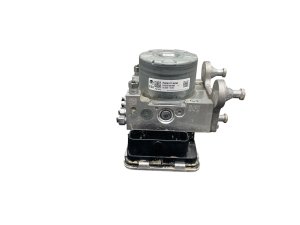
The ABS module is an electronic control unit that works in conjunction with a hydraulic pump assembly. It processes inputs from four wheel speed sensors and controls brake pressure via solenoid valves. It communicates with the Powertrain Control Module (PCM) and other vehicle systems over the CAN bus network.
We Have This Part in Stock





The information in this article is provided for general reference and educational purposes only. Vehicle specifications, procedures, and part compatibility can vary by production date, trim level, and region. Always consult your vehicle's factory service manual and verify part numbers before purchasing or performing repairs. Safety-critical components such as airbags, seat belts, and braking systems should be installed by a qualified professional.
- Jeep Wrangler:
- 🎬 Helpful Videos
- 🛍️ Shop This Part
- Symptoms of a Failing ABS Module
- Known Issues, Recalls, and Technical Service Bulletins (TSBs)
- Buying a Used ABS Control Module
- 1. Verify Compatibility by Part Number
- 2. Physical Inspection
- 3. Why Choose Used OEM?
- Programming and Calibration Requirements
- Cost Comparison
- Frequently Asked Questions (FAQ)
- 🎟️ Get 5% Off