

2016-2025 Hyundai Elantra ABS Module: A Guide to Part Numbers, Programming, and Failure
This in-depth guide covers the common failures, complex part number variations, and critical programming requirements for the 2016-2025 Hyundai Elantra ABS control module.
- Compatibility is extremely complex; you MUST match the OEM part number from your original module exactly.
- A replacement module, even a used one, will likely require professional programming ('Variant Coding') to work with your vehicle.
- A lit ABS warning light disables anti-lock brakes, traction control, and stability control, but your conventional brakes should still work.
- Before replacing the expensive module, always diagnose the wheel speed sensors first, as they are a more common and much cheaper failure point.
Known Issues: Fire Risk and Recalls

Safety Warning: While major recalls for ABS module fires primarily affect the prior generation (2011-2015) Elantra, the failure mode—an internal brake fluid leak causing an electrical short—is a known issue for Hyundai vehicles. This can lead to an engine compartment fire, even when the vehicle is parked and turned off. Due to this risk, it is often recommended to park affected vehicles outside and away from structures until a repair is made. If you see ABS warning lights, smell burning, or see smoke, have your vehicle towed for service immediately.
NHTSA Recall 251 is a prominent example affecting 2011-2015 Elantras, where an electrical short in the ABS module could cause a fire. The remedy provided by the manufacturer often involves replacing the ABS fuse with a lower-amperage one to prevent overheating, rather than replacing the entire module. While the 2016-2025 Elantra is not specifically listed in this major recall, the underlying design and potential for failure may still be a concern.
Symptoms of a Failing ABS Control Module

A failing ABS module will almost always make its presence known through dashboard warning lights. However, not every ABS light means the expensive module has failed. Here are the symptoms, from most to least common:
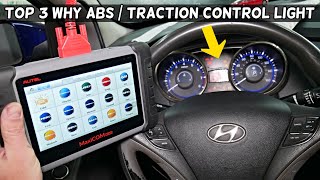
🎬 Watch: Top 3 reasons your ABS and traction lights are on.- ABS, Traction Control (TCS), and Stability Control (ESC) Lights On: This is the most common sign of a problem within the system. The module disables these safety features and illuminates the warning lights when it detects a fault in itself, the sensors, or the pump.
- Wheels Locking Up Under Braking: If the module fails, it cannot prevent the wheels from locking during a hard stop, which can cause skidding and loss of steering control. This is especially dangerous on wet or slippery surfaces.
- Spongy or Unresponsive Brake Pedal: In some failure modes, the brake pedal may feel soft, require more effort than usual, or feel like it's sinking to the floor. This indicates a serious problem with the hydraulic portion of the ABS unit.
- OBD-II Trouble Codes: A standard code reader may not be able to access ABS codes. A more advanced scan tool is required. Common codes point to wheel speed sensor faults (C1206, C1207, etc.) or internal module errors. A code such as C1702 specifically indicates a "Variant Coding" or programming error.
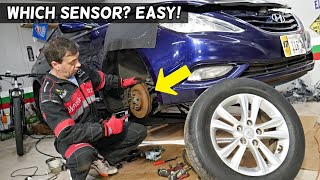
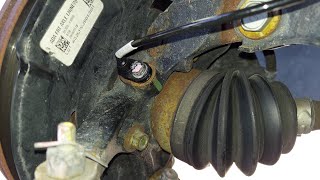
Pro Tip: Before condemning the entire ABS module, check the wheel speed sensors. These sensors are exposed to the elements and are a very common failure point. A faulty wheel speed sensor will trigger the same ABS/TCS/ESC lights but is a much simpler and cheaper repair.
🎬 See how to test which wheel speed sensor is bad.Buying a Used ABS Control Module: A Buyer's Guide


Due to the high cost of a new OEM module, a used part is an excellent value. However, the sheer number of variations makes buying the correct one tricky. Follow these steps to ensure you get a compatible part.
1. Match the Part Number EXACTLY
This is the single most important rule. Do not buy a module based on year and model alone. The initial data provided for this guide lists over a dozen part numbers, and many more exist. The specific module your car needs depends on a combination of factors:
- Engine: 1.6L Turbo vs. 2.0L
- Brake System: Rear Drum Brakes vs. 4-Wheel Disc Brakes
- Electronic Features: With or without Adaptive Cruise Control, Pedestrian Alert System, or Electric Parking Brake.
The original part number is printed on a sticker on the module itself. You or your mechanic must physically inspect your car's original module and match that number to the used part you plan to buy. The warnings provided in the initial prompt highlight how specific these can be; for example, a module for a 2.0L with rear drums and no adaptive cruise is different from one for a 2.0L with 4-wheel discs.
2. Physical Inspection
When you receive the used module, inspect it carefully before installation:
- Electrical Connectors: Look for any signs of green or white corrosion, bent pins, or damage to the plastic housing. Corrosion is a sign of water intrusion, a common cause of failure.
- Hydraulic Block: Check the aluminum block for any cracks or severe damage.
- Brake Line Ports: Ensure the threaded ports for the brake lines are clean and not cross-threaded.
3. Why Used OEM is a Smart Choice
For a complex electronic part like this, a used OEM module is often a better choice than a new, cheap aftermarket unit. Used OEM parts offer guaranteed compatibility and function when the part number is matched correctly. Aftermarket modules can have software or hardware differences that may cause programming issues or unpredictable behavior, even if they are listed as compatible.
Programming and Calibration Requirements
Replacing the ABS module is not always a plug-and-play job. In many cases, especially on newer models or when using a part from another vehicle, programming is required.
- Variant Coding: Hyundai's term for programming the module to the specific vehicle. This process tells the module about the car's features, like its engine, brake type, and stability control options. If this is not done, the module will not work correctly and will set a fault code like C1702.
- Who Can Program It?: Variant coding requires a professional-grade scan tool with Hyundai-specific software, such as the dealer's GDS (Global Diagnostic System), or high-end tools from brands like Autel or Launch. Most DIY code readers cannot perform this function. A dealership or a well-equipped independent shop can do it.
- Avoiding Programming: The best way to potentially avoid programming is to have your original module repaired or rebuilt. Since it retains its original programming, it is often plug-and-play once reinstalled. Using a used module with the *exact same part number* from an identical donor vehicle offers the next best chance of avoiding a programming fee, but it is not guaranteed.
Cost Comparison for Hyundai Elantra ABS Module Replacement
| Part Type | Estimated Cost (Part Only) |
|---|---|
| New OEM | $1,500 - $2,000+ |
| New Aftermarket | $400 - $700 |
| Remanufactured (Original Unit Repaired) | $200 - $400 |
| Used OEM | $55 - $200 |
| Shop Labor (Replacement & Bleeding) | $150 - $400 |
Note: Labor costs can vary significantly based on location and the need for specialized electronic brake bleeding and programming.
Replacement Overview

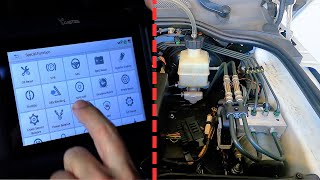
Replacing the ABS module is a job for an experienced DIYer or a professional. The process involves disconnecting the battery, carefully removing the brake lines from the module (expect some fluid spillage), unplugging the electrical connector, and unbolting the unit from the vehicle. The most critical part of the installation is the brake bleeding procedure. Modern ABS systems require a scan tool to cycle the internal pump and solenoids to purge all air from the hydraulic block. Failure to do this correctly will result in a spongy pedal and unsafe braking.
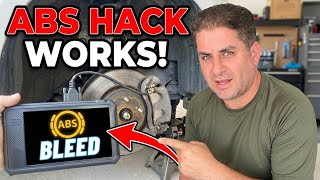
🎬 Learn how to bleed your ABS pump using a scan tool.Frequently Asked Questions (FAQ)
Do I have to program a replacement ABS module for my Elantra?
Most likely, yes. Hyundai calls this "Variant Coding," and it's required to match the module to your car's specific options. The only way to reliably avoid programming is to have your original module repaired.
Is it safe to drive with the ABS light on?
Your regular hydraulic brakes will still work, but the anti-lock, traction control, and stability control safety features will be disabled. This means your wheels can lock up and skid during a hard stop. It is drivable, but you should have it repaired as soon as possible to restore these critical safety functions.
Why are there so many different part numbers for the Elantra ABS module?
The part number changes based on the vehicle's specific configuration, including the engine size (2.0L or 1.6L Turbo), type of rear brakes (drum or disc), and the presence of advanced features like adaptive cruise control or an electric parking brake. You must match the part number exactly.
What are the most common OBD codes for a bad ABS module?
You need a special scanner to read ABS codes. Common codes often relate to wheel speed sensors (e.g., C1206, C1207, C1208, C1209), which should be checked first. A code for an internal module failure or pump motor fault points directly to the ABS unit itself. Code C1702 specifically means the module needs to be programmed (Variant Coding).
Helpful Videos

Technical Specifications
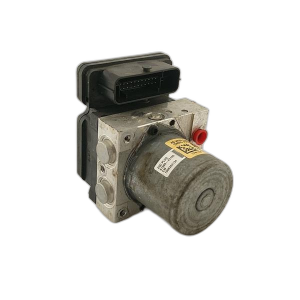
OEM Part Numbers: 58520BY100 58900-A5230 58900-AA550 58900-AA800 58900-IB100 58900AA500 58900AB800 58900F2620 58910-AA550 58910-AA800 58910-AA850 58910AA500 58910AA550 58910AB500 58910AB800
Module compatibility is determined by vehicle's engine, brake type (rear drum vs. 4-wheel disc), and electronic options (adaptive cruise, pedestrian alert, electric parking brake).
We Have This Part in Stock





The information in this article is provided for general reference and educational purposes only. Vehicle specifications, procedures, and part compatibility can vary by production date, trim level, and region. Always consult your vehicle's factory service manual and verify part numbers before purchasing or performing repairs. Safety-critical components such as airbags, seat belts, and braking systems should be installed by a qualified professional.
- Hyundai Elantra:
- 🎬 Helpful Videos
- 🛍️ Shop This Part
- Known Issues: Fire Risk and Recalls
- Symptoms of a Failing ABS Control Module
- Buying a Used ABS Control Module: A Buyer's Guide
- 1. Match the Part Number EXACTLY
- 2. Physical Inspection
- 3. Why Used OEM is a Smart Choice
- Programming and Calibration Requirements
- Cost Comparison for Hyundai Elantra ABS Module Replacement
- Replacement Overview
- Frequently Asked Questions (FAQ)
- 🎟️ Get 5% Off