

2012-2014 Hyundai Azera ABS Module: Fire Risk, Fault Codes, and Replacement Guide
Diagnose common ABS and ESC warning lights, understand the critical fire risk recall, and learn what's required to properly replace the ABS control module in your Azera.
- A critical fire risk recall (NHTSA 23V651000) affects 2012-2014 Azeras; park outside until the free dealer repair is done.
- Replacement requires a full brake system bleed and electronic calibration ('Variant Coding') with a professional scan tool.
- The most common failure symptoms are the ABS and ESC warning lights, often accompanied by fault code C2402.
- When buying a used module, you must match the OEM part number 58920-3V300 exactly for it to work.
Known Issues: Critical Fire Risk Recall
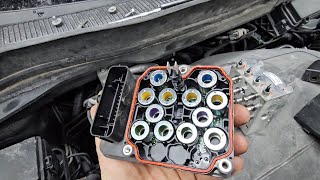
Safety Warning: The 2012-2014 Hyundai Azera is included in a major safety recall (NHTSA Campaign ID: 23V651000 🎬 Watch: Overview of the Hyundai ABS fire recall) for the ABS control module. The module can leak brake fluid internally, causing an electrical short on the circuit board. This short can lead to an engine compartment fire, which can occur even when the vehicle is parked and turned off. Hyundai and NHTSA strongly advise owners to park their vehicles outside and away from structures until the recall repair is completed.
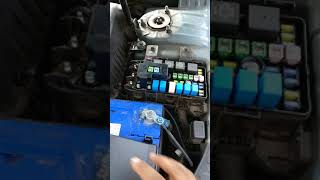
The official remedy from Hyundai involves a dealer replacing the original ABS fuse(s) with new ones of a lower amperage. This is designed to prevent the module from overheating and causing a fire. This repair is performed free of charge at any Hyundai dealership. You can verify if your specific vehicle is affected and if the repair has been performed by entering your Vehicle Identification Number (VIN) on the NHTSA or Hyundai recall websites.
Symptoms of a Failing ABS Module
A failing ABS module will almost always alert you with warning lights on the dashboard. Because the ABS module controls multiple systems, you will likely see several lights at once.
- ABS, ESC, and Brake Warning Lights: The most common symptom is the illumination of the Anti-lock Brake (ABS) and Electronic Stability Control (ESC) lights. The primary red brake warning light may also turn on.
- Loss of ABS and Stability Control: During a hard stop, you may notice the wheels locking up and skidding, which would not happen with a functional ABS. Likewise, the ESC system will not intervene to prevent a slide in slippery conditions.
- Brake Pedal Changes: In some cases of internal hydraulic failure, the brake pedal may feel spongy, require more effort, or sink towards the floor.
- Associated OBD-II Trouble Codes: A professional scan tool that can read Chassis ("C") codes is required for diagnosis. Common codes include:
| Code | Description |
|---|---|
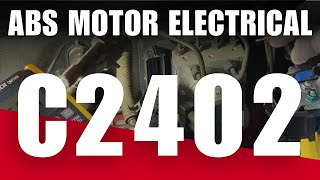
| C2402 | Motor Electrical / Pump Motor Circuit Fault. This is a very common code pointing to an internal electrical failure in the ABS pump motor. | 🎬 See how to fix the C2402 ABS motor fault
| C1702 | Variant Coding Error. This code indicates the module is not programmed or coded correctly for the vehicle it's installed in. |
| C1260 | Steering Angle Sensor Circuit Signal Error. This can sometimes be caused by a faulty ABS module that cannot properly communicate with other sensors. |
| U-Series Codes | Communication codes (e.g., U0121) may be present, indicating the ABS module is not communicating with other vehicle computers. |
Pro Tip: Before condemning the ABS module, always check the wheel speed sensors and their wiring. A faulty wheel speed sensor is a much more common and cheaper failure that will also cause the ABS and ESC lights to illuminate.
Replacement and Programming Requirements
Does the module need to be programmed?
Yes, but it's more of a configuration and calibration process than full programming. While the module may not need to be flashed with your car's VIN, it often requires "Variant Coding." This procedure uses a professional scan tool to tell the module which features your specific Azera has (e.g., specific traction control options). If this is not done, the module will not work correctly and will likely set a C1702 fault code.
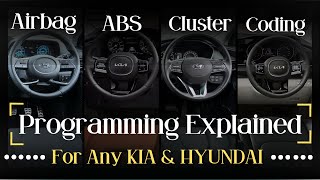
🎬 Watch: How Hyundai ABS module programming and coding worksAfter installation, a brake pressure sensor and G-sensor calibration is often required. This procedure resets the sensors within the module so the stability control system has an accurate baseline. This step is critical for the ESC system to function safely and effectively.
Replacement Process Overview
Replacing the ABS module is a job for an experienced DIY mechanic or a professional shop due to the need for special tools and procedures.
- Disconnect the Battery: Always disconnect the negative battery terminal before working on electrical components.
- Access the Module: The ABS module is located in the engine bay. You may need to remove the air filter box or other components for access.
- Disconnect Lines and Connector: Unplug the main electrical connector. Carefully, using a flare nut wrench to avoid stripping the fittings, disconnect the brake lines from the module. Be prepared for some brake fluid to spill.
- Swap the Module: Unbolt the old module from its bracket and install the replacement unit.
- Reconnect and Bleed Brakes: Reconnect the brake lines and the electrical connector. The entire brake system must now be bled to remove all air. This often requires a scan tool to cycle the ABS pump to purge air trapped inside the new module.
- Calibrate: Perform the variant coding and sensor calibration procedures using a compatible professional scan tool.
Buying a Used 2012-2014 Azera ABS Module
Given the high cost of a new OEM module, a used unit from a reputable recycler is an excellent value. However, careful purchasing is key.
- Match the Part Number Exactly: You must match the OEM part number from your original module. For the 2012-2014 Azera, the primary part number is 58920-3V300. Using a module with a different part number will likely result in compatibility and programming issues.
- Inspect for Damage: When you receive the part, inspect it carefully. Look for any cracks in the black plastic electronic housing or the aluminum hydraulic block. Ensure the electrical connector pins are straight and free of corrosion. Check that the brake line ports are clean and undamaged.
- Check the Source: Ask the seller about the donor vehicle. Avoid parts from vehicles with flood damage, as water intrusion is fatal to these electronics. A module from a vehicle with collision damage is usually fine, as long as the module itself was not physically impacted.
- Why Used OEM is a Good Choice: Aftermarket options for this specific module are virtually non-existent. A new OEM unit can be prohibitively expensive. A quality-tested used OEM module provides the same factory performance and fit at a fraction of the price.
Cost Comparison
| Part/Service | Estimated Cost |
|---|---|
| New OEM Module | $2,800 - $2,900 |
| New Aftermarket Module | Not Generally Available |
| Used OEM Module | $60 - $200 |
| Remanufactured Module | $200 - $450 |
| Shop Labor (Replacement & Bleeding) | $250 - $400 |
| Shop Labor (Programming/Calibration) | $100 - $200 |
Frequently Asked Questions (FAQ)
Can I drive my Azera with the ABS light on?
Yes, but with significant risks. Your standard brakes will still function, but the anti-lock (ABS), traction control (TCS), and stability control (ESC) safety systems will be disabled. This means your wheels can lock up and skid during a panic stop or on slippery surfaces, increasing the risk of losing control. It is strongly recommended to have the issue repaired as soon as possible.
Is my 2013 Azera part of the ABS fire recall?
Yes, 2012-2014 Hyundai Azera models are included in NHTSA recall 23V651000 due to a risk of the ABS module causing a fire. The remedy is a free fuse replacement at a Hyundai dealer. You should park your vehicle outdoors until this repair is completed.
Do I have to bleed the brakes after replacing the ABS module?
Yes, absolutely. Because you have to disconnect the hydraulic brake lines to replace the module, air will enter the system. You must perform a full brake bleed on all four wheels. This process often requires a scan tool to activate the internal ABS pump to ensure all trapped air is removed from the new unit.
Can an independent shop replace and program this module?
Yes. While a dealership can certainly do the work, many qualified independent repair shops have professional-grade scan tools (like Autel or Snap-on) that can perform the necessary variant coding and sensor calibrations for Hyundai vehicles. It is not a task that can be completed without a high-end scan tool.
Helpful Videos
Technical Specifications
OEM Part Numbers: 58920-3V300
The unit is a combined Hydraulic Electronic Control Unit (HECU) that integrates the electronic control module, hydraulic valve body, and pump motor into a single assembly.
We Have This Part in Stock


The information in this article is provided for general reference and educational purposes only. Vehicle specifications, procedures, and part compatibility can vary by production date, trim level, and region. Always consult your vehicle's factory service manual and verify part numbers before purchasing or performing repairs. Safety-critical components such as airbags, seat belts, and braking systems should be installed by a qualified professional.
- Hyundai Azera:
- 🎬 Helpful Videos
- 🛍️ Shop This Part
- Known Issues: Critical Fire Risk Recall
- Symptoms of a Failing ABS Module
- Replacement and Programming Requirements
- Does the module need to be programmed?
- Replacement Process Overview
- Buying a Used 2012-2014 Azera ABS Module
- Cost Comparison
- Frequently Asked Questions (FAQ)
- 🎟️ Get 5% Off