

2006-2017 Honda Odyssey ABS/VSA Module: Faults, Recalls, and Replacement Guide
Diagnose the common VSA modulator faults that trigger ABS and brake warning lights, and learn how to choose the correct replacement part for your specific Odyssey generation and trim.
- A mandatory 'VSA Sensor Neutral Position Memorization' using a scan tool is required after replacement; the part is not plug-and-play.
- 2007-2008 models were recalled for a defect causing a soft brake pedal; verify this recall was performed.
- 2011-2015 models have a TSB for false warning lights due to software sensitivity to low voltage; a software update may be the fix, not replacement.
- For 2011-2013 models, the module for LX/EX/EX-L trims is different from the one for Touring/Touring Elite trims; compatibility is crucial.
Key Differences by Generation

The ABS/VSA modulator for the Honda Odyssey changed significantly between the third and fourth generations. It is critical to identify your vehicle's generation before diagnosing or ordering parts.
- Third Generation (2006-2010): These models are known for a major safety recall related to the VSA modulator allowing air into the brake system. Part numbers typically begin with 57110-SHJ-.
- Fourth Generation (2011-2017): These models are subject to a Technical Service Bulletin (TSB) for software issues causing false warning lights. They also have specific part differences based on trim level. Part numbers typically begin with 57110-TK8-.
Known Issues, Recalls, and Technical Service Bulletins (TSBs)

2007-2008 Odyssey: VSA Modulator Recall (NHTSA 10V-098)
Safety Recall: Honda issued a recall for approximately 344,000 model year 2007-2008 Odyssey vans due to a defect in the VSA modulator. The modulator was assembled in a way that could allow air to slowly enter the brake fluid system during its routine self-checks.
The primary symptom is a brake pedal that feels soft, spongy, or travels further to the floor over time, potentially leading to increased stopping distances. 🎬 Watch: Fixing a sinking brake pedal and replacing the module. The official Honda remedy involved a dealer inspecting the system, bleeding the brakes to remove any accumulated air, and then installing a sealant and caps on the modulator to prevent future air intrusion.
2011-2015 Odyssey: TSB for Warning Lights (16-005)
For 2011-2015 Odysseys, Honda released Technical Service Bulletin 16-005. The symptom is multiple warning lights turning on, accompanied by VSA Diagnostic Trouble Codes (DTCs) 81-1 (modulator-control unit internal circuit malfunction) and/or 61-1 (modulator-control unit power source circuit low voltage).
The cause is not a hardware failure, but rather VSA software that is overly sensitive to minor drops in battery voltage. The official fix is for a Honda dealer to update the VSA modulator-control unit's software and then perform a VSA sensor neutral position memorization. Before replacing the module, it is essential to check if this software update has been performed.
🎬 See how to perform the VSA software flash update.Symptoms of a Failing ABS Control Module

Before assuming the module is faulty, always check the simple things first: ensure your brake fluid is full, your battery terminals are clean and tight, and the battery is healthy. Low voltage is a known cause of VSA system errors.
- ABS, VSA, and Brake Warning Lights: The most common symptom is the illumination of the ABS, VSA, and the triangular "!" warning lights on the dashboard.
- Spongy or Unresponsive Brake Pedal: A pedal that feels soft or goes down further than usual can indicate air in the system, a known issue with 2007-2008 models.
- ABS Pump Running Constantly: You may hear a buzzing or humming noise from the module under the hood, even when not braking.
- Loss of ABS or Traction Control: The vehicle's wheels may lock up during a hard stop, or the tires may spin easily on slippery surfaces.
- Diagnostic Trouble Codes (DTCs): A proper scan tool is needed to read codes from the ABS/VSA system. Common codes pointing to a module issue include 61-1 and 81-1. Other codes may point to wheel speed sensors, which should be diagnosed before condemning the module.
Buying a Used ABS Control Module: What to Look For

Given the high cost of a new OEM module, a quality used part is often the most practical solution. However, compatibility is critical.
- Verify the Generation: First, confirm if you need a module for a 2006-2010 or a 2011-2017 Odyssey. They are not interchangeable.
- Match the Part Number: The safest method is to match the OEM part number from your original module to the replacement. There are many variations.
- Check Trim Level Compatibility (2011-2013): This is a major trap for buyers. For 2011-2013 Odysseys, the module for LX, EX, and EX-L trims (Part No. 57110-TK8-A02) is different from the one used in Touring and Touring Elite models. Always verify the donor vehicle's trim level.
- Physical Inspection: Inspect the used module for any signs of damage. Check that the electrical connector pins are straight and free of corrosion. Ensure the brake line ports are clean and not cross-threaded. Avoid units that show heavy corrosion or signs of brake fluid leakage.
Pro Tip: Choosing a used OEM module is often more reliable than a cheap aftermarket alternative. The OEM unit was designed to integrate perfectly with your Odyssey's specific VSA software and hardware, reducing the risk of compatibility issues after installation.
Replacement and Calibration Requirements
Replacing the ABS/VSA modulator is a job for an experienced DIYer or a professional technician due to the safety-critical nature of the brake system.
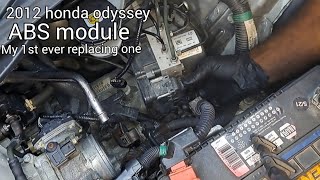
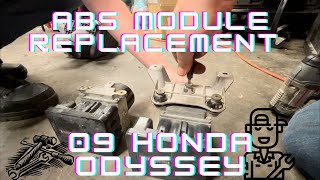
The basic steps involve disconnecting the battery, removing the battery tray for access, carefully disconnecting the electrical connector and brake lines (using flare nut wrenches to prevent stripping), and unbolting the module and its bracket.
Post-Installation Programming and Calibration
Warning: A replacement ABS/VSA module, whether new or used, does not require VIN programming, but it MUST have the VSA sensor neutral position memorized after installation.
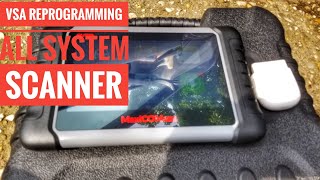
This procedure calibrates the steering angle sensor and G-sensor to the new module, ensuring the stability control system functions correctly. It requires a professional-grade scan tool with Honda-specific software (like the Honda HDS or a capable Snap-On/Autel tool). Failure to perform this step will result in continued VSA warning lights 🎬 Watch: Step-by-step VSA sensor neutral position memorization process. and a non-functional stability system.
After the module is installed and calibrated, the entire brake system must be thoroughly bled to remove all air. This may also require the scan tool to cycle the ABS pump to purge trapped air from the new modulator.
Cost of Replacing the Honda Odyssey ABS Module
| Part Type | Estimated Cost |
|---|---|
| New OEM | $1,200 - $1,900 |
| Remanufactured / Repaired | $550 - $700 |
| Used OEM | $150 - $450 |
| Shop Labor (Replacement, Bleeding, Calibration) | $250 - $450 |
Frequently Asked Questions (FAQ)
Does a used Honda Odyssey ABS module need to be programmed?
No, it does not need to be programmed with your vehicle's VIN. However, it absolutely requires a 'VSA Sensor Neutral Position Memorization' procedure using a compatible scan tool to calibrate the sensors to the module.
What is the difference between the ABS module and the VSA modulator?
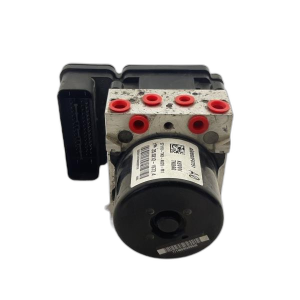
On the 2006-2017 Honda Odyssey, they are the same thing. The part is an integrated assembly that includes the electronic control module, the hydraulic pump, and solenoid valves for both the Anti-lock Braking System (ABS) and the Vehicle Stability Assist (VSA) system.
Can I drive my Odyssey with a bad ABS module?
You can, but with significant risks. Your normal hydraulic brakes will still work, but you will not have anti-lock brakes (ABS), traction control, or stability control. This means your wheels can lock up and skid during emergency braking, and the vehicle will not assist you in controlling a slide. It is highly recommended to get the system repaired as soon as possible.
Why are my ABS, VSA, and Brake lights all on at the same time?
These systems are all interconnected. A fault detected in the ABS/VSA module will automatically disable all related functions (ABS, traction control, stability assist) as a safety precaution, triggering all corresponding warning lights. The root cause could be the module itself, a wheel speed sensor, or even a low voltage issue.
Helpful Videos
Technical Specifications
OEM Part Numbers: 57110-SHJ-951 57110-SHJ-961 57110-SHJ-962 57110-SHJ-963 57110-SHJ-964 57110-SHJ-A61 57110-TK8-A02 57110SHJ951 57110SHJ952 57110SHJ953 57110SHJ962 57110SHJ963 57110SHJ964 57110SHJA61 57110TK8A020M1 57110TK8A630M1 57111-TK8-A02
The unit is an integrated electro-hydraulic modulator for the Vehicle Stability Assist (VSA) system, which includes ABS and traction control functions.
We Have This Part in Stock




The information in this article is provided for general reference and educational purposes only. Vehicle specifications, procedures, and part compatibility can vary by production date, trim level, and region. Always consult your vehicle's factory service manual and verify part numbers before purchasing or performing repairs. Safety-critical components such as airbags, seat belts, and braking systems should be installed by a qualified professional.
- Honda Odyssey:
- 🎬 Helpful Videos
- 🛍️ Shop This Part
- Key Differences by Generation
- Known Issues, Recalls, and Technical Service Bulletins (TSBs)
- 2007-2008 Odyssey: VSA Modulator Recall (NHTSA 10V-098)
- 2011-2015 Odyssey: TSB for Warning Lights (16-005)
- Symptoms of a Failing ABS Control Module
- Buying a Used ABS Control Module: What to Look For
- Replacement and Calibration Requirements
- Post-Installation Programming and Calibration
- Cost of Replacing the Honda Odyssey ABS Module
- Frequently Asked Questions (FAQ)
- 🎟️ Get 5% Off