

2012-2024 Honda CR-V ABS Module: Failures, Programming, and Critical Warnings
This guide covers common ABS and VSA failures on the 2012-2024 Honda CR-V, explaining critical compatibility differences and mandatory post-installation programming.
- A replacement ABS/VSA module MUST be programmed to the vehicle's immobilizer by a dealer or specialist with Honda-specific software; failure to do so can lead to a no-start condition.
- Compatibility is extremely specific. The part number must match your vehicle's drivetrain (FWD/AWD), engine, and whether it has the automatic emergency braking system (CMBS).
- Failure typically illuminates a cluster of warning lights, including ABS, VSA, Power Steering (EPS), and the main brake light.
- A used OEM module is a cost-effective option, but having your original module repaired can be even better as it may not require reprogramming.
Understanding the Honda CR-V ABS Control Module

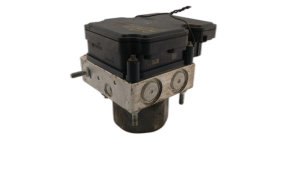
The ABS control module, which Honda often calls the VSA (Vehicle Stability Assist) modulator, is a critical safety component in all 2012-2024 Honda CR-V models. It is a sophisticated unit that combines a hydraulic pump, a block of solenoid valves, and an electronic control unit. Its primary job is to prevent wheel lock-up during emergency braking, allowing the driver to maintain steering control. Beyond that, it serves as the foundation for the traction control and Vehicle Stability Assist systems, which help prevent skids and loss of control by managing brake pressure and engine output. When this module fails, these crucial safety nets are disabled.
Common Symptoms of a Failing CR-V ABS Module

A failing ABS module will almost always alert you with a combination of dashboard warning lights. Because the module controls multiple systems, you will likely see more than just the ABS light.
- ABS, VSA, and Brake Warning Lights: This is the most common sign. The ABS, VSA (a triangle with an exclamation point), and sometimes the main BRAKE warning light will illuminate and stay on.
- Power Steering Warning Light (EPS): On many CR-V models, a fault in the VSA system will also disable the Electric Power Steering (EPS) assist, causing a warning light and making the steering feel very heavy.
- Unresponsive or Spongy Brake Pedal: The brake pedal may feel harder to press than usual, or it may feel soft and spongy, requiring more travel to engage the brakes.
- Wheels Locking Up: During hard braking, especially on wet or loose surfaces, the wheels may lock up and skid, as the anti-lock function is no longer working.
- Inaccurate Speedometer: In some cases, a failing ABS module can interfere with the speed signal, causing the speedometer to read incorrectly or not at all.
A technician can pull specific Diagnostic Trouble Codes (DTCs) to pinpoint the failure. Common codes pointing to an internal module failure include:
- DTC 66-1 / 66-11 / 66-13: Brake Pressure Sensor Failure/Malfunction. This is a very common code across CR-V generations and almost always means the entire module assembly needs to be replaced or repaired.
- DTC 84-1: Sensor Logic Failure.
- DTC U0121: Lost Communication With ABS Control Module.
- VSA Solenoid Codes (121-11 to 124-11): Indicate a failure in the solenoid block, common in 4th generation (2012-2016) models.
Known Issues, Recalls, and Technical Service Bulletins (TSBs)

While there are no widespread recalls specifically for the ABS module itself across this entire year range, several significant issues and service bulletins are relevant to its function, particularly for the 5th generation (2017-2022) CR-V.
5th & 6th Gen (2017-2024) CR-V Issues
- Phantom Braking Investigation (2017-2022): A large number of CR-Vs equipped with the Collision Mitigation Braking System (CMBS) are part of an ongoing NHTSA investigation for "phantom braking." This issue causes the vehicle to brake suddenly and forcefully without any obstacle present. This problem is related to the advanced driver-assistance systems that are integrated with the ABS/VSA module, highlighting the importance of getting the correct part for vehicles with this feature.
- TSB 17-032 (2017 CR-V): Addresses a parasitic battery drain where the vehicle may not start. The cause is faulty VSA modulator software that prevents the unit from entering "sleep mode" after the vehicle is shut off. The fix is a software update performed by a dealer.
- TSB 17-064 (2017 CR-V): Pertains to multiple warning lights appearing on the dash (ACC, CMBS, LKAS, Brake). This is caused by an internal software issue with the millimeter wave radar, not the ABS module itself, but presents similar symptoms. The fix is a software update.
4th Gen (2012-2016) CR-V Issues
Failures on the 4th generation CR-V are common due to age. The most frequent cause is an internal failure of the brake pressure sensor or solenoid valves, which are integral to the module. This typically triggers the 66-1x family of fault codes and requires the entire unit to be replaced or sent to a specialist for rebuilding.
Warning: A fault in the ABS/VSA system disables critical safety features. While the vehicle will still have conventional hydraulic brakes, the anti-lock, traction control, and stability control functions will not work. This significantly increases the risk of losing control in an emergency maneuver or on slippery roads.
CRITICAL: Programming and Calibration Requirements

Replacing the ABS/VSA module in a 2012-2024 Honda CR-V is not a simple plug-and-play job. Failure to perform the required electronic procedures will result in a non-functional part and can even prevent the vehicle from starting.
- Programming is Mandatory: A new or used replacement ABS/VSA module must be programmed to the vehicle. This process involves registering the module to the car's immobilizer system using a Honda-specific diagnostic tool, like the Honda Diagnostic System (i-HDS).
- Immobilizer Link: If the module is not registered with the immobilizer, the vehicle may not start after the battery is disconnected in the future, and a theft-system warning light may appear.
- Sensor Calibration: After installation, several sensors must be calibrated. This includes the VSA sensor neutral position memorization, steering angle sensor calibration, and lateral-G sensor calibration. This procedure also requires a compatible professional scan tool.
- Who Can Program It?: This job must be done by a Honda dealership or a well-equipped independent shop that has the proper i-HDS software and potentially a subscription for security access. Most DIY mechanics and general repair shops will not have the necessary tools.
Buying a Used ABS Control Module for Your CR-V
Given the high cost of a new OEM module, a used unit from a reputable recycler is an excellent value. However, verifying compatibility is absolutely critical to avoid wasting time and money.
Verifying Compatibility: The Most Important Step
You MUST match the part number exactly. Small differences in hardware and software can make a module incompatible. Pay close attention to these three factors, which are reflected in the part number:
- Drivetrain: Modules are specific to Front-Wheel Drive (FWD) or All-Wheel Drive (AWD) models. They are not interchangeable.
- Engine/Hybrid System: Modules differ between the standard 1.5L Turbo, the 2.4L (2012-2016), and the Hybrid models.
- Safety Systems: The biggest variation is the presence of the pre-crash / automatic emergency braking system (Honda's CMBS). Modules for vehicles with CMBS are different from those without it. The provided OEM part numbers and buyer warnings reflect these complex variations.
What to Look For on a Used Module
- Check the Part Number: Triple-check that the OEM part number on the used module's sticker matches your original part number.
- Inspect Connectors: Ensure the electrical connector pins are straight, clean, and free of any corrosion.
- Check Hydraulic Ports: Look for any damage to the threaded ports where the brake lines attach. Ensure the plastic caps are still in place to prevent contamination.
- No Physical Damage: Inspect the housing for any cracks, deep gouges, or signs of being dropped.
Pro Tip: Consider having your original module repaired. Several companies specialize in rebuilding these units. If you send your original module for repair, it often does not require reprogramming since it retains your vehicle's original coding, saving you a trip to the dealer.
ABS Module Replacement Cost Breakdown

The cost to replace a CR-V ABS module varies significantly based on the vehicle's year, the source of the part, and labor rates.
| Part Source | Estimated Part Cost |
|---|---|
| New OEM | $600 - $1,400 |
| New Aftermarket | $300 - $700 (Availability is limited) |
| Used OEM | $80 - $250 |
| Remanufactured / Repair Service | $140 - $600 |
| Shop Labor (Install & Program) | $250 - $500 |
Frequently Asked Questions (FAQ)
Do I have to bleed the brakes after replacing the ABS module?
Yes, if you replace the entire module and hydraulic pump assembly, you absolutely must bleed the brakes. Air will enter the hydraulic system when the lines are disconnected. Furthermore, a special procedure using a scan tool, often called an "ABS Bleed," is required to cycle the pump and purge all trapped air from the module's internal passages. A standard manual bleed is not sufficient.
Can I install a used ABS module myself and drive it to the dealer for programming?
Yes, you can physically install the part yourself to save on labor costs. The vehicle will be safe to drive to a dealership or qualified shop, but do so with caution. The ABS, VSA, and other related safety systems will be inoperative, and multiple warning lights will be on the dash until the module is programmed and calibrated.
My ABS and VSA lights are on. Does that always mean the module is bad?
Not always. While the module is a common culprit, the issue could also be a faulty wheel speed sensor, a bad connection to a sensor, a problem with the steering angle sensor, or even a low battery or failing alternator causing voltage issues. A proper diagnosis with a scan tool that can read ABS codes is necessary to confirm the problem before replacing parts.
What is the difference between an ABS module and a VSA modulator?
For modern Hondas, these terms are often used interchangeably to refer to the same part. The complete assembly includes the electronic control module and the hydraulic VSA (Vehicle Stability Assist) modulator pump. When you buy a replacement, you are typically buying this entire unit.
Technical Specifications
OEM Part Numbers: 57100-3A0-A01 57100-3A0-A11 571003A0A01 571003A0A11 57100-TLA-A82 57100-TLB-A91 57100-TLB-A92 57100-TLB-A93 57100-TLB-A94 57100-TLB-A95 57100-TLC-A01 57100-TLC-A02 57100-TLC-A03 57100-TLC-A04 57100-TLC-A05 57111-T1X-A13 57111-T1W-A23
The module integrates an electronic control unit with a hydraulic pump and solenoid valve block. It operates on the vehicle's 12V system and uses data from wheel speed, yaw rate, and steering angle sensors. Requires Honda DOT 3 Brake Fluid.
We Have This Part in Stock





The information in this article is provided for general reference and educational purposes only. Vehicle specifications, procedures, and part compatibility can vary by production date, trim level, and region. Always consult your vehicle's factory service manual and verify part numbers before purchasing or performing repairs. Safety-critical components such as airbags, seat belts, and braking systems should be installed by a qualified professional.
- Honda CR-V:
- 🛍️ Shop This Part
- Understanding the Honda CR-V ABS Control Module
- Common Symptoms of a Failing CR-V ABS Module
- Known Issues, Recalls, and Technical Service Bulletins (TSBs)
- 5th & 6th Gen (2017-2024) CR-V Issues
- 4th Gen (2012-2016) CR-V Issues
- CRITICAL: Programming and Calibration Requirements
- Buying a Used ABS Control Module for Your CR-V
- Verifying Compatibility: The Most Important Step
- What to Look For on a Used Module
- ABS Module Replacement Cost Breakdown
- Frequently Asked Questions (FAQ)
- 🎟️ Get 5% Off